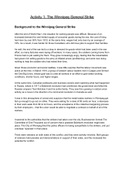
Activity 1: The Winnipeg General Strike
Background to the Winnipeg General Strike
After the end of World War I, the situation for working people was difficult. Because of an
increased demand for and limited supply of consumer goods during the war, the cost of living
had risen by over 50% from 1913; at the same time, wages had only risen by an average of
18%. As a result, it was harder for those Canadians who did have jobs to support their families.
As well, the end of the war led to a drop in demand for goods which had been used in the war
effort, so many factories were laying off workers. In many cases, the soldiers coming home from
France had no job waiting for them. They grew increasingly angry, feeling that the industrialists
had grown rich selling goods to the army at inflated prices (profiteering), and were now doing
nothing to help the soldiers who had risked their lives.
Given those economic and social realities, it was little surprise that the labour movement was
active at the time. In March 1919, a group of western labour leaders met in Calgary and formed
the One Big Union, whose goal was to unite all workers in an effort to gain better working
conditions, shorter hours, and higher wages.
At the same time, Canadian politicians and business owners were watching what had happened
in Russia, where in 1917 a Bolshevik revolution had overthrown the government and killed the
Russian emperor Tsar Nicholas II and his entire family. They saw this upswing in radical union
activity as a move in the direction of a communist revolution in Canada as well.
It was in this atmosphere of unrest and suspicion that the metal trades workers in Winnipeg got
fed up enough to go out on strike. They were asking for a raise of 85 cents an hour, a decrease
in their work week from 60 to 44 hours, and the acceptance of the collective bargaining process
by their employers – that the union would be able to negotiate a contract on behalf of all of the
workers.
It seemed to the authorities that the strikers had taken over the city. Businessmen formed The
Committee of One Thousand out of concern that a possible Bolshevik revolution might take
place. The City of Winnipeg fired the police officers for being sympathetic to the strikers, and put
volunteer “specials” in their place.
There were veterans on both sides of this conflict, and they were actively involved. Both groups
of veterans held parades and demonstrations in support of their sides, and this increased the
potential for conflict.
,On May 24th, the federal government ordered postal workers to return to their jobs, and also
sent in the North-West Mounted Police and army, with machine guns in case they were needed.
Meanwhile, back in Ottawa, they drafted federal laws to deport possible revolutionaries. It was
widely believed that foreign agitators from eastern Europe were behind the unrest.
Workers were starting to drift back to work, unable to survive without any wages, when the strike
became violent. On June10th, volunteer anti-strike police or “specials”, riding horses, were hit
with rocks, bottles and bricks after charging into a crowd of strikers.
The government took direct action. Ten strike leaders were arrested and put in Stoney Mountain
Penitentiary. The Mayor of Winnipeg read the Riot Act, forbidding any marches or
demonstrations.
Bloody Saturday
On June 21st, otherwise known as “Bloody Saturday”, veterans led a march protesting the
arrests. A streetcar driven by a non-union worker (called a “scab” by the strikers) was
overturned. The strikers were charged by mounted policemen with clubs and pistols. Two
strikers were killed, and thirty were injured. Many more were arrested.
The strike was over. By June 26th, strikers returned to work if their employers would let them.
Many were not rehired, and others only if they promised not to join a union.
Later, seven of those arrested strike leaders were sentenced to a year in prison. Three were
elected as Members of the Legislative Assembly (MLAs) in Manitoba while still in prison. J.S.
Woodsworth, another arrested leader, was acquitted of inciting revolt in newspaper editorials
when it was discovered that some of his seditious words were actually excerpts from the Bible.
What complaints did workers have in 1918?
Wages had only risen 18%, while the cost living had gone up more than 50% as a result of
wartime inflation.
Many workers worked a 60 hour week.
Working conditions were sometimes dangerous.
Many workers were being laid off, and many returning veterans could not get jobs.
Why would the strike leaders ask the police, bakers, and theatre workers to stay on the
job?
, Strike leaders wanted to make sure that the city would remain safe, that people would be able to
eat, and would have something to keep them entertained and off the streets.
What were the government and business leaders afraid that the strike would turn into?
They feared a communist revolution like the one that had just occurred in Russia.
What government action led to the events of “Bloody Saturday”?
The arrest of the strike leaders.
Background to the Winnipeg General Strike
After the end of World War I, the situation for working people was difficult. Because of an
increased demand for and limited supply of consumer goods during the war, the cost of living
had risen by over 50% from 1913; at the same time, wages had only risen by an average of
18%. As a result, it was harder for those Canadians who did have jobs to support their families.
As well, the end of the war led to a drop in demand for goods which had been used in the war
effort, so many factories were laying off workers. In many cases, the soldiers coming home from
France had no job waiting for them. They grew increasingly angry, feeling that the industrialists
had grown rich selling goods to the army at inflated prices (profiteering), and were now doing
nothing to help the soldiers who had risked their lives.
Given those economic and social realities, it was little surprise that the labour movement was
active at the time. In March 1919, a group of western labour leaders met in Calgary and formed
the One Big Union, whose goal was to unite all workers in an effort to gain better working
conditions, shorter hours, and higher wages.
At the same time, Canadian politicians and business owners were watching what had happened
in Russia, where in 1917 a Bolshevik revolution had overthrown the government and killed the
Russian emperor Tsar Nicholas II and his entire family. They saw this upswing in radical union
activity as a move in the direction of a communist revolution in Canada as well.
It was in this atmosphere of unrest and suspicion that the metal trades workers in Winnipeg got
fed up enough to go out on strike. They were asking for a raise of 85 cents an hour, a decrease
in their work week from 60 to 44 hours, and the acceptance of the collective bargaining process
by their employers – that the union would be able to negotiate a contract on behalf of all of the
workers.
It seemed to the authorities that the strikers had taken over the city. Businessmen formed The
Committee of One Thousand out of concern that a possible Bolshevik revolution might take
place. The City of Winnipeg fired the police officers for being sympathetic to the strikers, and put
volunteer “specials” in their place.
There were veterans on both sides of this conflict, and they were actively involved. Both groups
of veterans held parades and demonstrations in support of their sides, and this increased the
potential for conflict.
,On May 24th, the federal government ordered postal workers to return to their jobs, and also
sent in the North-West Mounted Police and army, with machine guns in case they were needed.
Meanwhile, back in Ottawa, they drafted federal laws to deport possible revolutionaries. It was
widely believed that foreign agitators from eastern Europe were behind the unrest.
Workers were starting to drift back to work, unable to survive without any wages, when the strike
became violent. On June10th, volunteer anti-strike police or “specials”, riding horses, were hit
with rocks, bottles and bricks after charging into a crowd of strikers.
The government took direct action. Ten strike leaders were arrested and put in Stoney Mountain
Penitentiary. The Mayor of Winnipeg read the Riot Act, forbidding any marches or
demonstrations.
Bloody Saturday
On June 21st, otherwise known as “Bloody Saturday”, veterans led a march protesting the
arrests. A streetcar driven by a non-union worker (called a “scab” by the strikers) was
overturned. The strikers were charged by mounted policemen with clubs and pistols. Two
strikers were killed, and thirty were injured. Many more were arrested.
The strike was over. By June 26th, strikers returned to work if their employers would let them.
Many were not rehired, and others only if they promised not to join a union.
Later, seven of those arrested strike leaders were sentenced to a year in prison. Three were
elected as Members of the Legislative Assembly (MLAs) in Manitoba while still in prison. J.S.
Woodsworth, another arrested leader, was acquitted of inciting revolt in newspaper editorials
when it was discovered that some of his seditious words were actually excerpts from the Bible.
What complaints did workers have in 1918?
Wages had only risen 18%, while the cost living had gone up more than 50% as a result of
wartime inflation.
Many workers worked a 60 hour week.
Working conditions were sometimes dangerous.
Many workers were being laid off, and many returning veterans could not get jobs.
Why would the strike leaders ask the police, bakers, and theatre workers to stay on the
job?
, Strike leaders wanted to make sure that the city would remain safe, that people would be able to
eat, and would have something to keep them entertained and off the streets.
What were the government and business leaders afraid that the strike would turn into?
They feared a communist revolution like the one that had just occurred in Russia.
What government action led to the events of “Bloody Saturday”?
The arrest of the strike leaders.