NRNP 6640 FINAL EXAM WITH ANSWERS (74/75 POINTS) 2021 UPDATE
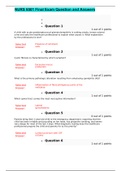
NRNP 6640 FINAL EXAM WITH ANSWERS (74/75 POINTS) • Question 1 1 out of 1 points Linda is a 65-year-old patient who has completed initial treatment for alcohol addiction and anxiety problems. She is motivated to continue her treatment gains and have a healthy lifestyle. How would the PMHNP apply a mindfulness approach to this case? • Question 2 1 out of 1 points A PMHNP is assessing a 60-year-old patient named Carlos. He has severe PTSD and mild substance abuse issues. The most appropriate setting to treat Carlos would be a _________. • Question 3 1 out of 1 points The PMHNP is interviewing a patient with a history of substance abuse. He has attempted to stop abusing drugs three times before. He states to the PMHNP, “I just cannot change. How can you help me?!” As it applies to change, the PMHNP understands the principle of evocation to mean: • Question 4 1 out of 1 points The PMHNP is assessing a 30-year-old client who reports feeling stressed out due to his current employment situation. When asked about how he manages this work-related stress, the patient says that exercise helps him feel less anxious, so he often spends 2 or more hours at the gym each night. After completing the patient assessment, the PMHNP has determined that an existential psychotherapy approach may best benefit this client. What is the PMHNP’s goal in employing this treatment approach? • Question 6 1 out of 1 points The PMHNP uses the Adult Attachment Interview (AAI) with a male patient who reports having had a difficult time being separated from his parents during his childhood. He explains that going to school or visiting his relatives without his parents was troublesome. The PMHNP characterizes the patient as unresolved/disorganized, according to his outcomes on the AAI. What does the PMHNP anticipate from the patient? • Question 7 0 out of 1 points A PMHNP is using motivational interviewing (MI) with a 50-year-old patient named Dave to commit to a healthy drug-free lifestyle. By using “change talk,” the PMHNP hopes to help the patient build self-esteem and hope. True or false: If Dave is resisting change, the PMHNP should challenge his resistance in order for MI to be successful. • Question 8 1 out of 1 points A PMHNP is using emotion-focused therapy to help a 38-year-old patient who says, “I’ve been feeling angry lately, but I’m not sure why.” The first attempt by the PMHNP is to say: • Question 9 1 out of 1 points The PMHNP is actively listening to Ms. Thomas who is detoxing from alcohol. Ms. Thomas is currently discussing with the PMHNP the reasons why she feels guilty about her drinking. Ms. Thomas tearfully states, “I have driven my family and friends away with this terrible habit. I have no one left. I had more than enough chances and now my children won’t even talk to me.” Which of the following statements demonstrate a simple reflection? • Question 10 1 out of 1 points The PMHNP is caring for a geriatric patient who expresses symptoms of gastrointestinal problems, aches and pains, and loss of appetite. The patient reports feeling lonely, as more of his friends have been passing away over the recent months and years. The PMHNP focuses on which therapeutic approach for this patient? • Question 11 1 out of 1 points The PMHNP is caring for an adult male patient whose wife left him several months ago. He recently learned that his ex-wife is dating someone much younger. The man feels belittled, sad, and lonely. He talks about trying to meet other women, but says, “I can’t compete with the younger guys these days, with the cool clothes and the vegan diets. I’m bald and overweight, and what woman is going to want to be with me?” How does the PMHNP help raise the man’s self-esteem? • Question 12 1 out of 1 points The PMHNP is initiating a plan of care for a patient who requires comprehensive psychotherapy to manage his depression and mood disorder. Throughout the initial sessions, the patient reports feeling as though he cannot be helped. The PMHNP is concerned about premature termination initiated by the patient. What strategy can the PMHNP employ to prevent or reduce premature termination? • Question 13 1 out of 1 points The PMHNP is caring for an older adult patient who is in the acute phase of schizophrenia. Which therapeutic model will the PMHNP employ with this patient? • Question 14 1 out of 1 points The PMHNP uses the cognitive behavioral therapy model with Gerald, an older adult patient who is being treated for depression and mood disorder. What will the PMHNP do with the patient during the first three sessions? MHNP is working with a patient who describes having a painful and traumatic childhood experience, which causes her to have anxiety as an adult. When asked how she manages her anxiety, the patient dismisses it and denies that it is a problem. Using the supportive psychotherapy approach, the PMHNP will do which of the following when assessing the patient’s ego strength?
Written for
Document information
- Uploaded on
- March 29, 2021
- Number of pages
- 16
- Written in
- 2020/2021
- Type
- Exam (elaborations)
- Contains
- Questions & answers
Subjects
-
nrnp 6640 final exam with answers 7475 points • question 1 1 out of 1 points linda is a 65 year old patient who has completed initial treatment for alcohol addiction and anxiety problems she i