

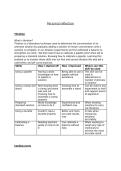
Personal reflection
Titration
What is titration?
Titration is a laboratory technique used to determine the concentration of an
unknown solution by gradually adding a solution of known concentration until a
reaction is complete. In our titration experiments we first calibrated a balance to
strengthen our skills . We then learnt how to calibrate a pipette which then led to
preparing a standard solution. Knowing how to calibrate a pipette Learning this
enabled us to transfer these skills into our first and second titration.We also did a
calorimetry and pH curve practical.
Skills How i started off How i improved Where can this
skill be used
Using a pipette Having a weak Being able to use a This skill can be
knowledge on how pipette without used in
to pipette a assistance laboratories to
solution transfer chemicals
in titration
Using a clamp and Not knowing what Knowing how to Can be used in any
stand a clamp and stand assemble a stand experiment to hold
was and not and support pieces
knowing how to of apparatus
assemble a clamp
properly
Preparing Weak knowledge Experienced and When needing
standard solution on how to do it confident now solutions to carry
out titrations
Using a burette Couldn't read a Better and more In labs when
burette properly accurate results measuring
now solutions
accurately
Calibrating a Needing teachers Can calibrate a When needing to
balance guide on how to do balance without weigh any type of
it help chemicals to
achieve the most
accurate result
Cooling curve
, A cooling curve is a graphical representation of how the temperature of a substance
changes over time as it loses heat. It typically shows the relationship between time
(or sometimes heat removed) and temperature during the cooling process.
Cooling curves are widely used in fields like materials science, chemistry, and
engineering to understand how different materials cool down under various
conditions. The graph typically shows a downward slope as the substance cools, but
the exact shape can vary depending on the material and the conditions.
Skills How i started How i improved Where i would
use this skill
Using a bunsen Not knowing what Confident in using When heating
burner color the safe it , I did a risk substances/
flame is assessment to chemicals
know about the
safety flame.
Identifying cooling Weak knowledge Can describe When studying
curve patterns not being able to different patterns phase transitions
interpret graphs on graphs and to analyse when
identify different something has
trends. changed state
(solidification and
crystallization)
Drawing a tangent Inaccurate results Accurate results/ These math skills
on a graph improved maths can be used at any
skills time when doing a
Practising more graph based on
than once. results.
Calculating the Not knowing Knowing equation Use the equation
rate of cooling equation and how to correctly
Drawing a graph calculate using
maths skills
Chromatography
Skills How i started Hpwi would Where i would use
improved this
Stretching Not knowing what Knowing how to Used in future
capillary capillary was safely stretch practicals where
Titration
What is titration?
Titration is a laboratory technique used to determine the concentration of an
unknown solution by gradually adding a solution of known concentration until a
reaction is complete. In our titration experiments we first calibrated a balance to
strengthen our skills . We then learnt how to calibrate a pipette which then led to
preparing a standard solution. Knowing how to calibrate a pipette Learning this
enabled us to transfer these skills into our first and second titration.We also did a
calorimetry and pH curve practical.
Skills How i started off How i improved Where can this
skill be used
Using a pipette Having a weak Being able to use a This skill can be
knowledge on how pipette without used in
to pipette a assistance laboratories to
solution transfer chemicals
in titration
Using a clamp and Not knowing what Knowing how to Can be used in any
stand a clamp and stand assemble a stand experiment to hold
was and not and support pieces
knowing how to of apparatus
assemble a clamp
properly
Preparing Weak knowledge Experienced and When needing
standard solution on how to do it confident now solutions to carry
out titrations
Using a burette Couldn't read a Better and more In labs when
burette properly accurate results measuring
now solutions
accurately
Calibrating a Needing teachers Can calibrate a When needing to
balance guide on how to do balance without weigh any type of
it help chemicals to
achieve the most
accurate result
Cooling curve
, A cooling curve is a graphical representation of how the temperature of a substance
changes over time as it loses heat. It typically shows the relationship between time
(or sometimes heat removed) and temperature during the cooling process.
Cooling curves are widely used in fields like materials science, chemistry, and
engineering to understand how different materials cool down under various
conditions. The graph typically shows a downward slope as the substance cools, but
the exact shape can vary depending on the material and the conditions.
Skills How i started How i improved Where i would
use this skill
Using a bunsen Not knowing what Confident in using When heating
burner color the safe it , I did a risk substances/
flame is assessment to chemicals
know about the
safety flame.
Identifying cooling Weak knowledge Can describe When studying
curve patterns not being able to different patterns phase transitions
interpret graphs on graphs and to analyse when
identify different something has
trends. changed state
(solidification and
crystallization)
Drawing a tangent Inaccurate results Accurate results/ These math skills
on a graph improved maths can be used at any
skills time when doing a
Practising more graph based on
than once. results.
Calculating the Not knowing Knowing equation Use the equation
rate of cooling equation and how to correctly
Drawing a graph calculate using
maths skills
Chromatography
Skills How i started Hpwi would Where i would use
improved this
Stretching Not knowing what Knowing how to Used in future
capillary capillary was safely stretch practicals where


