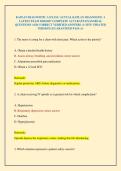
KAPLAN DIAGNOSTIC B EXAM 2026/2027 ACTUAL TEST COMPLETE
100 APPROVED QUESTIONS AND CORRECT DETAILED ANSWERS
(100% CORRECT VERIFIED SOLUTIONS) NEWEST UPDATED
VERSION |GUARANTEED PASS A+
1. A nurse finds a client unresponsive. What is the priority action?
A. Call the provider
B. Assess airway and breathing correct answer
C. Obtain vital signs
D. Check blood glucose
Rationale:
Airway and breathing are the top priority according to ABCs.
2. Which client requires immediate assessment?
A. Client with chronic pain
B. Client with sudden confusion correct answer
C. Client awaiting discharge
D. Client requesting food
Rationale:
Acute confusion may indicate hypoxia or neurologic compromise.
3. A client receiving IV fluids develops crackles. What should the nurse do first?
,A. Encourage coughing
B. Stop or slow the infusion correct answer
C. Increase oxygen
D. Document
Rationale:
Crackles indicate fluid overload requiring immediate intervention.
4. Which finding indicates hypoglycemia?
A. Polyuria
B. Fruity breath
C. Diaphoresis and tremors correct answer
D. Kussmaul respirations
Rationale:
Adrenergic symptoms signal low blood glucose.
5. Which action best prevents medication errors?
A. Preparing medications early
B. Asking another nurse
C. Using two patient identifiers correct answer
D. Relying on memory
,Rationale:
Two identifiers are essential for medication safety.
6. A postoperative client reports calf pain and swelling. Priority action?
A. Apply heat
B. Encourage ambulation
C. Assess for deep vein thrombosis correct answer
D. Give pain medication
Rationale:
Signs suggest DVT, which is life-threatening.
7. Which client is at highest aspiration risk?
A. Client with obesity
B. Client with hypertension
C. Client with decreased level of consciousness correct answer
D. Client with anxiety
Rationale:
Airway reflexes are impaired with decreased consciousness.
8. Which finding indicates effective oxygen therapy?
, A. Increased heart rate
B. Improved oxygen saturation correct answer
C. Cyanosis
D. Drowsiness
Rationale:
Improved saturation reflects better oxygenation.
9. A client receiving opioids is at risk for which complication?
A. Hypertension
B. Respiratory depression correct answer
C. Diarrhea
D. Hyperglycemia
Rationale:
Opioids suppress the respiratory center.
10. Which intervention most effectively prevents infection?
A. Wearing gloves
B. Hand hygiene correct answer
C. Cleaning equipment weekly
D. Wearing masks constantly
100 APPROVED QUESTIONS AND CORRECT DETAILED ANSWERS
(100% CORRECT VERIFIED SOLUTIONS) NEWEST UPDATED
VERSION |GUARANTEED PASS A+
1. A nurse finds a client unresponsive. What is the priority action?
A. Call the provider
B. Assess airway and breathing correct answer
C. Obtain vital signs
D. Check blood glucose
Rationale:
Airway and breathing are the top priority according to ABCs.
2. Which client requires immediate assessment?
A. Client with chronic pain
B. Client with sudden confusion correct answer
C. Client awaiting discharge
D. Client requesting food
Rationale:
Acute confusion may indicate hypoxia or neurologic compromise.
3. A client receiving IV fluids develops crackles. What should the nurse do first?
,A. Encourage coughing
B. Stop or slow the infusion correct answer
C. Increase oxygen
D. Document
Rationale:
Crackles indicate fluid overload requiring immediate intervention.
4. Which finding indicates hypoglycemia?
A. Polyuria
B. Fruity breath
C. Diaphoresis and tremors correct answer
D. Kussmaul respirations
Rationale:
Adrenergic symptoms signal low blood glucose.
5. Which action best prevents medication errors?
A. Preparing medications early
B. Asking another nurse
C. Using two patient identifiers correct answer
D. Relying on memory
,Rationale:
Two identifiers are essential for medication safety.
6. A postoperative client reports calf pain and swelling. Priority action?
A. Apply heat
B. Encourage ambulation
C. Assess for deep vein thrombosis correct answer
D. Give pain medication
Rationale:
Signs suggest DVT, which is life-threatening.
7. Which client is at highest aspiration risk?
A. Client with obesity
B. Client with hypertension
C. Client with decreased level of consciousness correct answer
D. Client with anxiety
Rationale:
Airway reflexes are impaired with decreased consciousness.
8. Which finding indicates effective oxygen therapy?
, A. Increased heart rate
B. Improved oxygen saturation correct answer
C. Cyanosis
D. Drowsiness
Rationale:
Improved saturation reflects better oxygenation.
9. A client receiving opioids is at risk for which complication?
A. Hypertension
B. Respiratory depression correct answer
C. Diarrhea
D. Hyperglycemia
Rationale:
Opioids suppress the respiratory center.
10. Which intervention most effectively prevents infection?
A. Wearing gloves
B. Hand hygiene correct answer
C. Cleaning equipment weekly
D. Wearing masks constantly