3.2 Business Objectives
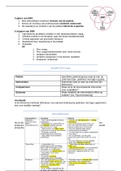
What motivates a firm in its actions depends on who controls the decision-making process
Owners/shareholders
Small business – owner is manager of the business greater control
When there is a large number of shareholders - control can become obscured
Directors and managers
Principal-agent problem / divorce between ownership and control
Only way for owners to influence decision making is by sacking directors/managers at the Annual
General Meeting (AGM)
Shareholders can also sell shares forcing the share price down – more vulnerable to a takeover bid
If there is a takeover – directors and managers may lose job – pressure on them to do well
Workers (trade union)
can exert pressure on matters such as wages (therefore costs), health and safety at work, location of
premises
workers demand higher wages increase costs lower profit margins
to reduce the principal-agent problem bonuses related to profitability to incentivize workers –
more in line with the owners’ goal of profit max
The state
legislation on taxation, environment, consumer protection, health and safety at work, employment
practices, solvency
Consumer
In a free market, consumers cast their spending votes amongst companies – indicate what they value
- $1 = 1 vote
** Consumer sovereignty – the power of consumers to allocate resources according to their own
preferences through spending decisions
Companies that are not responsive to consumers’ needs go out of business consumers control
company
BUT: in practice, firms manipulate consumers by advertising – not that powerless
Consumers, through organisations e.g. the Consumers’ Association can pressurize companies to
change policies (less effective)
Pressure Groups
E.g. Greenpeace, Friends of the Earth – environmental pressure groups
Attempt to influence others to advance a particular cause/viewpoint
Protest outside shops – scare off customers
Have the power to change company policies e.g. force companies to abandon projects/modify work
practices to be more environmentally friendly
Short-run Profit Maximisation
Neo-classical economists assume that the interests of owners/shareholders are the most important –
assumption of rationality means shareholders are motivated by maximizing their dividend to maximise their
profits from the company only goal is profit maximization
Neo-classical economics assumes that it is short-run profits that firms maximise
marginal cost = marginal revenue (MC=MR)
(When the difference between total revenue and total cost is the greatest)
Marginal cost: the addition to total cost of one extra unit of output
Marginal revenue: the increase in total revenue resulting from an extra unit of sales
Marginal profit = MR – MC when MR = MC, MP = 0
What motivates a firm in its actions depends on who controls the decision-making process
Owners/shareholders
Small business – owner is manager of the business greater control
When there is a large number of shareholders - control can become obscured
Directors and managers
Principal-agent problem / divorce between ownership and control
Only way for owners to influence decision making is by sacking directors/managers at the Annual
General Meeting (AGM)
Shareholders can also sell shares forcing the share price down – more vulnerable to a takeover bid
If there is a takeover – directors and managers may lose job – pressure on them to do well
Workers (trade union)
can exert pressure on matters such as wages (therefore costs), health and safety at work, location of
premises
workers demand higher wages increase costs lower profit margins
to reduce the principal-agent problem bonuses related to profitability to incentivize workers –
more in line with the owners’ goal of profit max
The state
legislation on taxation, environment, consumer protection, health and safety at work, employment
practices, solvency
Consumer
In a free market, consumers cast their spending votes amongst companies – indicate what they value
- $1 = 1 vote
** Consumer sovereignty – the power of consumers to allocate resources according to their own
preferences through spending decisions
Companies that are not responsive to consumers’ needs go out of business consumers control
company
BUT: in practice, firms manipulate consumers by advertising – not that powerless
Consumers, through organisations e.g. the Consumers’ Association can pressurize companies to
change policies (less effective)
Pressure Groups
E.g. Greenpeace, Friends of the Earth – environmental pressure groups
Attempt to influence others to advance a particular cause/viewpoint
Protest outside shops – scare off customers
Have the power to change company policies e.g. force companies to abandon projects/modify work
practices to be more environmentally friendly
Short-run Profit Maximisation
Neo-classical economists assume that the interests of owners/shareholders are the most important –
assumption of rationality means shareholders are motivated by maximizing their dividend to maximise their
profits from the company only goal is profit maximization
Neo-classical economics assumes that it is short-run profits that firms maximise
marginal cost = marginal revenue (MC=MR)
(When the difference between total revenue and total cost is the greatest)
Marginal cost: the addition to total cost of one extra unit of output
Marginal revenue: the increase in total revenue resulting from an extra unit of sales
Marginal profit = MR – MC when MR = MC, MP = 0