Philosophy of Science
Lecture 1
Thinking about science
-> Sloppy science and the case of Diederik Stapel
-> Prominent social psychologist from Tilburg
-> Removed from academia: fraud in 55 papers, including 10 PhD dissertations
Exhibits fraud in four ways
-> Publication bias (failed experiments not published)
-> Lack of replication/reproduction of results
-> Statistical incompetence
-> Lack of research ethics
Why is fraud interesting?
-> Sloppy science challenges the “common-sense” view of science:
-> Scientists look for truth, which means scientific knowledge is objective; external influences should
play no role, science is all about (empirical) evidence.
Objectivity
Presupposes a distinction between objective and subjective points of view
-> Claim: scientific knowledge is objective
-> Prerequisite: clear construction of concepts -> absence of vagueness and ambiguity -> ideal:
establishes clarity/avoids equivocality
To be objective, you need a perspective from either all perspectives or no perspective.
Concepts need to be precise, specified, measurable and free from personal bias
-> Ideal: personal convictions and values play no role
The case of phrenology
-> Study of the mind through trying to measure the skull, because it was assumed that with the weight
of the skull, we could say something about the brain
-> Proposed a modular view of the mind/brain
-> Perpetuated myths about racial and gender differences, intelligence and learning, criminal
tendencies, psychiatric disordered, etc
What can we conclude from sloppy science?
Reasons to look critically at scientific research. First thought eliminates sloppy science, enforce ideals
of objective science.
Geurts text: “is what we do pointless?”
Identifying “causes” and “laws” in psychology and neuroscience isn’t always feasible. Objectivity can
still be problematic even if science isn’t sloppy.
,Philosophy of Science
Is science objective? Is science fail able? Science is objective within some assumptions or standards
people have agreed on, if it is an opinion → then science is definitely the best opinion. Science is
reliable and replicable; this makes it somehow objective. It is acceptable that science is valuable within
a certain sets of standards.
From natural science to social science
Since 16th/17th century: successful natural sciences (Galileo/Newton)
Since the 19th century: society has become the object of research: how to study the society?
Questions to consider:
Is society characterized by causal relations, explanations and theories?
Is society reducible to the individuals that live in it?
Are “subjects” (researchers) standing apart from the “objects of research”?
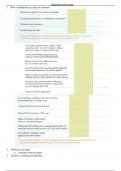
Smith on insider & outsiders perspective
Insider perspective: we can’t understand a group
unless we’re a part of that group, to understand a
religious group, you should become a part of it.
Opposition: you become biased, “apologetic”
descriptions.
Outsider perspective: preserve objectivity, be an
outsider.
Opposition: too much emphasis on explanation,
false reduction of insider perspective and intrinsic
motivation
.
Solution: stranger perspective
-> Supposed to bring together both
Review:
-> Sloppy science is a threat to the common-sense
ideal of science
-> Sloppy science shows: reflecting on science is necessary
,Philosophy of Science
Central themes of PSS (philosophy of social science):
-> Naturalism: the problem of understanding and explanation in social sciences (can we use the
concept “causality” in society?)
-> Reductionism: the problem of the relation between holism and individualism
-> Normativity: the function of norms, values and rules in the social sciences.
Analysing the four quadrants (Marx, Mill, Wittgenstein, Elster,):
Systems → explanation (Marx)
:
Wittgenstein: understanding, practices.
:
, Philosophy of Science
Elster: actors
:
Schurz’s perspective of the stranger: the bridge between the quadrants
Normativity focuses on
Lecture 1
Thinking about science
-> Sloppy science and the case of Diederik Stapel
-> Prominent social psychologist from Tilburg
-> Removed from academia: fraud in 55 papers, including 10 PhD dissertations
Exhibits fraud in four ways
-> Publication bias (failed experiments not published)
-> Lack of replication/reproduction of results
-> Statistical incompetence
-> Lack of research ethics
Why is fraud interesting?
-> Sloppy science challenges the “common-sense” view of science:
-> Scientists look for truth, which means scientific knowledge is objective; external influences should
play no role, science is all about (empirical) evidence.
Objectivity
Presupposes a distinction between objective and subjective points of view
-> Claim: scientific knowledge is objective
-> Prerequisite: clear construction of concepts -> absence of vagueness and ambiguity -> ideal:
establishes clarity/avoids equivocality
To be objective, you need a perspective from either all perspectives or no perspective.
Concepts need to be precise, specified, measurable and free from personal bias
-> Ideal: personal convictions and values play no role
The case of phrenology
-> Study of the mind through trying to measure the skull, because it was assumed that with the weight
of the skull, we could say something about the brain
-> Proposed a modular view of the mind/brain
-> Perpetuated myths about racial and gender differences, intelligence and learning, criminal
tendencies, psychiatric disordered, etc
What can we conclude from sloppy science?
Reasons to look critically at scientific research. First thought eliminates sloppy science, enforce ideals
of objective science.
Geurts text: “is what we do pointless?”
Identifying “causes” and “laws” in psychology and neuroscience isn’t always feasible. Objectivity can
still be problematic even if science isn’t sloppy.
,Philosophy of Science
Is science objective? Is science fail able? Science is objective within some assumptions or standards
people have agreed on, if it is an opinion → then science is definitely the best opinion. Science is
reliable and replicable; this makes it somehow objective. It is acceptable that science is valuable within
a certain sets of standards.
From natural science to social science
Since 16th/17th century: successful natural sciences (Galileo/Newton)
Since the 19th century: society has become the object of research: how to study the society?
Questions to consider:
Is society characterized by causal relations, explanations and theories?
Is society reducible to the individuals that live in it?
Are “subjects” (researchers) standing apart from the “objects of research”?
Smith on insider & outsiders perspective
Insider perspective: we can’t understand a group
unless we’re a part of that group, to understand a
religious group, you should become a part of it.
Opposition: you become biased, “apologetic”
descriptions.
Outsider perspective: preserve objectivity, be an
outsider.
Opposition: too much emphasis on explanation,
false reduction of insider perspective and intrinsic
motivation
.
Solution: stranger perspective
-> Supposed to bring together both
Review:
-> Sloppy science is a threat to the common-sense
ideal of science
-> Sloppy science shows: reflecting on science is necessary
,Philosophy of Science
Central themes of PSS (philosophy of social science):
-> Naturalism: the problem of understanding and explanation in social sciences (can we use the
concept “causality” in society?)
-> Reductionism: the problem of the relation between holism and individualism
-> Normativity: the function of norms, values and rules in the social sciences.
Analysing the four quadrants (Marx, Mill, Wittgenstein, Elster,):
Systems → explanation (Marx)
:
Wittgenstein: understanding, practices.
:
, Philosophy of Science
Elster: actors
:
Schurz’s perspective of the stranger: the bridge between the quadrants
Normativity focuses on