Economic Activity and Energy
LESSON 1
Types of Industry
Industry - a group of businesses which produce a particular kind of
good or service
1. Primary - gathering raw materials - e.g. farming, fishing,
mining
2. Secondary - manufacturing raw materials into product - e.g.
baker, carpenter
3. Tertiary - offering goods or services - e.g. doctor, teacher
4. Quaternary - research or management - e.g. scientist, CEO
LESSON 2
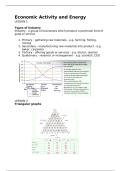
Triangular graphs
,LESSON 3
Development changing employment structure
Problems for future
less jobs in primary and secondary sectors - less money
climate change because of a lot of carbon emissions
Less countries producing raw materials - developing
Solutions
sharing technology, experience and knowledge
o Helping countries develop without repeating same
mistakes
o Sharing technology
o Sharing knowledge of industry, climate and nature
LESSON 4
, Causes of change in employment sector
Raw materials
raw materials depleted
o Causing manufacturers to change location and decrease
in workers in primary sector
E.g. depletion of coil, oil and gas
New Technologies
mechanisation of farming and manufacturing
Quicker transport
o More jobs in tertiary
o Less jobs in primary
o Less time to travel so increase productivity
Globalisation
countries becoming more linked and helping each other
o Increase in trade and better economically
E.g. Kenya grows fruit and vegetables for places in
Europe
Government policies
government intervention to help support sectors
o Helping more people get jobs
E.g. increase in secondary sectors by China’s
government so global demand could be reached
Demographic + social changes
population growth and product demand
o Boost in economic sectors
o Lots of job opportunities
E.g. more income to spend on fun
LESSON 5
Positives and negatives of industrial change in the UK
Advantages
Economic
o More employment
o Increasing in machinery
o Increase in productivity
o Increase of good being sold abroad
Social
o More employment
o Better quality of life
o Improved infrastructure
o Increased life expectancy
Environmental
o More research on storms and climate change
o Transition to cleaner, renewable energy sources
LESSON 1
Types of Industry
Industry - a group of businesses which produce a particular kind of
good or service
1. Primary - gathering raw materials - e.g. farming, fishing,
mining
2. Secondary - manufacturing raw materials into product - e.g.
baker, carpenter
3. Tertiary - offering goods or services - e.g. doctor, teacher
4. Quaternary - research or management - e.g. scientist, CEO
LESSON 2
Triangular graphs
,LESSON 3
Development changing employment structure
Problems for future
less jobs in primary and secondary sectors - less money
climate change because of a lot of carbon emissions
Less countries producing raw materials - developing
Solutions
sharing technology, experience and knowledge
o Helping countries develop without repeating same
mistakes
o Sharing technology
o Sharing knowledge of industry, climate and nature
LESSON 4
, Causes of change in employment sector
Raw materials
raw materials depleted
o Causing manufacturers to change location and decrease
in workers in primary sector
E.g. depletion of coil, oil and gas
New Technologies
mechanisation of farming and manufacturing
Quicker transport
o More jobs in tertiary
o Less jobs in primary
o Less time to travel so increase productivity
Globalisation
countries becoming more linked and helping each other
o Increase in trade and better economically
E.g. Kenya grows fruit and vegetables for places in
Europe
Government policies
government intervention to help support sectors
o Helping more people get jobs
E.g. increase in secondary sectors by China’s
government so global demand could be reached
Demographic + social changes
population growth and product demand
o Boost in economic sectors
o Lots of job opportunities
E.g. more income to spend on fun
LESSON 5
Positives and negatives of industrial change in the UK
Advantages
Economic
o More employment
o Increasing in machinery
o Increase in productivity
o Increase of good being sold abroad
Social
o More employment
o Better quality of life
o Improved infrastructure
o Increased life expectancy
Environmental
o More research on storms and climate change
o Transition to cleaner, renewable energy sources