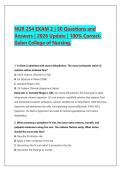
NUR 254 EXAM 2 | 50 Questions and
Answers | 2026 Update | 100% Correct-
Galen College of Nursing.
1. A client is admitted with severe dehydration. The nurse anticipates which IV
solution will be initiated first?
A. 0.45% Sodium Chloride (1/2 NS)
B. 5% Dextrose in Water (D5W)
C. Lactated Ringer's (LR)
D. 3% Sodium Chloride (Hypertonic Saline)
Rationale: C. Lactated Ringer's (LR). For severe dehydration, the initial goal is rapid
intravascular volume expansion. LR is an isotonic crystalloid solution that replaces fluid
and electrolytes (sodium, potassium, calcium, lactate) lost in dehydration. D5W becomes
hypotonic and distributes into cells, not expanding volume effectively. 0.45% NS is
hypotonic. 3% NaCl is hypertonic and used for severe hyponatremia, not routine
dehydration.
2. When assessing a peripheral IV site, the nurse notes redness, warmth, and
palpable tenderness along the vein. The catheter flushes easily. What action
should the nurse take first?
A. Slow the IV infusion rate.
B. Apply a warm compress to the site.
C. Discontinue the IV and restart it proximal to the site.
D. Document the findings as normal.
,Rationale: B. Apply a warm compress to the site. These are classic signs
of phlebitis (inflammation of the vein). The first intervention is to apply warm
compresses to promote comfort and vasodilation. The IV may be left in place if it flushes
easily and is needed, but it should be monitored closely. Discontinuing and restarting
proximal to an inflamed site is contraindicated. Documenting as normal is incorrect.
3. A patient with heart failure is prescribed a diuretic. Which lab value should the
nurse monitor most closely?
A. Hemoglobin
B. Potassium
C. Blood Urea Nitrogen (BUN)
D. Blood Glucose**
Rationale: B. Potassium. Loop and thiazide diuretics commonly cause potassium
wasting (hypokalemia), which can lead to dangerous cardiac dysrhythmias. Monitoring
potassium levels is a critical nursing responsibility for patients on these diuretics. While
BUN/Cr are monitored for renal function, electrolyte imbalance is the most immediate
common risk.
4. The nurse is preparing to administer a blood transfusion. Which action is most
critical before initiating the transfusion?
A. Prime the tubing with 0.9% Sodium Chloride.
B. Have the patient sign a second consent form.
C. Check the blood product against the patient's identification with a second licensed
nurse at the bedside.
D. Ensure the blood has been warmed to body temperature.
Rationale: C. Check the blood product against the patient's identification with a
second licensed nurse. This is the single most important safety step to prevent a
fatal hemolytic transfusion reaction. Two licensed professionals must verify the patient's
identity, blood type, and product details at the bedside. Priming with NS is standard but
not most critical. A specific consent is usually obtained once. Blood is not routinely
warmed unless for rapid, massive transfusion.
, 5. A post-operative patient's SpO2 drops to 88% on room air. What is the nurse's
priority action?
A. Notify the rapid response team.
B. Encourage deep breathing and coughing.
C. Apply oxygen via nasal cannula and reassess.
D. Suction the patient's oropharynx.
Rationale: C. Apply oxygen via nasal cannula and reassess. The priority is to correct
the hypoxia immediately. The nurse has a standing order/parameter to apply oxygen in
this situation. After stabilizing the patient (applying O2), the nurse would then assess
further (listen to lung sounds, encourage deep breathing) and notify the provider if
needed. Suctioning is only indicated if there is evidence of secretions.
6. Which finding in a patient receiving Morphine sulfate via PCA pump requires
immediate intervention?
A. Pain rating of 6/10.
B. Respiratory rate of 8 breaths/min.
C. Sedation score of 2 (easily aroused).
D. Patient states they are pushing the button every 10 minutes.
Rationale: B. Respiratory rate of 8 breaths/min. This indicates respiratory
depression, the most serious side effect of opioid analgesics. This requires immediate
intervention (stopping the PCA, administering naloxone per protocol, stimulating the
patient). A pain rating of 6/10 requires reassessment and possible adjustment, but is not
an immediate safety threat. Sedation score of 2 is normal. Frequent PCA demands may
indicate inadequate pain control.
7. A patient with a chest tube connected to a water-seal drainage system is getting
out of bed. The drainage system should be placed:
A. At the level of the patient's waist.
B. Above the level of the chest.
C. Below the level of the chest (upright position).
D. On the bed next to the patient.
Answers | 2026 Update | 100% Correct-
Galen College of Nursing.
1. A client is admitted with severe dehydration. The nurse anticipates which IV
solution will be initiated first?
A. 0.45% Sodium Chloride (1/2 NS)
B. 5% Dextrose in Water (D5W)
C. Lactated Ringer's (LR)
D. 3% Sodium Chloride (Hypertonic Saline)
Rationale: C. Lactated Ringer's (LR). For severe dehydration, the initial goal is rapid
intravascular volume expansion. LR is an isotonic crystalloid solution that replaces fluid
and electrolytes (sodium, potassium, calcium, lactate) lost in dehydration. D5W becomes
hypotonic and distributes into cells, not expanding volume effectively. 0.45% NS is
hypotonic. 3% NaCl is hypertonic and used for severe hyponatremia, not routine
dehydration.
2. When assessing a peripheral IV site, the nurse notes redness, warmth, and
palpable tenderness along the vein. The catheter flushes easily. What action
should the nurse take first?
A. Slow the IV infusion rate.
B. Apply a warm compress to the site.
C. Discontinue the IV and restart it proximal to the site.
D. Document the findings as normal.
,Rationale: B. Apply a warm compress to the site. These are classic signs
of phlebitis (inflammation of the vein). The first intervention is to apply warm
compresses to promote comfort and vasodilation. The IV may be left in place if it flushes
easily and is needed, but it should be monitored closely. Discontinuing and restarting
proximal to an inflamed site is contraindicated. Documenting as normal is incorrect.
3. A patient with heart failure is prescribed a diuretic. Which lab value should the
nurse monitor most closely?
A. Hemoglobin
B. Potassium
C. Blood Urea Nitrogen (BUN)
D. Blood Glucose**
Rationale: B. Potassium. Loop and thiazide diuretics commonly cause potassium
wasting (hypokalemia), which can lead to dangerous cardiac dysrhythmias. Monitoring
potassium levels is a critical nursing responsibility for patients on these diuretics. While
BUN/Cr are monitored for renal function, electrolyte imbalance is the most immediate
common risk.
4. The nurse is preparing to administer a blood transfusion. Which action is most
critical before initiating the transfusion?
A. Prime the tubing with 0.9% Sodium Chloride.
B. Have the patient sign a second consent form.
C. Check the blood product against the patient's identification with a second licensed
nurse at the bedside.
D. Ensure the blood has been warmed to body temperature.
Rationale: C. Check the blood product against the patient's identification with a
second licensed nurse. This is the single most important safety step to prevent a
fatal hemolytic transfusion reaction. Two licensed professionals must verify the patient's
identity, blood type, and product details at the bedside. Priming with NS is standard but
not most critical. A specific consent is usually obtained once. Blood is not routinely
warmed unless for rapid, massive transfusion.
, 5. A post-operative patient's SpO2 drops to 88% on room air. What is the nurse's
priority action?
A. Notify the rapid response team.
B. Encourage deep breathing and coughing.
C. Apply oxygen via nasal cannula and reassess.
D. Suction the patient's oropharynx.
Rationale: C. Apply oxygen via nasal cannula and reassess. The priority is to correct
the hypoxia immediately. The nurse has a standing order/parameter to apply oxygen in
this situation. After stabilizing the patient (applying O2), the nurse would then assess
further (listen to lung sounds, encourage deep breathing) and notify the provider if
needed. Suctioning is only indicated if there is evidence of secretions.
6. Which finding in a patient receiving Morphine sulfate via PCA pump requires
immediate intervention?
A. Pain rating of 6/10.
B. Respiratory rate of 8 breaths/min.
C. Sedation score of 2 (easily aroused).
D. Patient states they are pushing the button every 10 minutes.
Rationale: B. Respiratory rate of 8 breaths/min. This indicates respiratory
depression, the most serious side effect of opioid analgesics. This requires immediate
intervention (stopping the PCA, administering naloxone per protocol, stimulating the
patient). A pain rating of 6/10 requires reassessment and possible adjustment, but is not
an immediate safety threat. Sedation score of 2 is normal. Frequent PCA demands may
indicate inadequate pain control.
7. A patient with a chest tube connected to a water-seal drainage system is getting
out of bed. The drainage system should be placed:
A. At the level of the patient's waist.
B. Above the level of the chest.
C. Below the level of the chest (upright position).
D. On the bed next to the patient.