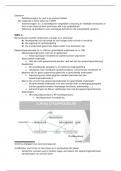
Exposure = aufdecken, responsiveness = „entgegenkommen“
BWL
Why do companies engage in foreign trade?
They internationalise because of a mix of push and pull factors
o Push factors:
Bad trends in their own markets so they decide to explore opportunities
beyond national borders
E.g.: declining demand, falling profit margins, growing of competitors
o Pull factors:
Good conditions in foreign markets that make internationalization attractive
E.g.: faster growth, good conditions (taxes, Ireland), lower environmental
standards, resources, customers, cheap labour, know how
Product satisfies an unmet need
3 basic decisions:
o Which markets to enter?
Depends on their long run profit potential
A good market is: political stable, has a free market system (low trade
barriers across borders), has low inflation risk and currency risk and stable
exchange rates (€ is good at this point)
Low private sector debt (if people have high debts, they can’t spend money,
same with low income)
o When to enter on what scale?
If attractive markets are identified, companies must consider time of entry
Either early or late:
Early (before other firms) Late (after firms established
themselves)
+ Might be faster growth + learn from mistakes from the
others
- risk (what works what doesn’t) + you know what customers want
(minimum requirements)
- Lack of qualified labour - high barriers set from the
competitors
+ qualified labour
o Which mode of market entry?
Depends on: does the company want to have higher market
share/profitability
Are there financial, organizational, and technological resources and
capabilities available?
Unique conditions in the target country (environmental laws, distribution,
transport)
Other factors:
Competition from existing rivals
Characteristics of product/service which you are about to offer to
the customer (e.g. baby food China)
Optimal mode is individually different for each situation and company!
BWL
Why do companies engage in foreign trade?
They internationalise because of a mix of push and pull factors
o Push factors:
Bad trends in their own markets so they decide to explore opportunities
beyond national borders
E.g.: declining demand, falling profit margins, growing of competitors
o Pull factors:
Good conditions in foreign markets that make internationalization attractive
E.g.: faster growth, good conditions (taxes, Ireland), lower environmental
standards, resources, customers, cheap labour, know how
Product satisfies an unmet need
3 basic decisions:
o Which markets to enter?
Depends on their long run profit potential
A good market is: political stable, has a free market system (low trade
barriers across borders), has low inflation risk and currency risk and stable
exchange rates (€ is good at this point)
Low private sector debt (if people have high debts, they can’t spend money,
same with low income)
o When to enter on what scale?
If attractive markets are identified, companies must consider time of entry
Either early or late:
Early (before other firms) Late (after firms established
themselves)
+ Might be faster growth + learn from mistakes from the
others
- risk (what works what doesn’t) + you know what customers want
(minimum requirements)
- Lack of qualified labour - high barriers set from the
competitors
+ qualified labour
o Which mode of market entry?
Depends on: does the company want to have higher market
share/profitability
Are there financial, organizational, and technological resources and
capabilities available?
Unique conditions in the target country (environmental laws, distribution,
transport)
Other factors:
Competition from existing rivals
Characteristics of product/service which you are about to offer to
the customer (e.g. baby food China)
Optimal mode is individually different for each situation and company!