INTERDISCIPLINAIRE
CONSUMENTEN THEORIE
UGent, 2024-2025
Patrick Vyncke
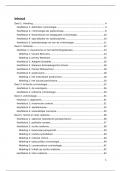
,Inhoudsopgave
1 Communicatiemanagement .................................................................................................................... 4
2 Introduction: paradigms for exploring the consumer mind ...................................................................... 4
2.1 Thomas Kuhn: the structure of scientific revolutions (A) ......................................................................... 4
2.2 Dept psychology: the mind is a boiling barrel of unconscious drives (B) ................................................. 4
2.3 Behaviourisme paradigma (C) ................................................................................................................. 6
2.4 The cognitive revolution: the mind is a computer (D).............................................................................. 6
2.5 Semiotics: the mind is a meaning manager (E) ....................................................................................... 8
2.6 Evolutionaire psychologie (F)................................................................................................................... 9
2.7 Gedragseconomie: the mind is a cognitive miser (G) ............................................................................ 10
2.8 Why we need research: the case of the hidden persuaders (H) ............................................................ 11
3 Human nature: the standard social science model ................................................................................. 18
3.1 The cognitive, affective and conative dimensions underlying human behaviour (A) ............................ 18
3.2 Associative networks, semantic differentials and means-end-chains (B) .............................................. 20
3.3 The core concept: goals (C).................................................................................................................... 22
3.4 Economic and social deliberations (D) ................................................................................................... 24
3.5 Synthesis: a SSSM of human/consumer behaviour and advertising processing (E) ............................... 25
3.6 Implications for communication managers (F) ...................................................................................... 26
4 Consumer goals, values & emotions: introduction to evolutionary psychology ...................................... 27
4.1 Doelconcept: the classic inventories of freud, rokeach & maslow revisted (A) ..................................... 28
4.2 Evolutionary psychology: from bodily to mental organs (B).................................................................. 31
4.3 Evolutionary psychology: core ideas and some misunderstanding (C) .................................................. 33
4.4 The universal goal model: the ultimate (dieper niveau) consumer goals (D) ........................................ 42
4.5 The universal value model: the economic value dimension (E) ............................................................. 45
4.6 The aesthetic value dimension: aesthetic feeling as predictive precousrsors of the UVM (F) ............... 52
4.7 The ethic value dimension: moral feelings as social correctors of the UVM (G).................................... 57
4.8 A note on happiness: positive psychology and the UGM/UVM (H) ....................................................... 59
4.9 A note on happiness: positive consumer psychology and the UGM/UVM (I) ........................................ 59
4.10 A note on identity: schizophrenic by nature: our 8 fundamental consumer subselves (I) ................. 60
4.11 A note on emotions as super regulators (J) ....................................................................................... 61
4.12 Een opmerking over het geheugen: wat is de moeite waard om te onthouden? (K) ........................ 67
4.13 Implicaties voor communicatiemanagers (L)..................................................................................... 67
victorinesandrap 1
,5 Perceptie: de biologie van signalen en signalen (perceptie) ................................................................... 68
5.1 James j. Gibson: ecological psychology (verschillende modellen) (A) .................................................... 68
5.2 Jakob von uexküll: umweltlehre (B) ....................................................................................................... 69
5.3 Geoffrey miller: from cues to fitness cues (C) ........................................................................................ 70
5.4 The brain as a fitness affordance management system (D) .................................................................. 71
5.5 Supernormal stimuli: the hedonic dimension of consumption in overdrive (E) ..................................... 73
5.6 Costly signals: the symbolic dimension of consumption in overdrive (F) ............................................... 77
5.7 Implicaties voor communicatiemanagers (G) ........................................................................................ 79
6 From info processing to meaning making: introduction to semiotics ..................................................... 80
6.1 From information processing to meaning making (paradigma semiotiek) (A) ..................................... 80
6.2 From cues to gestalts to words (B) ........................................................................................................ 81
6.3 Some remarkable aspects of cue reading (C) ........................................................................................ 83
6.4 Semiotics: the science of signs and meaning processes (semiosis) (D) .................................................. 86
6.5 Indices, icons & symbols: from sign types to semiotic levels (E) ............................................................ 87
6.6 Archetypes and stereotypes: on natural and cultural iconic gestalt (F) ................................................ 89
6.7 Van archetypes en stereotypes naar verhalen (G)................................................................................. 92
6.8 Implicaties voor communicatiemanagers (H) ........................................................................................ 92
7 Consumer decision making: an introduction to behavioral economics ................................................... 94
7.1 The SSSM of consumer decision making revisited: the rational consumer (A) ...................................... 94
7.2 Dual systems theory (B) ......................................................................................................................... 95
7.3 Heuristic decision making: the intuitive consumer (C)........................................................................... 97
7.4 From 2 to 3 decision systems in the consumer mind (D) ..................................................................... 103
7.5 Implications for communication managers (E).................................................................................... 105
8 Models of advertising processing ........................................................................................................ 106
8.1 De klassieke modellen van advertising processen (A) ......................................................................... 106
8.2 Implicaties for communication managers (B)...................................................................................... 112
9 Towards a typology of advertising strategies ....................................................................................... 113
9.1 The triple consumer mind & the three prototypical branding strategies (A)....................................... 117
9.2 Synthesis: the triune consumer brain (B) (Paul McLean) ..................................................................... 118
9.3 Belang van een goede theorie en goed onderzoek (C) ........................................................................ 118
10 Market and consumer research methods......................................................................................... 119
10.1 Markt en consumenten onderzoeksmethodes (A) ........................................................................... 119
victorinesandrap 2
, 10.2 Klassieke technieken (B) .................................................................................................................. 119
10.3 Behavioral economics: AB/testing (C) ............................................................................................. 120
10.4 A note on the number of participants (zie slides) ............................................................................ 121
10.5 Neuromarketing: psycho-psychosociologische methoden .............................................................. 121
11 Conclusie ......................................................................................................................................... 123
12 Videos ZELFSTUDIE .......................................................................................................................... 124
12.1 Subliminal sex messages hidden in ads ........................................................................................... 124
12.2 Subliminal advertisement ................................................................................................................ 124
12.3 Is subliminal messaging real? & the truth about subliminal messages ........................................... 124
victorinesandrap 3
CONSUMENTEN THEORIE
UGent, 2024-2025
Patrick Vyncke
,Inhoudsopgave
1 Communicatiemanagement .................................................................................................................... 4
2 Introduction: paradigms for exploring the consumer mind ...................................................................... 4
2.1 Thomas Kuhn: the structure of scientific revolutions (A) ......................................................................... 4
2.2 Dept psychology: the mind is a boiling barrel of unconscious drives (B) ................................................. 4
2.3 Behaviourisme paradigma (C) ................................................................................................................. 6
2.4 The cognitive revolution: the mind is a computer (D).............................................................................. 6
2.5 Semiotics: the mind is a meaning manager (E) ....................................................................................... 8
2.6 Evolutionaire psychologie (F)................................................................................................................... 9
2.7 Gedragseconomie: the mind is a cognitive miser (G) ............................................................................ 10
2.8 Why we need research: the case of the hidden persuaders (H) ............................................................ 11
3 Human nature: the standard social science model ................................................................................. 18
3.1 The cognitive, affective and conative dimensions underlying human behaviour (A) ............................ 18
3.2 Associative networks, semantic differentials and means-end-chains (B) .............................................. 20
3.3 The core concept: goals (C).................................................................................................................... 22
3.4 Economic and social deliberations (D) ................................................................................................... 24
3.5 Synthesis: a SSSM of human/consumer behaviour and advertising processing (E) ............................... 25
3.6 Implications for communication managers (F) ...................................................................................... 26
4 Consumer goals, values & emotions: introduction to evolutionary psychology ...................................... 27
4.1 Doelconcept: the classic inventories of freud, rokeach & maslow revisted (A) ..................................... 28
4.2 Evolutionary psychology: from bodily to mental organs (B).................................................................. 31
4.3 Evolutionary psychology: core ideas and some misunderstanding (C) .................................................. 33
4.4 The universal goal model: the ultimate (dieper niveau) consumer goals (D) ........................................ 42
4.5 The universal value model: the economic value dimension (E) ............................................................. 45
4.6 The aesthetic value dimension: aesthetic feeling as predictive precousrsors of the UVM (F) ............... 52
4.7 The ethic value dimension: moral feelings as social correctors of the UVM (G).................................... 57
4.8 A note on happiness: positive psychology and the UGM/UVM (H) ....................................................... 59
4.9 A note on happiness: positive consumer psychology and the UGM/UVM (I) ........................................ 59
4.10 A note on identity: schizophrenic by nature: our 8 fundamental consumer subselves (I) ................. 60
4.11 A note on emotions as super regulators (J) ....................................................................................... 61
4.12 Een opmerking over het geheugen: wat is de moeite waard om te onthouden? (K) ........................ 67
4.13 Implicaties voor communicatiemanagers (L)..................................................................................... 67
victorinesandrap 1
,5 Perceptie: de biologie van signalen en signalen (perceptie) ................................................................... 68
5.1 James j. Gibson: ecological psychology (verschillende modellen) (A) .................................................... 68
5.2 Jakob von uexküll: umweltlehre (B) ....................................................................................................... 69
5.3 Geoffrey miller: from cues to fitness cues (C) ........................................................................................ 70
5.4 The brain as a fitness affordance management system (D) .................................................................. 71
5.5 Supernormal stimuli: the hedonic dimension of consumption in overdrive (E) ..................................... 73
5.6 Costly signals: the symbolic dimension of consumption in overdrive (F) ............................................... 77
5.7 Implicaties voor communicatiemanagers (G) ........................................................................................ 79
6 From info processing to meaning making: introduction to semiotics ..................................................... 80
6.1 From information processing to meaning making (paradigma semiotiek) (A) ..................................... 80
6.2 From cues to gestalts to words (B) ........................................................................................................ 81
6.3 Some remarkable aspects of cue reading (C) ........................................................................................ 83
6.4 Semiotics: the science of signs and meaning processes (semiosis) (D) .................................................. 86
6.5 Indices, icons & symbols: from sign types to semiotic levels (E) ............................................................ 87
6.6 Archetypes and stereotypes: on natural and cultural iconic gestalt (F) ................................................ 89
6.7 Van archetypes en stereotypes naar verhalen (G)................................................................................. 92
6.8 Implicaties voor communicatiemanagers (H) ........................................................................................ 92
7 Consumer decision making: an introduction to behavioral economics ................................................... 94
7.1 The SSSM of consumer decision making revisited: the rational consumer (A) ...................................... 94
7.2 Dual systems theory (B) ......................................................................................................................... 95
7.3 Heuristic decision making: the intuitive consumer (C)........................................................................... 97
7.4 From 2 to 3 decision systems in the consumer mind (D) ..................................................................... 103
7.5 Implications for communication managers (E).................................................................................... 105
8 Models of advertising processing ........................................................................................................ 106
8.1 De klassieke modellen van advertising processen (A) ......................................................................... 106
8.2 Implicaties for communication managers (B)...................................................................................... 112
9 Towards a typology of advertising strategies ....................................................................................... 113
9.1 The triple consumer mind & the three prototypical branding strategies (A)....................................... 117
9.2 Synthesis: the triune consumer brain (B) (Paul McLean) ..................................................................... 118
9.3 Belang van een goede theorie en goed onderzoek (C) ........................................................................ 118
10 Market and consumer research methods......................................................................................... 119
10.1 Markt en consumenten onderzoeksmethodes (A) ........................................................................... 119
victorinesandrap 2
, 10.2 Klassieke technieken (B) .................................................................................................................. 119
10.3 Behavioral economics: AB/testing (C) ............................................................................................. 120
10.4 A note on the number of participants (zie slides) ............................................................................ 121
10.5 Neuromarketing: psycho-psychosociologische methoden .............................................................. 121
11 Conclusie ......................................................................................................................................... 123
12 Videos ZELFSTUDIE .......................................................................................................................... 124
12.1 Subliminal sex messages hidden in ads ........................................................................................... 124
12.2 Subliminal advertisement ................................................................................................................ 124
12.3 Is subliminal messaging real? & the truth about subliminal messages ........................................... 124
victorinesandrap 3