Developmental psych
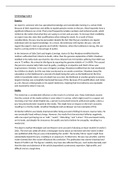
Part 1. Introduction
CHAPTER 1
Maturation: aspects of development that are primarily under genetic control, and which are
relatively uninfluenced by the environment.
Folk theories of development: ideas about development not based upon scientific
investigation
Intergenerational continuity:
Paradigm: world view, hypothesis, model
- Organismic world view: People are active and interact with environment, shaping
their own development. Qualitatively different stages
- Mechanistic world view: Person as a machine, passive unti stimulated by
environment. Study the environment that leads to changes in behavior. More
continuous growth function
Behaviorism: the view in line with Watson and Skinner that sees observable behavior as
focus of study, and developing child as passive respondent to conditioning and
reinforcement
Cross sectional designs
- Children of different ages observed at single point in time. Performance averaged
over different children at each age
Longitudinal designs
- More than one observation of the same group of children at different points in
development. Children tested repeatedly as they grow older. Within person changes
and between person differences with age
- Look at each individual data
- But: effects of repeated testing, selective survivorship
Conflicting results:
1. Time between measures
2. Cohort effects. Changes across generations:
height (increased over years)
attitudes (homosexuality)
Leisure activities (Playing video games)
Everyday life (better electronic devices)
Intelligence (IQ Increased) Flynn effect
Cohort: group of people raised in same environment, or share certain demographic
characters
Microgenetic methods: change as it occurs: individuals being tested repeatedly, over a short
period of time so density of observations is high compared with typical longitudinal study
,Sequential/age cohort design: Combination of longitudinal or cross-sectional designs that
examines the development of individuals from different age cohorts
Research methods
Observational studies
Baby biographies: diaries of infants development.
Time sampling - observational study that record an individual’s behavior at frequent
intervals of time
Event sampling - observational study which records what happens during particular events,
like playing, bathtime, feeding, reading (continuous sampling)
Clinical method: research method where natural behavior is observed and then the
individual’s environment is changed in order to understand better the behavior of interest
Experimental methods
Specify causal relationship, independent and dependent variable
Structured observation: IV systematically controlled
Psychological testing
instruments for the quantitative assessment of some psychological attribute or attribute of
person
Correlational studies
Concurrent: variables measured at the same time
Predictive: over time
Marker task: method to produce behavior with known neural basis
Imaging methods: methods of recording brain activity
EEG: scalp recording with electrodes that measure electrical activity produced by neurons,
usually time locked to stimulus event, producing ERP (event related potential) brain activity
is monitored during presentation of specific perceptual events
- Sensitive to timing of brain’s response to events, but surface so hard to tap in specific
brain area
PET: blood flow to tissues in body, regions of high acitvity, but injection so rarely used infants
fMRI: differences oxygen concentration throughout brain
Ecological validity: meaningful in real world
Developmental function: typical trends development (more intelligent as we age)
, CHAPTER 2
Theory of development: Scheme or system of ideas that is based on evidence and
attempts to explain, describe and predict behavior and development
Behaviorism: the theory that human and animal behaviour can be explained in terms of
conditioning. Encouraging desirable behavior by praising
6 major developmental theories
1. Motor development
Motor milestones: the basic motor skills acquired in infancy and early childhood, such as
sitting unaidethe theory that human and animal behaviour can be explained in terms of
conditioning, without appeal to thoughts or feelings, and that some mental conditions are
best treated by altering behaviour patterns.
d, crawling, walking
-> important implications other aspects development (emotional, social), communication,
appreciation of heights
- Maturational theory
Gesell: motor development in 2 directions
Cephalocaudal: from head to foot
Proximodistal: central of body to peripheral
together with the regular sequence with which the motor milestones are achieved -> view
that maturation shapes motor development
2. Cognitive development
Before Piaget: pscyhoanalysis and behaviorism, both passive role in child
Piaget: active
Cognitive adaptation: children’s developing cognitive awareness of the world. As a result of
cognitive adaptations they become better able to understand their world. Organismic world
view, portrays children as active and shaping own development
Assimilation: treat new objects as if they are familiar, incorporate new experiences into
existing schemes of thought
Accomodation: Adjust to a new situations by modifying preexisting schemes (adjust to new
toy, person)
(Always occur together)
schema: mental structures in the childs thinking that provide representations and plans for
enacting behaviors
Functional invariants: Processes that don’t change during development such as
accommodation and assimilation
Piagets view: 4 stages cognitive development
Part 1. Introduction
CHAPTER 1
Maturation: aspects of development that are primarily under genetic control, and which are
relatively uninfluenced by the environment.
Folk theories of development: ideas about development not based upon scientific
investigation
Intergenerational continuity:
Paradigm: world view, hypothesis, model
- Organismic world view: People are active and interact with environment, shaping
their own development. Qualitatively different stages
- Mechanistic world view: Person as a machine, passive unti stimulated by
environment. Study the environment that leads to changes in behavior. More
continuous growth function
Behaviorism: the view in line with Watson and Skinner that sees observable behavior as
focus of study, and developing child as passive respondent to conditioning and
reinforcement
Cross sectional designs
- Children of different ages observed at single point in time. Performance averaged
over different children at each age
Longitudinal designs
- More than one observation of the same group of children at different points in
development. Children tested repeatedly as they grow older. Within person changes
and between person differences with age
- Look at each individual data
- But: effects of repeated testing, selective survivorship
Conflicting results:
1. Time between measures
2. Cohort effects. Changes across generations:
height (increased over years)
attitudes (homosexuality)
Leisure activities (Playing video games)
Everyday life (better electronic devices)
Intelligence (IQ Increased) Flynn effect
Cohort: group of people raised in same environment, or share certain demographic
characters
Microgenetic methods: change as it occurs: individuals being tested repeatedly, over a short
period of time so density of observations is high compared with typical longitudinal study
,Sequential/age cohort design: Combination of longitudinal or cross-sectional designs that
examines the development of individuals from different age cohorts
Research methods
Observational studies
Baby biographies: diaries of infants development.
Time sampling - observational study that record an individual’s behavior at frequent
intervals of time
Event sampling - observational study which records what happens during particular events,
like playing, bathtime, feeding, reading (continuous sampling)
Clinical method: research method where natural behavior is observed and then the
individual’s environment is changed in order to understand better the behavior of interest
Experimental methods
Specify causal relationship, independent and dependent variable
Structured observation: IV systematically controlled
Psychological testing
instruments for the quantitative assessment of some psychological attribute or attribute of
person
Correlational studies
Concurrent: variables measured at the same time
Predictive: over time
Marker task: method to produce behavior with known neural basis
Imaging methods: methods of recording brain activity
EEG: scalp recording with electrodes that measure electrical activity produced by neurons,
usually time locked to stimulus event, producing ERP (event related potential) brain activity
is monitored during presentation of specific perceptual events
- Sensitive to timing of brain’s response to events, but surface so hard to tap in specific
brain area
PET: blood flow to tissues in body, regions of high acitvity, but injection so rarely used infants
fMRI: differences oxygen concentration throughout brain
Ecological validity: meaningful in real world
Developmental function: typical trends development (more intelligent as we age)
, CHAPTER 2
Theory of development: Scheme or system of ideas that is based on evidence and
attempts to explain, describe and predict behavior and development
Behaviorism: the theory that human and animal behaviour can be explained in terms of
conditioning. Encouraging desirable behavior by praising
6 major developmental theories
1. Motor development
Motor milestones: the basic motor skills acquired in infancy and early childhood, such as
sitting unaidethe theory that human and animal behaviour can be explained in terms of
conditioning, without appeal to thoughts or feelings, and that some mental conditions are
best treated by altering behaviour patterns.
d, crawling, walking
-> important implications other aspects development (emotional, social), communication,
appreciation of heights
- Maturational theory
Gesell: motor development in 2 directions
Cephalocaudal: from head to foot
Proximodistal: central of body to peripheral
together with the regular sequence with which the motor milestones are achieved -> view
that maturation shapes motor development
2. Cognitive development
Before Piaget: pscyhoanalysis and behaviorism, both passive role in child
Piaget: active
Cognitive adaptation: children’s developing cognitive awareness of the world. As a result of
cognitive adaptations they become better able to understand their world. Organismic world
view, portrays children as active and shaping own development
Assimilation: treat new objects as if they are familiar, incorporate new experiences into
existing schemes of thought
Accomodation: Adjust to a new situations by modifying preexisting schemes (adjust to new
toy, person)
(Always occur together)
schema: mental structures in the childs thinking that provide representations and plans for
enacting behaviors
Functional invariants: Processes that don’t change during development such as
accommodation and assimilation
Piagets view: 4 stages cognitive development