This OpenStax ancillary resource is © Rice University under a CC BY 4.0 International license; it may be reproduced or modified but
must be attributed to OpenStax, Rice University and any changes must be noted.
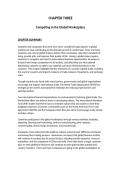
CHAPTER THREE
Competing in the Global Marketplace
CHAPTER SUMMARY
Countries and companies that were once never considered major players in global
markets are now contributing to the dramatic growth in world trade. More and more
countries now rely on global trade to bolster their economies, raise their standards of
living, provide jobs, and improve their quality of life. Having a global vision requires
countries to recognize and react to international business opportunities, be aware of
threats from foreign competitors in all markets, and effectively use international
distribution networks to obtain raw materials and move finished products to the
customer. This chapter highlights the key measures of a country’s global trade; including
the country’s exports and imports, balance of trade, balance of payments, and exchange
rates.
Though countries are faced with many barriers, governments and global organizations
encourage and support international trade. The World Trade Organization (WTO) has
emerged as the world’s most powerful institution for reducing trade barriers and
opening markets.
Two international financial organizations are instrumental in fostering global trade. The
World Bank offers low-interest loans to developing nations. The International Monetary
Fund (IMF) makes short-term loans to member nations that are unable to meet their
budgetary expenses. Economic communities such as the North American Free Trade
Agreement (NAFTA) and the European Union (EU) also strive to encourage trade among
member nations.
Countries participate in the global marketplace through various methods; including
exporting, licensing and franchising, contract manufacturing, joint ventures,
countertrading, direct foreign investment, and countertrade.
Companies must understand the political, cultural, and economic differences between
and among their trading partners. Businesses can expect that global business activity
will continue to escalate due to several factors; including market expansion, resource
acquisition, and the emergence of China and India. Firms that desire a larger customer
base or need additional resources will continue to seek opportunities outside their
country’s borders. More and more companies are going to the global marketplace to
,acquire the resources they need to operate efficiently. China and India—two of the
world’s economic powerhouses—are impacting businesses around the globe.
LEARNING OUTCOMES
1. Why is global trade important to the United States, and how is it measured?
International trade improves relations with friends and allies, eases tensions
among nations, helps bolster economies, raises people’s standard of living, and
improves the quality of life. The value of international trade is over $16 trillion a
year and growing. U.S. companies play a major role in this growth in world trade,
with 113 of the Fortune 500 companies making over 50 percent of their profits
outside the United States.
Trade-dependent jobs have grown at a rate three times the growth of U.S.-
dependent jobs. Every U.S. state has realized a growth of jobs attributable to
trade. Trade influences both service and manufacturing jobs.
One of the concepts used to measure global trade include the balance of trade
(the difference in value between a country’s exports and its imports over some
period). Although U.S. exports have been increasing, we still import more than
we export.
A second concept to measure global trade is the balance of payments (the
difference between a country’s total payments to other countries and its total
receipts from other countries) measure global trade. Since 1970, both the
balance of payments and the balance of trade have been unfavorable.
A third important concept in measuring global trade is the exchange rate, which
is the price of one country’s currency in terms of another country’s currency. If a
country’s currency appreciates, less of that country’s currency is needed to buy
another country’s currency. If a country’s currency depreciates, more of that
currency will be needed to buy another country’s currency. Currency markets
operate under a system called floating exchange rates. Prices of currencies
“float” up and down based upon the demand for and supply of each currency.
Global currency traders create the supply of and demand for a currency based
on that currency’s investment, trade potential, and economic strength. If a
country decides that its currency is not properly valued in international currency
markets, the government may step in and adjust the currency’s value. In a
devaluation, a nation lowers the value of its currency relative to other
currencies. This makes that country’s exports cheaper and should, in turn, help
the balance of payments.
September 4, 2018 2
, 2. Why do nations trade?
Countries trade because of the advantages they experience. Free trade allows
trade among nations without government restrictions. The principle of
comparative advantage states that each country should specialize in the goods
and services it can produce most readily and cheaply and trade them for those
that other countries can produce most readily and cheaply. The result is more
goods and services at lower prices than if each country produced by itself
everything it needed.
3. What are the barriers to international trade?
The three major barriers to international trade are natural barriers, such as
distance and language; tariff barriers, or taxes on imported goods; and non-tariff
barriers. Non-tariff barriers to trade include import quotas, embargoes, buy-
national regulations, customs regulations, and exchange controls.
The main argument against tariffs is that they discourage free trade and keep the
principle of comparative advantage from working efficiently. The main argument
for using tariffs is that they protect domestic companies, industries, and workers.
4. How do governments and institutions foster world trade?
The World Trade Organization (WTO) created by the Uruguay Round has
emerged as the world’s most powerful institution for lowering trade barriers and
opening markets worldwide. The advantage of WTO membership is that member
countries lower trade barriers among themselves.
Two international financial organizations are instrumental in fostering global
trade. The World Bank makes loans to developing nations to help build
infrastructures. The International Monetary Fund makes loans to member
nations that cannot meet their budgetary expenses.
5. What are international economic communities?
International economic communities are a bilateral trade agreement between
two or more countries (member countries) to lower trade barriers. They often
establish common tariffs and other trade barriers toward non-member
countries. The best-known economic communities are the European Union,
North American Free Trade Agreement (NAFTA), and Central America Free Trade
Agreement (CAFTA). The largest new trade agreement is Mercosur; which
includes Peru, Brazil, Argentina, Uruguay, and Paraguay.
6. How do companies enter the global marketplace?
September 4, 2018 3
must be attributed to OpenStax, Rice University and any changes must be noted.
CHAPTER THREE
Competing in the Global Marketplace
CHAPTER SUMMARY
Countries and companies that were once never considered major players in global
markets are now contributing to the dramatic growth in world trade. More and more
countries now rely on global trade to bolster their economies, raise their standards of
living, provide jobs, and improve their quality of life. Having a global vision requires
countries to recognize and react to international business opportunities, be aware of
threats from foreign competitors in all markets, and effectively use international
distribution networks to obtain raw materials and move finished products to the
customer. This chapter highlights the key measures of a country’s global trade; including
the country’s exports and imports, balance of trade, balance of payments, and exchange
rates.
Though countries are faced with many barriers, governments and global organizations
encourage and support international trade. The World Trade Organization (WTO) has
emerged as the world’s most powerful institution for reducing trade barriers and
opening markets.
Two international financial organizations are instrumental in fostering global trade. The
World Bank offers low-interest loans to developing nations. The International Monetary
Fund (IMF) makes short-term loans to member nations that are unable to meet their
budgetary expenses. Economic communities such as the North American Free Trade
Agreement (NAFTA) and the European Union (EU) also strive to encourage trade among
member nations.
Countries participate in the global marketplace through various methods; including
exporting, licensing and franchising, contract manufacturing, joint ventures,
countertrading, direct foreign investment, and countertrade.
Companies must understand the political, cultural, and economic differences between
and among their trading partners. Businesses can expect that global business activity
will continue to escalate due to several factors; including market expansion, resource
acquisition, and the emergence of China and India. Firms that desire a larger customer
base or need additional resources will continue to seek opportunities outside their
country’s borders. More and more companies are going to the global marketplace to
,acquire the resources they need to operate efficiently. China and India—two of the
world’s economic powerhouses—are impacting businesses around the globe.
LEARNING OUTCOMES
1. Why is global trade important to the United States, and how is it measured?
International trade improves relations with friends and allies, eases tensions
among nations, helps bolster economies, raises people’s standard of living, and
improves the quality of life. The value of international trade is over $16 trillion a
year and growing. U.S. companies play a major role in this growth in world trade,
with 113 of the Fortune 500 companies making over 50 percent of their profits
outside the United States.
Trade-dependent jobs have grown at a rate three times the growth of U.S.-
dependent jobs. Every U.S. state has realized a growth of jobs attributable to
trade. Trade influences both service and manufacturing jobs.
One of the concepts used to measure global trade include the balance of trade
(the difference in value between a country’s exports and its imports over some
period). Although U.S. exports have been increasing, we still import more than
we export.
A second concept to measure global trade is the balance of payments (the
difference between a country’s total payments to other countries and its total
receipts from other countries) measure global trade. Since 1970, both the
balance of payments and the balance of trade have been unfavorable.
A third important concept in measuring global trade is the exchange rate, which
is the price of one country’s currency in terms of another country’s currency. If a
country’s currency appreciates, less of that country’s currency is needed to buy
another country’s currency. If a country’s currency depreciates, more of that
currency will be needed to buy another country’s currency. Currency markets
operate under a system called floating exchange rates. Prices of currencies
“float” up and down based upon the demand for and supply of each currency.
Global currency traders create the supply of and demand for a currency based
on that currency’s investment, trade potential, and economic strength. If a
country decides that its currency is not properly valued in international currency
markets, the government may step in and adjust the currency’s value. In a
devaluation, a nation lowers the value of its currency relative to other
currencies. This makes that country’s exports cheaper and should, in turn, help
the balance of payments.
September 4, 2018 2
, 2. Why do nations trade?
Countries trade because of the advantages they experience. Free trade allows
trade among nations without government restrictions. The principle of
comparative advantage states that each country should specialize in the goods
and services it can produce most readily and cheaply and trade them for those
that other countries can produce most readily and cheaply. The result is more
goods and services at lower prices than if each country produced by itself
everything it needed.
3. What are the barriers to international trade?
The three major barriers to international trade are natural barriers, such as
distance and language; tariff barriers, or taxes on imported goods; and non-tariff
barriers. Non-tariff barriers to trade include import quotas, embargoes, buy-
national regulations, customs regulations, and exchange controls.
The main argument against tariffs is that they discourage free trade and keep the
principle of comparative advantage from working efficiently. The main argument
for using tariffs is that they protect domestic companies, industries, and workers.
4. How do governments and institutions foster world trade?
The World Trade Organization (WTO) created by the Uruguay Round has
emerged as the world’s most powerful institution for lowering trade barriers and
opening markets worldwide. The advantage of WTO membership is that member
countries lower trade barriers among themselves.
Two international financial organizations are instrumental in fostering global
trade. The World Bank makes loans to developing nations to help build
infrastructures. The International Monetary Fund makes loans to member
nations that cannot meet their budgetary expenses.
5. What are international economic communities?
International economic communities are a bilateral trade agreement between
two or more countries (member countries) to lower trade barriers. They often
establish common tariffs and other trade barriers toward non-member
countries. The best-known economic communities are the European Union,
North American Free Trade Agreement (NAFTA), and Central America Free Trade
Agreement (CAFTA). The largest new trade agreement is Mercosur; which
includes Peru, Brazil, Argentina, Uruguay, and Paraguay.
6. How do companies enter the global marketplace?
September 4, 2018 3