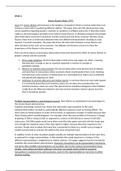
1 Social Influence
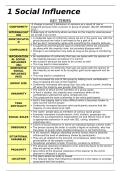
KEY TERMS
‘A change in person’s behaviour or opinions as a result of real or
CONFORMITY imagined pressure from a person or group of people’ (ELLIOT ARONSON
2011)
INTERNALISAT A deep type of conformity where we take on the majority view because
ION we accept it as correct
A moderate type of conformity where we act in the same way with the
IDENTIFICATIO
group because we value it and want to be a part of it
N But we don’t necessarily agree with everything the majority believes
A superficial and temporary type of conformity where we outwardly
go along with the majority view, but privately disagree with it
COMPLIANCE
Change in our behaviour only lasts as long as the group is monitoring
us
INFORMATION An explanation of conformity that says we agree with the opinion of
AL SOCIAL the majority because we believe it is correct
INFLUENCE We accept it because we want to be correct as well
(ISI) This may lead to internalisation
NORMATIVE An explanation of conformity that says we agree with the opinion of
SOCIAL the majority as we want to be accepted, gain social approval and be
INFLUENCE liked
(NSI) This may lead to compliance
Asch increased the size of the group by adding more confederates,
thus increasing the size of the majority
GROUP SIZE
Conformity increased with group size, but only up to a point, levelling
off when the majority was greater than three
The extent to which all the members of a group agree
In Asch’s studies, the majority was unanimous when all the
UNANIMITY
confederates selected the same comparison line
This produced the most conformity in the naïve participants
Asch’s line-judging task is more difficult when it becomes harder to
TASK work out the correct answer
DIFFICULTY Conformity increases because naïve participants assume that the
majority is more likely to be right
The ‘parts’ people play as members of various social groups
Everyday examples include parent, child, student, passenger etc.
SOCIAL ROLES These are accompanied by expectations we and others have of what
is appropriate behaviour in each role (EG. caring, obedient,
industrious etc.)
A form of social influence in which an individual follows a direct order
OBEDIENCE The person issuing the order is usually a figure of authority, who has
the power to punish when obedient behaviour is not forthcoming
In his research, Milgram identified several factors that he believed
influenced the level of obedience shown by participants
SITUATIONAL
They are all related to the external circumstances rather than to the
VARIABLES personalities of the people involved
Situational variables include: Proximity, Location & Uniform
The physical closeness of distance of an authority figure to the person
they are giving an order to
PROXIMITY
Also refers to the physical closeness of the teacher to the victim
(learner) in Milgram’s studies
The place where an order is issued
LOCATION The relevant factor that influences obedience is the status or prestige
associated with the location
, People in positions of authority often have a specific outfit that is
UNIFORM symbolic of their authority (EG. Police officers and judges)
This indicates to the rest of us who is entitled to expect our obedience
A mental state where we feel no personal responsibility for our
behaviour because we believe ourselves to be acting for an authority
AGENTIC
figure (IE as their agent)
STATE This frees us from the demands of our consciences and allows us to
obey even a destructive authority figure
An explanation for obedience which suggests that we are more likely
LEGITIMACY
to obey people who we perceive to have authority over us
OF This authority is justified (legitimate) by the individual’s position of
AUTHORITY power within a social hierarchy
DISPOSITIONA Any explanation of behaviour that highlights the importance of the
L individual’s personality (IE. Their disposition)
EXPLANATION Such explanations are often contrasted with situational explanations
A type of personality that ADORNO argued was especially susceptible
AUTHORITARI
to obeying people in authority
AN Such individuals are also thought to be submissive to those of higher
PERSONALITY status and dismissive of inferiors
Refers to the ability of people to withstand the social pressure to
RESISTANCE
conform to the majority or to obey authority
TO SOCIAL This ability to withstand social pressure is influenced by both
INFLUENCE situational and dispositional factors
The presence of people who resist pressures to conform or obey can
SOCIAL help others to do the same
SUPPORT These people act as models to show others that resistance to social
influence is possible
Refers to the sense we each have about directs events in our lives
LOCUS OF Internals believe they are mostly responsible for what happens to
CONTROL them (internal locus of control)
(LOC) Externals believe it is mainly a matter of luck or other outside forces
(external locus of control)
A form of social influence in which a minority of people (sometimes
just one person) persuade others to adopt their beliefs, attitudes or
MINORITY
behaviours
INFLUENCE Leads to internalisation or conversion, in which private attitudes are
changed as well as public behaviours
Minority influence is most effective if the minority keeps the same
beliefs, both over time and between all the individuals that form the
CONSISTENCY minority
It’s effective because it draws attention to the minority view
Minority influence is more powerful if the minority demonstrates
dedication to their position (EG. making personal sacrifices)
COMMITMENT This is effective because it shows the minority is not acting out of self-
interest
Relentless consistency could be counter-productive if it is seen by the
majority as unbending and unreasonable
FLEXIBILITY Therefore, minority influence is more effective if the minority show
flexibility by accepting the possibility of compromise
The process by which individuals and groups change each other’s
SOCIAL
attitudes and behaviours
INFLUENCE Includes conformity, obedience and minority influence
This occurs when whole societies, rather than just individuals, adopt
SOCIAL new attitudes, beliefs and ways of doing things
CHANGE Examples include accepting that the Earth orbits the Sun, women’s
suffrage, gay rights and environmental issues
KEY PSYCHOLOGISTS & DATES
, ELLIOT ARONSON (2011) HERBERT KELMAN (1958) DEUTSCH & GERARD
(1955)
LUCAS et al. (2006) ASCH (1951) MCGHEE & TEEVAN
(1967)
PERRIN & SPENCER (1980) SHERIF (1935) LUCAS ET Al.
ZIMBARDO MILGRAM (1963) BANUAZIZI & MOHAVEDI
(1975)
FROMM (1973) SMITH & BOND (1998)
Conformity: Types & Explanations
KEY TERMS
‘A change in person’s behaviour or opinions as a result of real or
CONFORMITY imagined pressure from a person or group of people’ (ELLIOT ARONSON
2011)
INTERNALISAT A deep type of conformity where we take on the majority view because
ION we accept it as correct
A moderate type of conformity where we act in the same way with the
IDENTIFICATIO
group because we value it and want to be a part of it
N But we don’t necessarily agree with everything the majority believes
A superficial and temporary type of conformity where we outwardly
go along with the majority view, but privately disagree with it
COMPLIANCE
Change in our behaviour only lasts as long as the group is monitoring
us
INFORMATION An explanation of conformity that says we agree with the opinion of
AL SOCIAL the majority because we believe it is correct
INFLUENCE We accept it because we want to be correct as well
(ISI) This may lead to internalisation
NORMATIVE An explanation of conformity that says we agree with the opinion of
SOCIAL the majority as we want to be accepted, gain social approval and be
INFLUENCE liked
(NSI) This may lead to compliance
Asch increased the size of the group by adding more confederates,
thus increasing the size of the majority
GROUP SIZE
Conformity increased with group size, but only up to a point, levelling
off when the majority was greater than three
The extent to which all the members of a group agree
In Asch’s studies, the majority was unanimous when all the
UNANIMITY
confederates selected the same comparison line
This produced the most conformity in the naïve participants
Asch’s line-judging task is more difficult when it becomes harder to
TASK work out the correct answer
DIFFICULTY Conformity increases because naïve participants assume that the
majority is more likely to be right
The ‘parts’ people play as members of various social groups
Everyday examples include parent, child, student, passenger etc.
SOCIAL ROLES These are accompanied by expectations we and others have of what
is appropriate behaviour in each role (EG. caring, obedient,
industrious etc.)
A form of social influence in which an individual follows a direct order
OBEDIENCE The person issuing the order is usually a figure of authority, who has
the power to punish when obedient behaviour is not forthcoming
In his research, Milgram identified several factors that he believed
influenced the level of obedience shown by participants
SITUATIONAL
They are all related to the external circumstances rather than to the
VARIABLES personalities of the people involved
Situational variables include: Proximity, Location & Uniform
The physical closeness of distance of an authority figure to the person
they are giving an order to
PROXIMITY
Also refers to the physical closeness of the teacher to the victim
(learner) in Milgram’s studies
The place where an order is issued
LOCATION The relevant factor that influences obedience is the status or prestige
associated with the location
, People in positions of authority often have a specific outfit that is
UNIFORM symbolic of their authority (EG. Police officers and judges)
This indicates to the rest of us who is entitled to expect our obedience
A mental state where we feel no personal responsibility for our
behaviour because we believe ourselves to be acting for an authority
AGENTIC
figure (IE as their agent)
STATE This frees us from the demands of our consciences and allows us to
obey even a destructive authority figure
An explanation for obedience which suggests that we are more likely
LEGITIMACY
to obey people who we perceive to have authority over us
OF This authority is justified (legitimate) by the individual’s position of
AUTHORITY power within a social hierarchy
DISPOSITIONA Any explanation of behaviour that highlights the importance of the
L individual’s personality (IE. Their disposition)
EXPLANATION Such explanations are often contrasted with situational explanations
A type of personality that ADORNO argued was especially susceptible
AUTHORITARI
to obeying people in authority
AN Such individuals are also thought to be submissive to those of higher
PERSONALITY status and dismissive of inferiors
Refers to the ability of people to withstand the social pressure to
RESISTANCE
conform to the majority or to obey authority
TO SOCIAL This ability to withstand social pressure is influenced by both
INFLUENCE situational and dispositional factors
The presence of people who resist pressures to conform or obey can
SOCIAL help others to do the same
SUPPORT These people act as models to show others that resistance to social
influence is possible
Refers to the sense we each have about directs events in our lives
LOCUS OF Internals believe they are mostly responsible for what happens to
CONTROL them (internal locus of control)
(LOC) Externals believe it is mainly a matter of luck or other outside forces
(external locus of control)
A form of social influence in which a minority of people (sometimes
just one person) persuade others to adopt their beliefs, attitudes or
MINORITY
behaviours
INFLUENCE Leads to internalisation or conversion, in which private attitudes are
changed as well as public behaviours
Minority influence is most effective if the minority keeps the same
beliefs, both over time and between all the individuals that form the
CONSISTENCY minority
It’s effective because it draws attention to the minority view
Minority influence is more powerful if the minority demonstrates
dedication to their position (EG. making personal sacrifices)
COMMITMENT This is effective because it shows the minority is not acting out of self-
interest
Relentless consistency could be counter-productive if it is seen by the
majority as unbending and unreasonable
FLEXIBILITY Therefore, minority influence is more effective if the minority show
flexibility by accepting the possibility of compromise
The process by which individuals and groups change each other’s
SOCIAL
attitudes and behaviours
INFLUENCE Includes conformity, obedience and minority influence
This occurs when whole societies, rather than just individuals, adopt
SOCIAL new attitudes, beliefs and ways of doing things
CHANGE Examples include accepting that the Earth orbits the Sun, women’s
suffrage, gay rights and environmental issues
KEY PSYCHOLOGISTS & DATES
, ELLIOT ARONSON (2011) HERBERT KELMAN (1958) DEUTSCH & GERARD
(1955)
LUCAS et al. (2006) ASCH (1951) MCGHEE & TEEVAN
(1967)
PERRIN & SPENCER (1980) SHERIF (1935) LUCAS ET Al.
ZIMBARDO MILGRAM (1963) BANUAZIZI & MOHAVEDI
(1975)
FROMM (1973) SMITH & BOND (1998)
Conformity: Types & Explanations