
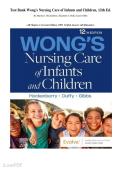
Test Bank Wong's Nursing Care of Infants and Children, 12th Ed.
By Marilyn J. Hockenberry, Elizabeth A. Duffy, Karen Gibbs
(All Chapters 1-34, Latest Edition, 100% Verified Answers with Rationales)
a
,Table of Contents
Section I Children, Their Families, and the Nurse
1. Perspectives of Pediatric Nursing, 1
2. Family, Social, Cultural, and Religious Influences on Child Health Promotion, 14
3. Hereditary Influences on Health of the Child and Family, 36
Section II Childhood and Family Assessment
4. Communication and Physical Assessment of the Child and Family, 74
5. Pain Assessment in Children, 131
6. Childhood Communicable and Infectious Diseases, 167
Section III Family-Centered Care of the Newborn
7. Health Promotion of the Newborn and Family, 196
8. Health Problems of Newborns, 239
9. The High-Risk Newborn and Family, 270
Section IV Family-Centered Care of the Infant
10. Health Promotion of the Infant and Family, 338
11. Health Problems of the Infant, 375
Section V Family-Centered Care of the Toddler and Preschooler
12. Health Promotion of the Toddler and Family, 396
13. Health Promotion of the Preschooler and Family, 425
14. Health Problems of Early Childhood, 442
Section VI Family-Centered Care of the School-Age Child
15. Health Promotion of the School-Age Child and Family, 463
16. Health Problems of the School-Age Child, 483
Section VII Family-Centered Care of the Adolescent
17. Health Promotion of the Adolescent and Family, 510
18. Health Problems of the Adolescent, 537
Section VIII Family-Centered Care of the Child with Special Needs
19. Impact of Complex Chronic Illness, Disability, or End-of-Life Care on the Child and Family, 574
20. Impact of Cognitive or Sensory Impairment on the Child and Family, 621
Section IX The Child Who Is Hospitalized
21. Family-Centered Care of the Child During Illness and Hospitalization, 648
22. Pediatric Nursing Interventions and Skills, 668
,Section X Childhood Nutrition and Elimination Problems
23. The Child with Fluid and Electrolyte Imbalance, 739
24. The Child with Genitourinary Dysfunction, 762
25. The Child with Gastrointestinal Dysfunction, 812
Section XI Childhood Oxygenation Problems
26. The Child with Respiratory Dysfunction, 871
Section XII Childhood Blood Production and Circulation Problems
27. The Child with Cardiovascular Dysfunction, 949
28. The Child with Hematologic or Immunologic Dysfunction, 1013
Section XIII Childhood Regulatory Problems
29. The Child with Cancer, 1073
30. The Child with Cerebral Dysfunction, 1111
31. The Child with Endocrine Dysfunction, 1172
Section XIV Childhood Physical Mobility Problems
32. The Child with Integumentary Dysfunction, 1210
33. The Child with Musculoskeletal or Articular Dysfunction, 1263
34. The Child with Neuromuscular or Muscular Dysfunction, 1324
, Chapter 1. Perspectives of Pediatric Nursing
MULTIPLE CHOICE
1. The clinic nurse is reviewing statistics on infant mortality for the United States versus other countries.
Compared with other countries that have a population of at least 25 million, the nurse makes which
determination?
a. The United States is ranked last among 27 countries.
b. The United States is ranked similar to 20 other developed countries.
c. The United States is ranked in the middle of 20 other developed countries.
d. The United States is ranked highest among 27 other industrialized countries.
Answer: A
Although the death rate has decreased, the United States still ranks last in infant mortality among nations with a
population of at least 25 million. The United States has the highest infant death rate of developed nations.
DIF: Cognitive Level: Remembering REF: MCS: 6
TOP: Nursing Process: Assessment: Cl Needs: Health Promotion and Maintenance
2. Which is the leading cause of death in infants younger than 1 year in the United States?
a. Congenital anomalies
b. Sudden infant death syndrome
c. Disorders related to short gestation and low birth weight
d. Maternal complications specific to the perinatal period
Answer: A
Congenital anomalies account for 20.1% of deaths in infants younger than 1 year compared with sudden infant
death syndrome, which accounts for 8.2%; disorders related to short gestation and unspecified low birth weight,
which account for 16.5%; and maternal complications such as infections specific to the perinatal period, which
account for 6.1% of deaths in infants younger than 1 year of age.
By Marilyn J. Hockenberry, Elizabeth A. Duffy, Karen Gibbs
(All Chapters 1-34, Latest Edition, 100% Verified Answers with Rationales)
a
,Table of Contents
Section I Children, Their Families, and the Nurse
1. Perspectives of Pediatric Nursing, 1
2. Family, Social, Cultural, and Religious Influences on Child Health Promotion, 14
3. Hereditary Influences on Health of the Child and Family, 36
Section II Childhood and Family Assessment
4. Communication and Physical Assessment of the Child and Family, 74
5. Pain Assessment in Children, 131
6. Childhood Communicable and Infectious Diseases, 167
Section III Family-Centered Care of the Newborn
7. Health Promotion of the Newborn and Family, 196
8. Health Problems of Newborns, 239
9. The High-Risk Newborn and Family, 270
Section IV Family-Centered Care of the Infant
10. Health Promotion of the Infant and Family, 338
11. Health Problems of the Infant, 375
Section V Family-Centered Care of the Toddler and Preschooler
12. Health Promotion of the Toddler and Family, 396
13. Health Promotion of the Preschooler and Family, 425
14. Health Problems of Early Childhood, 442
Section VI Family-Centered Care of the School-Age Child
15. Health Promotion of the School-Age Child and Family, 463
16. Health Problems of the School-Age Child, 483
Section VII Family-Centered Care of the Adolescent
17. Health Promotion of the Adolescent and Family, 510
18. Health Problems of the Adolescent, 537
Section VIII Family-Centered Care of the Child with Special Needs
19. Impact of Complex Chronic Illness, Disability, or End-of-Life Care on the Child and Family, 574
20. Impact of Cognitive or Sensory Impairment on the Child and Family, 621
Section IX The Child Who Is Hospitalized
21. Family-Centered Care of the Child During Illness and Hospitalization, 648
22. Pediatric Nursing Interventions and Skills, 668
,Section X Childhood Nutrition and Elimination Problems
23. The Child with Fluid and Electrolyte Imbalance, 739
24. The Child with Genitourinary Dysfunction, 762
25. The Child with Gastrointestinal Dysfunction, 812
Section XI Childhood Oxygenation Problems
26. The Child with Respiratory Dysfunction, 871
Section XII Childhood Blood Production and Circulation Problems
27. The Child with Cardiovascular Dysfunction, 949
28. The Child with Hematologic or Immunologic Dysfunction, 1013
Section XIII Childhood Regulatory Problems
29. The Child with Cancer, 1073
30. The Child with Cerebral Dysfunction, 1111
31. The Child with Endocrine Dysfunction, 1172
Section XIV Childhood Physical Mobility Problems
32. The Child with Integumentary Dysfunction, 1210
33. The Child with Musculoskeletal or Articular Dysfunction, 1263
34. The Child with Neuromuscular or Muscular Dysfunction, 1324
, Chapter 1. Perspectives of Pediatric Nursing
MULTIPLE CHOICE
1. The clinic nurse is reviewing statistics on infant mortality for the United States versus other countries.
Compared with other countries that have a population of at least 25 million, the nurse makes which
determination?
a. The United States is ranked last among 27 countries.
b. The United States is ranked similar to 20 other developed countries.
c. The United States is ranked in the middle of 20 other developed countries.
d. The United States is ranked highest among 27 other industrialized countries.
Answer: A
Although the death rate has decreased, the United States still ranks last in infant mortality among nations with a
population of at least 25 million. The United States has the highest infant death rate of developed nations.
DIF: Cognitive Level: Remembering REF: MCS: 6
TOP: Nursing Process: Assessment: Cl Needs: Health Promotion and Maintenance
2. Which is the leading cause of death in infants younger than 1 year in the United States?
a. Congenital anomalies
b. Sudden infant death syndrome
c. Disorders related to short gestation and low birth weight
d. Maternal complications specific to the perinatal period
Answer: A
Congenital anomalies account for 20.1% of deaths in infants younger than 1 year compared with sudden infant
death syndrome, which accounts for 8.2%; disorders related to short gestation and unspecified low birth weight,
which account for 16.5%; and maternal complications such as infections specific to the perinatal period, which
account for 6.1% of deaths in infants younger than 1 year of age.


