Gene Technology lecture notes
College 1
Starting a cell line:
● Isolate individual cells by disrupting the extracellular matrix and cell-junctions:
○ Proteolytic enzymes trypsin & collagenase to digest matrix.
○ EDTA solution to chelate Ca2+ on which cell-cell adhesion depends.
● Mammalian cells need a solid surface that is coated with material they can adhere to
○ Use this property to obtain specific cell type based on surface properties and
their binding to antibodies
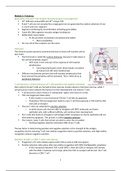
Fluorescence-activated cell sorter (FACS):
● Antibody coupled to a fluorescent dye to label specific
cells
● Droplet containing single cells are given a negative or
positive charge, depending on whether the cell is
fluorescent
● And deflected by an electric field into collection tubes
according to their charge
Cell lines:
● Generated from cancer cells
● Repeated culturing → immortal
● Cells in culture remain that differentiation status
● Growth factors are needed to stimulate replication of
specific cell types
Transformation methods for animal cells:
● CA2+ phospate co-percipitation
○ Adenovirus striped from protein
○ Add CaCl2 to precipitate
○ Add DNA to cells
○ Isolate infectious virus cells
● Electrophoration
○ Add gene of interest and selectable marker to cell
○ Apply voltage to open up membrane
○ DNA enters nucleus
● Lipofection
○ Mix lipid solution with DNA
○ Liposome adheres to cell
○ DNA enters cells
● Viral vectors
○ Ideal because made for inserting genetic material
○ Membrane fusion
○ Pore formation
○ Membrane disruption
○ Lytic and non lytic
○ Integrate in host genome or as episome
1
,Retrovirus:
Only things you need from a vector are the long terminal repeats (LTR)
Functions as a integration into the genome and as a promoter
Can’t control where the gene gets inserted into the genome
Can’t make a virus anymore because lack of gag, pol and env genes
Vector:
● Long terminal repeats
● Selectable marker for e.coli
● Origin of replication
● Multiple cloning site
● Eukaryotic promoter
● Selectable marker for eukaryotic cells
● Encapsidated sequence
MLV-based viral vector integrated in the promoter of the growth promoting LMO2 gene.
Affecting white blood cells by overexpressing this gene.
→ self-inactivating vector by mutating LTR
Adeno-associated virus (AAV):
● ssDNA
● Low cloning capacity
● Replication defective
○ Needs adenovirus/herpes
● Apparent lack of pathogenicity
● Can infect dividing and non-dividing cells
● Does not generally integrate in the genome
○ Wild type can at specific site
○ virus delivers the gene in nucleus, where it forms small DNA circles called
episomes
● 3 ORF (rep, cap and AAP) flanked by inverted terminal repeats (ITRs)
2
, ○ Rep: encodes four non-structural proteins essential for replication,
transcriptional regulation, and virus particle assembly
○ Cap: encodes 3 structural proteins (VP1, VP2 and VP3) that form the 60-mer
viral capsid with the aid of the assembly-activating protein (AAP)
○ The gene of interest is inserted between the ITRs to replace both rep and cap
○ Rep and cap are provided in trans on ‘packaging construct’ along with
adenoviral helper genes that are needed for replication
Gene therapy:
● Gene addition
● Gene correction/alteration
● Gene knockdown
● To treat or prevent diseases
Micro injection → all cells have the DNA
○ Highly efficient
○ Transgenic progeny is heterozygous (not chimaeric) for transgene
○ No selection marker needed
○ Random integration of multiple copies
○ Low efficiencies in other species than rodents
Successful gene therapy requires:
● Uptake, transport and uncoating
● Vector genome persistence
● Transcriptional activity and transgene persistence
● Avoid/overcome immune responses
Adeno-associated viral vectors have 11 serotypes which generally result in an large portion
of neutralizing antibodies → change epitose of virus by capsid shuffling
Directed evolution by capsid shuffling:
● wild type AAVs
● Shuffling of AAV cap sequences
● Generating of capsid library
● Infection of cells and selection
● Production of vector and testing
Non-viral vectors:
● Gene transfer by lipofection
● Prevent degradation by serum endonucleases
● Evade immune detection (achieved by chemical modifications of nucleic acids and
encapsulation of vectors)
● Prevent nonspecific interactions/targeting (using polyethylene glycol (PEG) or
through specific characteristics of particles)
● Extravasate from the bloodstream to reach target tissues
● Mediate cell entry and endosomal escape (by specific ligands and key components
of carriers)
3
College 1
Starting a cell line:
● Isolate individual cells by disrupting the extracellular matrix and cell-junctions:
○ Proteolytic enzymes trypsin & collagenase to digest matrix.
○ EDTA solution to chelate Ca2+ on which cell-cell adhesion depends.
● Mammalian cells need a solid surface that is coated with material they can adhere to
○ Use this property to obtain specific cell type based on surface properties and
their binding to antibodies
Fluorescence-activated cell sorter (FACS):
● Antibody coupled to a fluorescent dye to label specific
cells
● Droplet containing single cells are given a negative or
positive charge, depending on whether the cell is
fluorescent
● And deflected by an electric field into collection tubes
according to their charge
Cell lines:
● Generated from cancer cells
● Repeated culturing → immortal
● Cells in culture remain that differentiation status
● Growth factors are needed to stimulate replication of
specific cell types
Transformation methods for animal cells:
● CA2+ phospate co-percipitation
○ Adenovirus striped from protein
○ Add CaCl2 to precipitate
○ Add DNA to cells
○ Isolate infectious virus cells
● Electrophoration
○ Add gene of interest and selectable marker to cell
○ Apply voltage to open up membrane
○ DNA enters nucleus
● Lipofection
○ Mix lipid solution with DNA
○ Liposome adheres to cell
○ DNA enters cells
● Viral vectors
○ Ideal because made for inserting genetic material
○ Membrane fusion
○ Pore formation
○ Membrane disruption
○ Lytic and non lytic
○ Integrate in host genome or as episome
1
,Retrovirus:
Only things you need from a vector are the long terminal repeats (LTR)
Functions as a integration into the genome and as a promoter
Can’t control where the gene gets inserted into the genome
Can’t make a virus anymore because lack of gag, pol and env genes
Vector:
● Long terminal repeats
● Selectable marker for e.coli
● Origin of replication
● Multiple cloning site
● Eukaryotic promoter
● Selectable marker for eukaryotic cells
● Encapsidated sequence
MLV-based viral vector integrated in the promoter of the growth promoting LMO2 gene.
Affecting white blood cells by overexpressing this gene.
→ self-inactivating vector by mutating LTR
Adeno-associated virus (AAV):
● ssDNA
● Low cloning capacity
● Replication defective
○ Needs adenovirus/herpes
● Apparent lack of pathogenicity
● Can infect dividing and non-dividing cells
● Does not generally integrate in the genome
○ Wild type can at specific site
○ virus delivers the gene in nucleus, where it forms small DNA circles called
episomes
● 3 ORF (rep, cap and AAP) flanked by inverted terminal repeats (ITRs)
2
, ○ Rep: encodes four non-structural proteins essential for replication,
transcriptional regulation, and virus particle assembly
○ Cap: encodes 3 structural proteins (VP1, VP2 and VP3) that form the 60-mer
viral capsid with the aid of the assembly-activating protein (AAP)
○ The gene of interest is inserted between the ITRs to replace both rep and cap
○ Rep and cap are provided in trans on ‘packaging construct’ along with
adenoviral helper genes that are needed for replication
Gene therapy:
● Gene addition
● Gene correction/alteration
● Gene knockdown
● To treat or prevent diseases
Micro injection → all cells have the DNA
○ Highly efficient
○ Transgenic progeny is heterozygous (not chimaeric) for transgene
○ No selection marker needed
○ Random integration of multiple copies
○ Low efficiencies in other species than rodents
Successful gene therapy requires:
● Uptake, transport and uncoating
● Vector genome persistence
● Transcriptional activity and transgene persistence
● Avoid/overcome immune responses
Adeno-associated viral vectors have 11 serotypes which generally result in an large portion
of neutralizing antibodies → change epitose of virus by capsid shuffling
Directed evolution by capsid shuffling:
● wild type AAVs
● Shuffling of AAV cap sequences
● Generating of capsid library
● Infection of cells and selection
● Production of vector and testing
Non-viral vectors:
● Gene transfer by lipofection
● Prevent degradation by serum endonucleases
● Evade immune detection (achieved by chemical modifications of nucleic acids and
encapsulation of vectors)
● Prevent nonspecific interactions/targeting (using polyethylene glycol (PEG) or
through specific characteristics of particles)
● Extravasate from the bloodstream to reach target tissues
● Mediate cell entry and endosomal escape (by specific ligands and key components
of carriers)
3