ARCHITECTURE THEORY
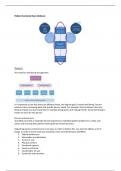
ACCELERATION
1972 CLUB OF ROME
ECOLOGY, ACCELERATION, TECHNOLOGY, CRISIS
COMMONS
1961 JANE JACOBS
NON-LIEUX, COMMONS, BOTTEM-UP, CAPITALISM, URBAN DIVERSITY
PARTICIPATION
1969 GIANCARLO DE CARLO
PARTICIPATION, DIALOGUE, CO-CONCEPTION, THE USER
CRITICAL REGIONALISM
1983 KENNETH FRAMPTON
REGIONALISM, AUTHENTICITY, PLACE, TOPOGRAPHY, TECTONICS, TACTILITY, BEING MODERN
WITHOUT RETURNING TO THE PAST, SITUATED, ARCHITECTURE
TRANSFORMATION
1989 HERMAN CZECH
TRANFORMATION, MEMORY, URBANITY, CONTINUITY, LAYERED, ARCHITECTURE, REPAIR,
CARE
1
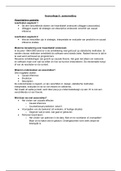
,LECTURE 1 — ACCELERATION
Key notions: ecology, acceleration, technology, crisis
1. ACCELERATION
Introduction
Acceleration is the key framework through which this lecture reads late-20th-century architectural theory. It
describes a historical condition in which the pace of change itself becomes the dominant force shaping society,
space, and architecture.
Definition (from the text)
In Thank You for Being Late, Thomas Friedman defines the contemporary era as an “age of acceleration”, caused by
the convergence of:
globalization
technological innovation
climate change
Acceleration is not only speed, but the loss of time for adaptation (Acceleration PDF, p. 6–8).
Context
Historically, acceleration intensifies after WWII:
industrialisation and mass production
fossil-fuel–driven construction
modernist faith in progress and growth
Architecture becomes part of an accelerated machinery of production, demolition, and rebuilding.
Problematization
Acceleration undermines:
durability
continuity
human and ecological rhythms
It leads directly to crisis, because systems can no longer absorb change.
Why featured in the course
Acceleration is the diagnostic condition that explains why architects are forced to rethink:
participation
reuse and transformation
ecological responsibility
2. ECOLOGY
2
,Introduction
Ecology enters architectural theory when the environment is no longer seen as an infinite backdrop, but as a finite,
interconnected system a ected by human action.
Definition (from the text)
In The Limits to Growth, ecology is defined as a system of interdependent variables—population, resources,
pollution, food, industry—that must remain in balance to avoid collapse (Meadows et al., 1972, p. 96–102).
“The earth is finite. Exponential growth cannot continue indefinitely.”
(Limits to Growth, p. 23)
Context
Ecological awareness emerges strongly in the late 1960s–1970s:
Rachel Carson (Silent Spring, 1962)
the oil crisis (1973)
the founding of the Club of Rome
This marks a break with modernist optimism.
Problematization
Ecology challenges architecture’s historical role as:
extractor of materials
producer of CO₂
instrument of growth
It introduces limits where modernity assumed expansion.
Why featured in the course
Ecology grounds the course’s shift from building more to building di erently, preparing later themes such as
commons, transformation, and resilience.
3. TECHNOLOGY
Introduction
Technology is a central but ambivalent concept in the age of acceleration: both cause of crisis and proposed
solution.
Definition (from the text)
In The Limits to Growth, technology is described as incapable of solving systemic problems on its own, because it
often accelerates consumption rather than reducing it (Meadows et al., 1972, p. 126–130).
“Technological solutions may postpone limits, but they do not remove them.”
(Limits to Growth, p. 127)
Context
Modern architecture relied heavily on:
industrial materials
standardisation
3
, technical optimization
Technology became synonymous with progress.
Problematization
The lecture questions techno-optimism:
e iciency ≠ sustainability
innovation ≠ responsibility
Architecture must move from technological expansion to technological restraint.
Why featured in the course
Technology is reintroduced later not as spectacle, but as:
reuse
low-tech intelligence
maintenance and care
4. CRISIS
Introduction
Crisis is not an exception, but the structural outcome of acceleration.
Definition (from the text)
In The Limits to Growth, crisis is defined as the moment when growth overshoots planetary limits, causing sudden
collapse in population and production (Meadows et al., 1972, p. 133–140).
Context
By the 1970s, crises converge:
ecological (pollution, climate)
economic (oil crisis)
social (inequality, housing shortages)
Architecture can no longer operate as if neutral.
Problematization
Crisis exposes the failure of:
modernist universal solutions
growth-driven planning
demolition-based renewal
It demands new architectural ethics.
Why featured in the course
Crisis legitimizes the course’s return to:
participation
4
ACCELERATION
1972 CLUB OF ROME
ECOLOGY, ACCELERATION, TECHNOLOGY, CRISIS
COMMONS
1961 JANE JACOBS
NON-LIEUX, COMMONS, BOTTEM-UP, CAPITALISM, URBAN DIVERSITY
PARTICIPATION
1969 GIANCARLO DE CARLO
PARTICIPATION, DIALOGUE, CO-CONCEPTION, THE USER
CRITICAL REGIONALISM
1983 KENNETH FRAMPTON
REGIONALISM, AUTHENTICITY, PLACE, TOPOGRAPHY, TECTONICS, TACTILITY, BEING MODERN
WITHOUT RETURNING TO THE PAST, SITUATED, ARCHITECTURE
TRANSFORMATION
1989 HERMAN CZECH
TRANFORMATION, MEMORY, URBANITY, CONTINUITY, LAYERED, ARCHITECTURE, REPAIR,
CARE
1
,LECTURE 1 — ACCELERATION
Key notions: ecology, acceleration, technology, crisis
1. ACCELERATION
Introduction
Acceleration is the key framework through which this lecture reads late-20th-century architectural theory. It
describes a historical condition in which the pace of change itself becomes the dominant force shaping society,
space, and architecture.
Definition (from the text)
In Thank You for Being Late, Thomas Friedman defines the contemporary era as an “age of acceleration”, caused by
the convergence of:
globalization
technological innovation
climate change
Acceleration is not only speed, but the loss of time for adaptation (Acceleration PDF, p. 6–8).
Context
Historically, acceleration intensifies after WWII:
industrialisation and mass production
fossil-fuel–driven construction
modernist faith in progress and growth
Architecture becomes part of an accelerated machinery of production, demolition, and rebuilding.
Problematization
Acceleration undermines:
durability
continuity
human and ecological rhythms
It leads directly to crisis, because systems can no longer absorb change.
Why featured in the course
Acceleration is the diagnostic condition that explains why architects are forced to rethink:
participation
reuse and transformation
ecological responsibility
2. ECOLOGY
2
,Introduction
Ecology enters architectural theory when the environment is no longer seen as an infinite backdrop, but as a finite,
interconnected system a ected by human action.
Definition (from the text)
In The Limits to Growth, ecology is defined as a system of interdependent variables—population, resources,
pollution, food, industry—that must remain in balance to avoid collapse (Meadows et al., 1972, p. 96–102).
“The earth is finite. Exponential growth cannot continue indefinitely.”
(Limits to Growth, p. 23)
Context
Ecological awareness emerges strongly in the late 1960s–1970s:
Rachel Carson (Silent Spring, 1962)
the oil crisis (1973)
the founding of the Club of Rome
This marks a break with modernist optimism.
Problematization
Ecology challenges architecture’s historical role as:
extractor of materials
producer of CO₂
instrument of growth
It introduces limits where modernity assumed expansion.
Why featured in the course
Ecology grounds the course’s shift from building more to building di erently, preparing later themes such as
commons, transformation, and resilience.
3. TECHNOLOGY
Introduction
Technology is a central but ambivalent concept in the age of acceleration: both cause of crisis and proposed
solution.
Definition (from the text)
In The Limits to Growth, technology is described as incapable of solving systemic problems on its own, because it
often accelerates consumption rather than reducing it (Meadows et al., 1972, p. 126–130).
“Technological solutions may postpone limits, but they do not remove them.”
(Limits to Growth, p. 127)
Context
Modern architecture relied heavily on:
industrial materials
standardisation
3
, technical optimization
Technology became synonymous with progress.
Problematization
The lecture questions techno-optimism:
e iciency ≠ sustainability
innovation ≠ responsibility
Architecture must move from technological expansion to technological restraint.
Why featured in the course
Technology is reintroduced later not as spectacle, but as:
reuse
low-tech intelligence
maintenance and care
4. CRISIS
Introduction
Crisis is not an exception, but the structural outcome of acceleration.
Definition (from the text)
In The Limits to Growth, crisis is defined as the moment when growth overshoots planetary limits, causing sudden
collapse in population and production (Meadows et al., 1972, p. 133–140).
Context
By the 1970s, crises converge:
ecological (pollution, climate)
economic (oil crisis)
social (inequality, housing shortages)
Architecture can no longer operate as if neutral.
Problematization
Crisis exposes the failure of:
modernist universal solutions
growth-driven planning
demolition-based renewal
It demands new architectural ethics.
Why featured in the course
Crisis legitimizes the course’s return to:
participation
4