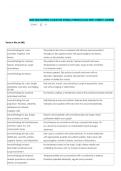
nurs 2030 final Exam with Correct Answers
Terms in this set (191)
-Care Provider
-Case Manager
-Researcher
roles of the nurse -Educator
-Leader
-Manager
-Change Agent
-Provide knowledgeable, compassionate care to promote health and address
illness
Care Provider -Focus on holistic care
-Using evidence-based skills
-Providing high-quality ,safe care
-Working with the client, family, and the health care team to ensure
that the client receives needed services
Case Manager -Communicating with interprofessional team members
-Coordinating educational needs
-Can also be a formal role
Researcher Utilize resources to provide evidence-based care
Research Developing nursing knowledge by conducting research and publishing the
results
Using scholarly resources to find the most valid and current
Evidence-Based Practice
information about new medications, procedures, or technology
-Client education
-Mentoring others
Educator - Preceptors
-Clinical nurse educators
-Nursing faculty
-Effective communication
Leader -Relationship building
-Communicating and working together to create clear plans and achieve goals
, types of Leaders assigned leadership and emergent leadership
-formal leadership
assigned leadership
-informal leadership
-making staffing decisions
Emergent Leadership -resolve conflicts
-educate others
-advocate for others
-Assigned leadership role
-Responsible for teams of nurses
Manager
-Manages staff
-Ensuring quality of care
• Hiring
• Orienting
manager responsibilities • Scheduling
• Budgets
• Unit
goals
-A nurse who brings innovation for improvement through
knowledge, critical thinking, objectivity, and practice
Change Agent -Recognize the need for and take steps to make a chance
-Need to be credible and reliable
-Embrace change
Nursing Process how nurses make sound decisions
1. Assessment (recognize cues)
2. Diagnosis (analyze cues)
nursing process steps 3. Planning (prioritize hypotheses and generate solutions)
4. Implementation (take action)
5.Evaluation (evuluate outcomes)
-Using nursing knowledge to:
-Collect
1. Assessment -Organize
-Validate
-Document
-Uses subjective and objective data to perform a holistic view of the patient
Subjective data from a clients self report or from a family member
-measurable
objective data -based on facts
-what the nurse can see or observe using the senses
-Analyze assessment data gathered to identify health
2. Diagnosis/Analysis problems/risks and the need for intervention
-Uses patterns, trends, and normal ranges
-Ability to make decisions and problem solve
-Develop goals and outcomes
-Identify nursing interventions
3. Planning
-Set client goals
-Establish priorities of care
-Maslow's Hierarchy of Needs
Terms in this set (191)
-Care Provider
-Case Manager
-Researcher
roles of the nurse -Educator
-Leader
-Manager
-Change Agent
-Provide knowledgeable, compassionate care to promote health and address
illness
Care Provider -Focus on holistic care
-Using evidence-based skills
-Providing high-quality ,safe care
-Working with the client, family, and the health care team to ensure
that the client receives needed services
Case Manager -Communicating with interprofessional team members
-Coordinating educational needs
-Can also be a formal role
Researcher Utilize resources to provide evidence-based care
Research Developing nursing knowledge by conducting research and publishing the
results
Using scholarly resources to find the most valid and current
Evidence-Based Practice
information about new medications, procedures, or technology
-Client education
-Mentoring others
Educator - Preceptors
-Clinical nurse educators
-Nursing faculty
-Effective communication
Leader -Relationship building
-Communicating and working together to create clear plans and achieve goals
, types of Leaders assigned leadership and emergent leadership
-formal leadership
assigned leadership
-informal leadership
-making staffing decisions
Emergent Leadership -resolve conflicts
-educate others
-advocate for others
-Assigned leadership role
-Responsible for teams of nurses
Manager
-Manages staff
-Ensuring quality of care
• Hiring
• Orienting
manager responsibilities • Scheduling
• Budgets
• Unit
goals
-A nurse who brings innovation for improvement through
knowledge, critical thinking, objectivity, and practice
Change Agent -Recognize the need for and take steps to make a chance
-Need to be credible and reliable
-Embrace change
Nursing Process how nurses make sound decisions
1. Assessment (recognize cues)
2. Diagnosis (analyze cues)
nursing process steps 3. Planning (prioritize hypotheses and generate solutions)
4. Implementation (take action)
5.Evaluation (evuluate outcomes)
-Using nursing knowledge to:
-Collect
1. Assessment -Organize
-Validate
-Document
-Uses subjective and objective data to perform a holistic view of the patient
Subjective data from a clients self report or from a family member
-measurable
objective data -based on facts
-what the nurse can see or observe using the senses
-Analyze assessment data gathered to identify health
2. Diagnosis/Analysis problems/risks and the need for intervention
-Uses patterns, trends, and normal ranges
-Ability to make decisions and problem solve
-Develop goals and outcomes
-Identify nursing interventions
3. Planning
-Set client goals
-Establish priorities of care
-Maslow's Hierarchy of Needs