ATI CAPSTONE PHARMACOLOGY 1
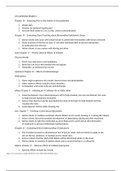
ATI CAPSTONE PHARM 1 ATI CAPSTONE PHARM 1 Chapter 14 – Assessing Prior to the Admin of Acetazolamide Chapter 14 – Evaluating Client Teaching about Brimonidine Ophthalmic Drops 1. Chapter 17 – Priority Adverse Effects of Inhaled Glucocorticoids 1. Chapter 10 – Effects of Anticholinergic Medications 1. Chapter 4 – Initiating an IV Catheter for an Older Adult 1. Avoid tourniquets. Use a blood pressure cuff to help visualize, but not overdistend, the veins to 2. . Chapter 7 – Teaching a client about Alprazolam 1. Advise clients to swallow sustained-release tablets and to avoid chewing or crushing the tablets. 2. Inform clients about the possible development of dependency during and after treatment 3. Advise clients to take the medication as prescribed and to avoid abrupt discontinuation of treatment to prevent withdrawal manifestations Chapter 15 – Evaluating Client Understanding of Oxybutynin 1. The transdermal patch is administered two times per week. Instruct clients to apply to dry skin of the hip, abdomen, or buttock and to rotate sites. 2. Instruct clients that the shell of ER tablets will be eliminated whole in the stool. 3. Advise clients to swallow ER tablets whole and to avoid chewing or crushing the tablets. Chapter 17 – Adverse effects of Inhaled Ipratropium 1. Adverse effects include dry mouth 2. Hoarseness is another adverse effect of Ipratropium 3. Sugar free candies might help with adverse effect of dry mouth. Chapter 18 – Client Teaching about Guaifenesin 1. Report a cough lasting longer than 1 week to the provider. 2. Advise clients to increase fluid intake when taking guaifenesin, in order to promote liquefying secretions. 3. This medication is available in tablets (which should not be crushed) and capsules, which can be opened to sprinkle on foods. Chapter 20 – Evaluating Client Understanding of Clonidine 1. Advise clients to apply patch on hairless, intact skin on torso or upper arm. 2. Advise clients to avoid activities that require mental alertness until manifestations subside. 3. Instruct clients to lie down if feeling dizzy, lightheaded, or faint, and change positions slowly. Chapter 14 – Adverse effects of Timolol ………………………………………CONTINUED……………………………………….
Written for
- Institution
-
University Of Texas - Dallas
- Course
-
NURS 3301 (NURS3301)
Document information
- Uploaded on
- March 18, 2021
- Number of pages
- 4
- Written in
- 2020/2021
- Type
- Other
- Person
- Unknown
Subjects
-
– assessing prior to the admin of acetazolamide
-
evaluating client teaching about brimonidine ophthalmic drops
-
priority adverse effects of inhaled glucocorticoids
-
effects of anticholinergic medications

Also available in package deal