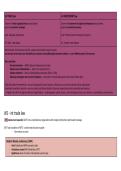
Int TRADE law Int INVESTMENT law
Governs the flow of goods/services across borders. Governs the movement of capital and enterprises across borders.
governs cross-border exchange governs cross-border presence,
Goal : Liberalizes transactions Goal : Protects assets and long-term presence
DS : State - state dispute DS : Investor- state disputes
Both branches of int Economic law (IEL) = governs cross border economic activity
are two sides of the same coin: they both aim to structure and stabilize global economic relations — just at different points in the process.
Share principles :
- Non-discrimination → MFN & National Treatment exist in both
- Market access & liberalization → both aim to reduce barriers
- Dispute settlement → both use binding dispute resolution (DSU vs. ISDS)
- Balancing sovereignty and economic integration → both seek to reconcile state power with investor/trader rights
Trade law without investment law = you can trade goods, but your factories, infrastructure, and services abroad may be unprotected.
Investment law without trade law = you can protect your factory abroad, but barriers on goods and services may block your business.
→Together, they form the legal architecture of globalization — enabling goods, capital, services, and technology to move across borders in a predictable, rule-based way.
W2 - int trade law
WTO replaced and expanded GATT into a comprehensive organization with stronger enforcement and broader coverage.
GATT was foundation of WTO - a trade treaty focused on goods
- Not enforce any more
Bretton Woods conference (1944)
- Goal: Rebuild post-WWII economic order.
- Institutions created: IMF, World Bank, GATT.
- Significance: Basis of modern international economic law.
,GATT = General Agreement on Tariffs and Trade (1947–1994)
- Multilateral treaty reducing tariffs and trade barriers.
- = treaty
- Core principles :
- Non-discrimination: Equal treatment of trading partners.
- MFN: No worse treatment than any other state. = most favored nation - any trade advantage granted to one must be granted to all
- National treatment: Imported goods treated same as domestic goods after entry.
- Problems: Blocking in dispute settlement, rise of new protectionism, unilateralism (e.g., US Section 301).
- Legacy: Foundation for creation of WTO.
WTO (1995–present)
= Permanent int. organization replacing GATT.
- Goal: Liberalize trade in goods, services, and IP; create binding, predictable trade system.
- Founding agreement : Marrakech Agreement
- Annexes complement the founding agreement :
- =attachements to the main treaty - each annex contains a group of agreements on a specific area of int trade
- 1A: GATT 1994 & agreements : on agriculture, SPS, TBT, TRIMS, subsidies, safeguards, etc.
- 1B: GATS – trade in services.
- 1C: TRIPS – intellectual property.
- 2: DSU – dispute settlement understanding
- 3: Trade Policy Review Mechanism.
- 4: Plurilateral agreements (civil aircraft, procurement).
- Key features:
- Single undertaking: All agreements part of one package.
- Precise rules: Anti-dumping, subsidies, no voluntary export restraints.
- Improved dispute settlement: DSU, Appellate Body, negative consensus.
- Objectives (Preamble):
- Raise living standards, full employment, expand trade sustainably.
- Ensure developing countries share trade growth.
- Functions :
- Administer and implement covered agreements
- Forum for new trade negotiations.
- Administer dispute settlement.
- Administer trade policy reviews.
, - Cooperate with IMF & World Bank.
- Means: Trade liberalization, harmonization, integration.
- No direct effect: WTO law does not automatically apply domestically.
- WTO Structure
- Ministerial Conference: Top decision-making body, meets biennially.
- General Council: Day-to-day decisions; acts as DSB and Trade Policy Review Body.
- Specialized Councils: Goods, services, IP.
- Committees/Working groups: Technical work.
- Decision-Making in WTO
- Amendments: Members can choose not to join (sovereignty preserved).
- Decisions/Interpretations/Waivers: Positive consensus or voting.
- Dispute Settlement: Negative consensus – reports adopted unless all oppose.
=a panel or Appellate Body report is automatically adopted unless all members reject it.
= Makes rulings much harder to block → strengthens enforcement compared to GATT
- DSB = Dispute settlement body
- Function: Administers dispute settlement procedures.
- Powers: Establish panels, adopt reports, monitor implementation, authorize retaliation.
- Consensus rule: Decisions adopted if no member objects.
- Appellate Body: 7 members, 4-year terms (currently paralyzed due to US blocking).
DSB in WTO DSU in WTO
= the institutional body that applies and enforces the DSU = the legal framework = annex 2
(made up of all WTO members) - Sets rules and procedures for how disputes are
handels
Responsibilities:
- Establish panels
- Adopt panel and Appellate Body reports
- Monitor implementation of rulings
- Authorize retaliation (suspension of concessions)
Regional Trade Agreements (RTAs)
= negotiated outside the WTO legal framework.- not part of WTO law
= A treaty between two or more countries in a specific region (or sometimes globally) to reduce or eliminate trade barriers — usually tariffs and quotas — only among
, themselves.
=agreement formed between WTO members under the conditions allowed by WTO rules.
=RTAs co-exist with the multilateral system
= separate treaties negotiated outside the WTO - but must comply w WTO conditions
- They allow members to go beyond WTO rules with preferred partners while remaining inside the WTO framework.
- Multiplication challenges multilateral WTO regime
- rapid growth (over 350+ today) shows a shift from purely multilateral trade governance (WTO) to a mixed system of multilateral + regional rules. -
- multiplication can fragment global trade law and weaken WTO centrality.
- Eg :
- MERCOSUR
- NAFTA
- Challenges & Erosion of WTO
- Appellate Body crisis: Blocking of appointments → end of compulsory dispute settlement.
- MPIA – Multi-Party Interim Appeal Arbitration
=Alternative appeal mechanism created by some WTO members after AB paralysis.
- Purpose : Maintain rule-based dispute settlement among participants.
- Significance : Shows adaptation of WTO system despite crisis.
- EU, canada , not US!
- Replicates role of the appellate body
- Rise of RTAs: Parallel rules and dispute settlement.
- US unilateralism: “Trump deals,” disregard for MFN and tariff bindings.
- = result of returning to more bilateralism but most members still follow WTO rules.
- New Developments : Plurilateral Initiatives
=shift in how trade law is made today: Instead of full consensus among all 160+ members (often hard to achieve), smaller groups of members
negotiate plurilateral agreements (only binding on those who sign).
= system continues to evolve beyond the original Uruguay Round agreements.
→focus is: new or emerging issues that were not central in 1995,
→Demonstrates flexibility —
- Fisheries Subsidies (2022)
- Electronic Commerce (2024)
- Investment Facilitation for Development (2023)
RTAs Plurilateral initiatives
Governs the flow of goods/services across borders. Governs the movement of capital and enterprises across borders.
governs cross-border exchange governs cross-border presence,
Goal : Liberalizes transactions Goal : Protects assets and long-term presence
DS : State - state dispute DS : Investor- state disputes
Both branches of int Economic law (IEL) = governs cross border economic activity
are two sides of the same coin: they both aim to structure and stabilize global economic relations — just at different points in the process.
Share principles :
- Non-discrimination → MFN & National Treatment exist in both
- Market access & liberalization → both aim to reduce barriers
- Dispute settlement → both use binding dispute resolution (DSU vs. ISDS)
- Balancing sovereignty and economic integration → both seek to reconcile state power with investor/trader rights
Trade law without investment law = you can trade goods, but your factories, infrastructure, and services abroad may be unprotected.
Investment law without trade law = you can protect your factory abroad, but barriers on goods and services may block your business.
→Together, they form the legal architecture of globalization — enabling goods, capital, services, and technology to move across borders in a predictable, rule-based way.
W2 - int trade law
WTO replaced and expanded GATT into a comprehensive organization with stronger enforcement and broader coverage.
GATT was foundation of WTO - a trade treaty focused on goods
- Not enforce any more
Bretton Woods conference (1944)
- Goal: Rebuild post-WWII economic order.
- Institutions created: IMF, World Bank, GATT.
- Significance: Basis of modern international economic law.
,GATT = General Agreement on Tariffs and Trade (1947–1994)
- Multilateral treaty reducing tariffs and trade barriers.
- = treaty
- Core principles :
- Non-discrimination: Equal treatment of trading partners.
- MFN: No worse treatment than any other state. = most favored nation - any trade advantage granted to one must be granted to all
- National treatment: Imported goods treated same as domestic goods after entry.
- Problems: Blocking in dispute settlement, rise of new protectionism, unilateralism (e.g., US Section 301).
- Legacy: Foundation for creation of WTO.
WTO (1995–present)
= Permanent int. organization replacing GATT.
- Goal: Liberalize trade in goods, services, and IP; create binding, predictable trade system.
- Founding agreement : Marrakech Agreement
- Annexes complement the founding agreement :
- =attachements to the main treaty - each annex contains a group of agreements on a specific area of int trade
- 1A: GATT 1994 & agreements : on agriculture, SPS, TBT, TRIMS, subsidies, safeguards, etc.
- 1B: GATS – trade in services.
- 1C: TRIPS – intellectual property.
- 2: DSU – dispute settlement understanding
- 3: Trade Policy Review Mechanism.
- 4: Plurilateral agreements (civil aircraft, procurement).
- Key features:
- Single undertaking: All agreements part of one package.
- Precise rules: Anti-dumping, subsidies, no voluntary export restraints.
- Improved dispute settlement: DSU, Appellate Body, negative consensus.
- Objectives (Preamble):
- Raise living standards, full employment, expand trade sustainably.
- Ensure developing countries share trade growth.
- Functions :
- Administer and implement covered agreements
- Forum for new trade negotiations.
- Administer dispute settlement.
- Administer trade policy reviews.
, - Cooperate with IMF & World Bank.
- Means: Trade liberalization, harmonization, integration.
- No direct effect: WTO law does not automatically apply domestically.
- WTO Structure
- Ministerial Conference: Top decision-making body, meets biennially.
- General Council: Day-to-day decisions; acts as DSB and Trade Policy Review Body.
- Specialized Councils: Goods, services, IP.
- Committees/Working groups: Technical work.
- Decision-Making in WTO
- Amendments: Members can choose not to join (sovereignty preserved).
- Decisions/Interpretations/Waivers: Positive consensus or voting.
- Dispute Settlement: Negative consensus – reports adopted unless all oppose.
=a panel or Appellate Body report is automatically adopted unless all members reject it.
= Makes rulings much harder to block → strengthens enforcement compared to GATT
- DSB = Dispute settlement body
- Function: Administers dispute settlement procedures.
- Powers: Establish panels, adopt reports, monitor implementation, authorize retaliation.
- Consensus rule: Decisions adopted if no member objects.
- Appellate Body: 7 members, 4-year terms (currently paralyzed due to US blocking).
DSB in WTO DSU in WTO
= the institutional body that applies and enforces the DSU = the legal framework = annex 2
(made up of all WTO members) - Sets rules and procedures for how disputes are
handels
Responsibilities:
- Establish panels
- Adopt panel and Appellate Body reports
- Monitor implementation of rulings
- Authorize retaliation (suspension of concessions)
Regional Trade Agreements (RTAs)
= negotiated outside the WTO legal framework.- not part of WTO law
= A treaty between two or more countries in a specific region (or sometimes globally) to reduce or eliminate trade barriers — usually tariffs and quotas — only among
, themselves.
=agreement formed between WTO members under the conditions allowed by WTO rules.
=RTAs co-exist with the multilateral system
= separate treaties negotiated outside the WTO - but must comply w WTO conditions
- They allow members to go beyond WTO rules with preferred partners while remaining inside the WTO framework.
- Multiplication challenges multilateral WTO regime
- rapid growth (over 350+ today) shows a shift from purely multilateral trade governance (WTO) to a mixed system of multilateral + regional rules. -
- multiplication can fragment global trade law and weaken WTO centrality.
- Eg :
- MERCOSUR
- NAFTA
- Challenges & Erosion of WTO
- Appellate Body crisis: Blocking of appointments → end of compulsory dispute settlement.
- MPIA – Multi-Party Interim Appeal Arbitration
=Alternative appeal mechanism created by some WTO members after AB paralysis.
- Purpose : Maintain rule-based dispute settlement among participants.
- Significance : Shows adaptation of WTO system despite crisis.
- EU, canada , not US!
- Replicates role of the appellate body
- Rise of RTAs: Parallel rules and dispute settlement.
- US unilateralism: “Trump deals,” disregard for MFN and tariff bindings.
- = result of returning to more bilateralism but most members still follow WTO rules.
- New Developments : Plurilateral Initiatives
=shift in how trade law is made today: Instead of full consensus among all 160+ members (often hard to achieve), smaller groups of members
negotiate plurilateral agreements (only binding on those who sign).
= system continues to evolve beyond the original Uruguay Round agreements.
→focus is: new or emerging issues that were not central in 1995,
→Demonstrates flexibility —
- Fisheries Subsidies (2022)
- Electronic Commerce (2024)
- Investment Facilitation for Development (2023)
RTAs Plurilateral initiatives