w1
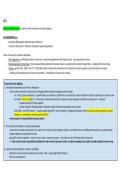
Denial of benefits clause - to avoid for shell companies and treaty shopping
Int INVESTMENT law :
- strong tool SMEs against illegitimate gov interference
- is based on thousands of : bilateral, multilateral, regional agreements
Forms of consent to investment arbitration
- Direct agreement – Arbitration clauses in contracts or compromise (agreement after dispute arises). - eg compromissory clause
- National legislation of host state - Host state laws offering arbitration to foreign investors, accepted by the investor through filing. = standing offer by host state
- Treaties - eg BITs, FTAs, -ICSID is not!!!!!! : ICSID offers details framework for settlement of inv dispute but requires separate consent by statea and investor
→binding and irrevocable nature of consent to arbitrate →manifestation of pacta sunt servanda
7 points from the syllabus
1. International Investment Law in Historic Perspective
- Current system evolved from long history of managing relations between foreigners and host states :
- pre - 20th c gunboat diplomacy = powerful states used military or political force to protect their citizens' investment abroad = system of pure power not law
- Early 20th : HULL formula & CIL = US secretary of state Hull argued that IL required ‘prompt adequate and effective compensation’ - relevance?
- Capital exporting rich nations agreed
- Capital importing- developing nations disagreed -argued for national sovereignty over resources
- Post 1960s - rise of BIT network → countries began signing BITs- those provided for a legalised framework- where host states voluntarily agreed to protect
foreign inv in exchange for attracting capital and tech
=current system is a legal substitute for power politics
2. The Commitment-Problem in Investor-State Relations
= when state can make a promise but bc its a state it can v much just easily change its promise- commitment is not a credible promise anymore- eg changes taxes ,
changes regulations, expropriates the asset
- Signing BITs solves this problem - state ties its own hands - reassures investors →thus leads to more FDI (foreign direct investment )
=→is the central economic and political justification for why we have investment treaties -its about managing risk to enable mutually beneficial economic coop.
3. Investment Treaty Arbitration: Functions and Effects
- Arbitration is the enforcement mechanism of treaties - ISDS →eg through ICSID institutions
- ICSID is a key mechanism
, - Depolitices - removes disputes from the political realm puts them into legal - no more gunboat
- Provides neutral adjudication - independent arbitral that are not the host states’ own courts which could be bised
- Worldwide enforcement of arbitration awards
=ISDS is the key to system- without it treaty commitments would only be symbolic
4. Sources of International Investment Law
- Investment law is decentralised,
5. Applicable Law: Interaction between International and Domestic Law
- Domestic Law: Governs many factual aspects of the dispute. For example: Did the investor legally own the asset under host state law? Was the company properly
incorporated?
- IL (the BIT): Provides the standards for judging whether the state's conduct was illegal (e.g., Was the expropriation lawful? Did it violate FET?).
→a successful legal argument must correctly separate and apply both set of rules
6. Remedies: Specific Performance, Damages and Compensation
If state breaches its obligations primary goal is to compensate for loss not to punish :
- Specific performance = order state to uhno wrongful act- eg reinstate revoked license - v rare
- Damages/compensation =goal to wipe out consequences of illegal act by putting incestor in financil position it would have been in had the breach not occurred
-most common remedy
- Standard : usually Hull, fair maket value
7. Challenges Facing International Investment Law and Reform Debate
- System designed in 20th c is facing legitimacy crisis in 21st c
- Legitimacy & sovereignty debate = Critics argue ISDS allows unaccountable tribunals to second-guess democratic public interest regulations (on health, environment,
etc.).
- Inconsistency: Different tribunals interpreting similar treaty language can reach conflicting awards, creating legal uncertainty.
- Lack of Transparency: Historically, arbitration was a private process, leading to concerns about "secret tribunals."
- Cost and Time: Arbitration is extremely expensive, potentially limiting access for smaller states and investors.
,w2
Starting point to apply ICSID : whether ICSID has jurisdiction = art 25
Art 25 conditions :
1. ‘Legal dispute’ = difference in law or fact as defined in Mavrommatis Palestine Concessions case)!!!!!
- Mention that there is a breach of x legal instrument
2. ‘Arising directly out of an Investment’
- =Needs to fulfill BIT def of investment +ICSID def of investment-
- need def of the BIT just bc - by default fulfill the def of investment und both just bc - cause applying a BIT and both are members of ICSID so just
do both
- in the sense of the BIT there is but ICSID is a multilateral treaty and the BIT is bilateral - so the state x and y party to the BIT should not be able to define what
an investment means for all those in ICSID - thus we also need to define ‘investment’ under ICSID - the def under the BIT does not apply here
- ICSID itself does not provide the def of an investment
- Reading : ‘Malaysian Historical Salvors case’→decided by an ad hoc annulment committee for ICSID award - that def of an investment does not fit thus ICSID has
no jurisdiction - thus even if BIT def of investment fulfilled - ICSID def of investment fulfilled
Investment art 25(1)
Theres agreement that theres flexibility but also that theres outer limits - usually today only first 3 conditions of salini are taken
→the Salini test is not strict - it was only used to help in assessment
- Travaux préparatoires
- Salini test : look at certain criterias to determine if investment :
1.(Significant) contribution of money or assets
2.Certain duration of activity -
3.Participation in risk
4.Contribution to economic development of host state
- Interaction with def of BITs
→say this in exam!!!!!! ‘tribunals are not bound by previous decisions and that the 4 requirement is not always
strict - that its hard to hit all conditions and tribunals interpret it differently as diff thresholds of investments
→if shareholding case say : ‘shareholdings fall under the criteria of the Salini test (contribution of money or asset, risk,
duration, regularity of profits, contribution to economic development). In fact, a shareholding is one of the typical forms a
foreign investment may take.’
, ‘Drawing on the Salini criteria, ____ qualifies as an investment under Art. 25(1) of the ICSID Convention.’
→salini has a higher threshold for the def of an investment - you can use it to try and argue against def of investment and thus
against an investment claim of an investor
- Debate on whether a shareholding is an investment : If standing as a shareholder-investor mention the existing debate surrounding this from the ICJ in
Barcelona Traction case : on debate on whether a shareholding is an investment : ‘possible objection may be possible to the shareholder-investor standing,
drawing on the reasoning of the , recognizing that ICSID tribunals generally reject such objections’ - mention the possibility thereof
- ‘This issue is problematic as under the law of diplomatic protection a distinction is made between measures affecting rights of the company and rights of the
shareholder (see the Barcelona Traction case, in which the International Court of Justice did not permit Belgium to protect Belgian shareholders of a Canadian company
that had been declared bankrupt by Spanish courts, arguing that the measures by the Spanish courts had only affected the rights of the company, not the rights of the
shareholders in that company). What qualifies an investment in the sense of that provision is not further defined by the Convention itself. Some tribunals therefore have
recourse to a bilateral investment treaty in force between the respondent State and the investor’s home State (in the case at hand the AstropiaRaganaka BIT, which
defines what an “investment” is in Article 1(1)). Other tribunals apply only the so-called Salini test (and the criteria established thereunder) in order to determine
whether claimant had made an investment in the case at hand’
3. Between a contracting state
4. And a national of another contracting state =
- Must fall under 25(2)(a) or 25(2)(b).
- ‘In this context, it is important to realize that there are two respondents in the arbitration, Raganaka and Ramon Raga. Accordingly, jurisdiction needs to be
determined separately in regard of both respondents. /// Article 25(1) ICSID Convention requires that the dispute be between a “Contracting State […] and a
national of another Contracting State”. These requirements are not fulfilled in case of an arbitration between two private individuals. In consequence, the
Tribunal has no jurisdiction over Aron’s claims against Ramon Raga’’
- ‘In the present case, ____ , is a natural person with ___ citizenship, and therefore falls under Article 25(2)(a) of the ICSID Convention.’
- For def of a national : art 25(2) ICSID
- We look at case : Champion Trading Company (w2 reading)
- These corporate structures allow you to change nationality rather quickly - so you can play around with this and make it stick for under ICSID-
corporations its easy to just change registration (much easier than for a natural person (art 25(2)a)
5. Consent of both parties to settle the dispute -
- We get this consent from the BIT in between parties to the dispute (= the BIT is their standing BIT but we still need consent from the investor- which will write a
letter)-art 8 BIT
- Check the BIT clause + apply investment and investor def of usually art 1 + actually apply the BIT consent clause term by term
- + bring up any diff BIT conditions to consent by invoking MFN to get faster access to court and shorter waiting period
‘ can circumvent the condition to litigate in Raganaka’s domestic courts for 18 months by arguing that under the MFN clause in Article 3 of the
Raganaka-Euphoria BIT he is entitled to the same access conditions ’
1. State the exact clause of the current BIT and the exact clause of the BIT with the more favorable treatment
2. Go to MFN clause of this BIT and see if it'll apply in this case to this discrepancy - interpret that article
Denial of benefits clause - to avoid for shell companies and treaty shopping
Int INVESTMENT law :
- strong tool SMEs against illegitimate gov interference
- is based on thousands of : bilateral, multilateral, regional agreements
Forms of consent to investment arbitration
- Direct agreement – Arbitration clauses in contracts or compromise (agreement after dispute arises). - eg compromissory clause
- National legislation of host state - Host state laws offering arbitration to foreign investors, accepted by the investor through filing. = standing offer by host state
- Treaties - eg BITs, FTAs, -ICSID is not!!!!!! : ICSID offers details framework for settlement of inv dispute but requires separate consent by statea and investor
→binding and irrevocable nature of consent to arbitrate →manifestation of pacta sunt servanda
7 points from the syllabus
1. International Investment Law in Historic Perspective
- Current system evolved from long history of managing relations between foreigners and host states :
- pre - 20th c gunboat diplomacy = powerful states used military or political force to protect their citizens' investment abroad = system of pure power not law
- Early 20th : HULL formula & CIL = US secretary of state Hull argued that IL required ‘prompt adequate and effective compensation’ - relevance?
- Capital exporting rich nations agreed
- Capital importing- developing nations disagreed -argued for national sovereignty over resources
- Post 1960s - rise of BIT network → countries began signing BITs- those provided for a legalised framework- where host states voluntarily agreed to protect
foreign inv in exchange for attracting capital and tech
=current system is a legal substitute for power politics
2. The Commitment-Problem in Investor-State Relations
= when state can make a promise but bc its a state it can v much just easily change its promise- commitment is not a credible promise anymore- eg changes taxes ,
changes regulations, expropriates the asset
- Signing BITs solves this problem - state ties its own hands - reassures investors →thus leads to more FDI (foreign direct investment )
=→is the central economic and political justification for why we have investment treaties -its about managing risk to enable mutually beneficial economic coop.
3. Investment Treaty Arbitration: Functions and Effects
- Arbitration is the enforcement mechanism of treaties - ISDS →eg through ICSID institutions
- ICSID is a key mechanism
, - Depolitices - removes disputes from the political realm puts them into legal - no more gunboat
- Provides neutral adjudication - independent arbitral that are not the host states’ own courts which could be bised
- Worldwide enforcement of arbitration awards
=ISDS is the key to system- without it treaty commitments would only be symbolic
4. Sources of International Investment Law
- Investment law is decentralised,
5. Applicable Law: Interaction between International and Domestic Law
- Domestic Law: Governs many factual aspects of the dispute. For example: Did the investor legally own the asset under host state law? Was the company properly
incorporated?
- IL (the BIT): Provides the standards for judging whether the state's conduct was illegal (e.g., Was the expropriation lawful? Did it violate FET?).
→a successful legal argument must correctly separate and apply both set of rules
6. Remedies: Specific Performance, Damages and Compensation
If state breaches its obligations primary goal is to compensate for loss not to punish :
- Specific performance = order state to uhno wrongful act- eg reinstate revoked license - v rare
- Damages/compensation =goal to wipe out consequences of illegal act by putting incestor in financil position it would have been in had the breach not occurred
-most common remedy
- Standard : usually Hull, fair maket value
7. Challenges Facing International Investment Law and Reform Debate
- System designed in 20th c is facing legitimacy crisis in 21st c
- Legitimacy & sovereignty debate = Critics argue ISDS allows unaccountable tribunals to second-guess democratic public interest regulations (on health, environment,
etc.).
- Inconsistency: Different tribunals interpreting similar treaty language can reach conflicting awards, creating legal uncertainty.
- Lack of Transparency: Historically, arbitration was a private process, leading to concerns about "secret tribunals."
- Cost and Time: Arbitration is extremely expensive, potentially limiting access for smaller states and investors.
,w2
Starting point to apply ICSID : whether ICSID has jurisdiction = art 25
Art 25 conditions :
1. ‘Legal dispute’ = difference in law or fact as defined in Mavrommatis Palestine Concessions case)!!!!!
- Mention that there is a breach of x legal instrument
2. ‘Arising directly out of an Investment’
- =Needs to fulfill BIT def of investment +ICSID def of investment-
- need def of the BIT just bc - by default fulfill the def of investment und both just bc - cause applying a BIT and both are members of ICSID so just
do both
- in the sense of the BIT there is but ICSID is a multilateral treaty and the BIT is bilateral - so the state x and y party to the BIT should not be able to define what
an investment means for all those in ICSID - thus we also need to define ‘investment’ under ICSID - the def under the BIT does not apply here
- ICSID itself does not provide the def of an investment
- Reading : ‘Malaysian Historical Salvors case’→decided by an ad hoc annulment committee for ICSID award - that def of an investment does not fit thus ICSID has
no jurisdiction - thus even if BIT def of investment fulfilled - ICSID def of investment fulfilled
Investment art 25(1)
Theres agreement that theres flexibility but also that theres outer limits - usually today only first 3 conditions of salini are taken
→the Salini test is not strict - it was only used to help in assessment
- Travaux préparatoires
- Salini test : look at certain criterias to determine if investment :
1.(Significant) contribution of money or assets
2.Certain duration of activity -
3.Participation in risk
4.Contribution to economic development of host state
- Interaction with def of BITs
→say this in exam!!!!!! ‘tribunals are not bound by previous decisions and that the 4 requirement is not always
strict - that its hard to hit all conditions and tribunals interpret it differently as diff thresholds of investments
→if shareholding case say : ‘shareholdings fall under the criteria of the Salini test (contribution of money or asset, risk,
duration, regularity of profits, contribution to economic development). In fact, a shareholding is one of the typical forms a
foreign investment may take.’
, ‘Drawing on the Salini criteria, ____ qualifies as an investment under Art. 25(1) of the ICSID Convention.’
→salini has a higher threshold for the def of an investment - you can use it to try and argue against def of investment and thus
against an investment claim of an investor
- Debate on whether a shareholding is an investment : If standing as a shareholder-investor mention the existing debate surrounding this from the ICJ in
Barcelona Traction case : on debate on whether a shareholding is an investment : ‘possible objection may be possible to the shareholder-investor standing,
drawing on the reasoning of the , recognizing that ICSID tribunals generally reject such objections’ - mention the possibility thereof
- ‘This issue is problematic as under the law of diplomatic protection a distinction is made between measures affecting rights of the company and rights of the
shareholder (see the Barcelona Traction case, in which the International Court of Justice did not permit Belgium to protect Belgian shareholders of a Canadian company
that had been declared bankrupt by Spanish courts, arguing that the measures by the Spanish courts had only affected the rights of the company, not the rights of the
shareholders in that company). What qualifies an investment in the sense of that provision is not further defined by the Convention itself. Some tribunals therefore have
recourse to a bilateral investment treaty in force between the respondent State and the investor’s home State (in the case at hand the AstropiaRaganaka BIT, which
defines what an “investment” is in Article 1(1)). Other tribunals apply only the so-called Salini test (and the criteria established thereunder) in order to determine
whether claimant had made an investment in the case at hand’
3. Between a contracting state
4. And a national of another contracting state =
- Must fall under 25(2)(a) or 25(2)(b).
- ‘In this context, it is important to realize that there are two respondents in the arbitration, Raganaka and Ramon Raga. Accordingly, jurisdiction needs to be
determined separately in regard of both respondents. /// Article 25(1) ICSID Convention requires that the dispute be between a “Contracting State […] and a
national of another Contracting State”. These requirements are not fulfilled in case of an arbitration between two private individuals. In consequence, the
Tribunal has no jurisdiction over Aron’s claims against Ramon Raga’’
- ‘In the present case, ____ , is a natural person with ___ citizenship, and therefore falls under Article 25(2)(a) of the ICSID Convention.’
- For def of a national : art 25(2) ICSID
- We look at case : Champion Trading Company (w2 reading)
- These corporate structures allow you to change nationality rather quickly - so you can play around with this and make it stick for under ICSID-
corporations its easy to just change registration (much easier than for a natural person (art 25(2)a)
5. Consent of both parties to settle the dispute -
- We get this consent from the BIT in between parties to the dispute (= the BIT is their standing BIT but we still need consent from the investor- which will write a
letter)-art 8 BIT
- Check the BIT clause + apply investment and investor def of usually art 1 + actually apply the BIT consent clause term by term
- + bring up any diff BIT conditions to consent by invoking MFN to get faster access to court and shorter waiting period
‘ can circumvent the condition to litigate in Raganaka’s domestic courts for 18 months by arguing that under the MFN clause in Article 3 of the
Raganaka-Euphoria BIT he is entitled to the same access conditions ’
1. State the exact clause of the current BIT and the exact clause of the BIT with the more favorable treatment
2. Go to MFN clause of this BIT and see if it'll apply in this case to this discrepancy - interpret that article