Assignment B - PPP Grammar Lesson Table: First Conditional
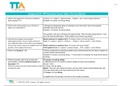
1. What is the target form of the first conditional If clause = If + subject + present simple , Subject + will + future simple (infinitive)
(both clauses)? (F) Example: If it snows, we will go skiing
2. What is the model sentence you will elicit to I will begin by eliciting the ideas of ‘activities to do in the winter’ set by the students'
begin your presentation? examples during the warmer.
Example: ‘If it snows, we will go skiing’
The question I will use to introduce the activity skiing, “Who has been skiing before?”, then
from that elicit the affirmative, “What weather do we need to go skiing?”.
3. What are the negative and question Model sentence in negative form: If it doesn’t snow, we won’t go skiing
(interrogative) forms of your model sentence? Form: If + subject + doesn’t + infinitive , Subject + will not (won’t) + verb infinitive
(You might find there is more than one possibility,
but you only need to show one negative and one Model sentence in question form: If it snows, will we go skiing?
question, then analyse the forms.) Interrogative Form: If + subject + present simple , Will + subject + verb infinitive
4. What is the function? (M) The first conditional is to describe possible future actions/events that are likely to happen as
a result of those actions/events.
Example: If it snows, we will go skiing. -> In the event of it snowing, the result will be that we
go skiing.
5. What do students need to know about the If it snows, we will go skiing
pronunciation, including sentence stress and In affirmative form it is normal to contract subject pronouns and auxiliaries.
intonation? (P) We will = We’ll
(Think only about how the model sentence would If it snows, we’ll go skiing.
normally be said.) Stress: The main verb carries the stress, and any other content words following the verb.
The main stress falls on the last content word in the clause.
If it snows, we’ll go skiing.
In negative form the auxiliary verb and not are usually contracted.
© 2020 The TEFL Academy. All rights reserved. 1
, Will not = Won’t
If it doesn't snow, we won’t go skiing.
Stress: Auxiliary verb + n’t carries the stress and any content words following the verb/
If it doesn’t snow, we won’t go skiing.
Intonation: The rise and fall of speech in speaking. In question form, for yes/no, the voice
rises at the end .
For affirmative and negative forms, voice normally falls at the end .
6. What is the context I will use to introduce the Students will have an understanding of present simple and ‘will’, therefor I will talk about
form? (M) interesting events/actions that they want to happen in the future.
Examples: We want it to snow, because snow will allow us to go skiing.
There is a new movie in theaters next week, if we save our money, we can see it.
7. How will I try to elicit the first conditional from I will use a student's example on ‘activities to do in the winter’ to elicit what will happen if it
the students? snows.
Example: “If it snows, we will go skiing”
T: We will go skiing ...
S: If it snows
T: If it’s not going to snow ...
S: We won't go skiing
8. How will I encourage students to analyse the I will use the student example from elicitation, along with a few other student examples, put
form (S+V, etc.) themselves rather than just them on the board and analyze as a class.
telling them what it is? (F) Examples:
Student A put skating on the board as a winter activity = If there is ice, we can go skating.
Student B put snowshoeing on the board as a winter activity = If my friend comes over, we
will go snowshoeing.
© 2020 The TEFL Academy. All rights reserved. 2
1. What is the target form of the first conditional If clause = If + subject + present simple , Subject + will + future simple (infinitive)
(both clauses)? (F) Example: If it snows, we will go skiing
2. What is the model sentence you will elicit to I will begin by eliciting the ideas of ‘activities to do in the winter’ set by the students'
begin your presentation? examples during the warmer.
Example: ‘If it snows, we will go skiing’
The question I will use to introduce the activity skiing, “Who has been skiing before?”, then
from that elicit the affirmative, “What weather do we need to go skiing?”.
3. What are the negative and question Model sentence in negative form: If it doesn’t snow, we won’t go skiing
(interrogative) forms of your model sentence? Form: If + subject + doesn’t + infinitive , Subject + will not (won’t) + verb infinitive
(You might find there is more than one possibility,
but you only need to show one negative and one Model sentence in question form: If it snows, will we go skiing?
question, then analyse the forms.) Interrogative Form: If + subject + present simple , Will + subject + verb infinitive
4. What is the function? (M) The first conditional is to describe possible future actions/events that are likely to happen as
a result of those actions/events.
Example: If it snows, we will go skiing. -> In the event of it snowing, the result will be that we
go skiing.
5. What do students need to know about the If it snows, we will go skiing
pronunciation, including sentence stress and In affirmative form it is normal to contract subject pronouns and auxiliaries.
intonation? (P) We will = We’ll
(Think only about how the model sentence would If it snows, we’ll go skiing.
normally be said.) Stress: The main verb carries the stress, and any other content words following the verb.
The main stress falls on the last content word in the clause.
If it snows, we’ll go skiing.
In negative form the auxiliary verb and not are usually contracted.
© 2020 The TEFL Academy. All rights reserved. 1
, Will not = Won’t
If it doesn't snow, we won’t go skiing.
Stress: Auxiliary verb + n’t carries the stress and any content words following the verb/
If it doesn’t snow, we won’t go skiing.
Intonation: The rise and fall of speech in speaking. In question form, for yes/no, the voice
rises at the end .
For affirmative and negative forms, voice normally falls at the end .
6. What is the context I will use to introduce the Students will have an understanding of present simple and ‘will’, therefor I will talk about
form? (M) interesting events/actions that they want to happen in the future.
Examples: We want it to snow, because snow will allow us to go skiing.
There is a new movie in theaters next week, if we save our money, we can see it.
7. How will I try to elicit the first conditional from I will use a student's example on ‘activities to do in the winter’ to elicit what will happen if it
the students? snows.
Example: “If it snows, we will go skiing”
T: We will go skiing ...
S: If it snows
T: If it’s not going to snow ...
S: We won't go skiing
8. How will I encourage students to analyse the I will use the student example from elicitation, along with a few other student examples, put
form (S+V, etc.) themselves rather than just them on the board and analyze as a class.
telling them what it is? (F) Examples:
Student A put skating on the board as a winter activity = If there is ice, we can go skating.
Student B put snowshoeing on the board as a winter activity = If my friend comes over, we
will go snowshoeing.
© 2020 The TEFL Academy. All rights reserved. 2