a
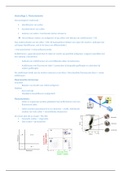
AGGRESSION
Behavioural Neurosciences Notes
, WHAT IS AGGRESSION?
Essentially, almost all species of animals engage in aggressive behaviour.
Aggressive behaviour is species typical – meaning that the patterns of
movements (like posture, biting etc.) are organized by neural circuits which
development is mostly programmed by genes of an animal.
Aggressive behaviour can be related to different situations – like reproduction,
protection, assertion of dominance etc.
Aggressive behaviour can be divided into:
- Threat behaviour
o Consists of postures or gestures used as a warning
- Defensive behaviour
o Behaviour of an animal that is being threatened
- Submissive behaviour
o Behaviour of an animal that accepts defeat and will not challenge
the attacker any further
Furthermore, aggression can involve emotions as well as lack any emotions – we
refer to them as affective (emotional) vs affectless (‘cold-blooded’).
Examples of affectless aggression include:
1) Distant aggression
2) Territorial aggression
3) Ethnic aggression
4) Cfr. Syndrome-E
AGGRESSION
Behavioural Neurosciences Notes
, WHAT IS AGGRESSION?
Essentially, almost all species of animals engage in aggressive behaviour.
Aggressive behaviour is species typical – meaning that the patterns of
movements (like posture, biting etc.) are organized by neural circuits which
development is mostly programmed by genes of an animal.
Aggressive behaviour can be related to different situations – like reproduction,
protection, assertion of dominance etc.
Aggressive behaviour can be divided into:
- Threat behaviour
o Consists of postures or gestures used as a warning
- Defensive behaviour
o Behaviour of an animal that is being threatened
- Submissive behaviour
o Behaviour of an animal that accepts defeat and will not challenge
the attacker any further
Furthermore, aggression can involve emotions as well as lack any emotions – we
refer to them as affective (emotional) vs affectless (‘cold-blooded’).
Examples of affectless aggression include:
1) Distant aggression
2) Territorial aggression
3) Ethnic aggression
4) Cfr. Syndrome-E