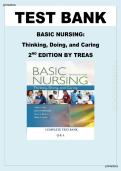
TESTBANK
,BASIC NURSING: Thinking, Doing, and Caring, 3rd Edition ByJTreas
Contents:
I. HowJNurses Think
Chapter 1. Nursing Past &JPresent
Chapter 2. Critical Thinking and Nursing Process
Chapter 3. Assessment
Chapter 4. Nursing Process: Diagnosis
Chapter 5. Planning Outcomes
Chapter 6. Planning Interventions
ChapterJ7. Implementation &JEvaluation
ChapterJ8. Theory, Research, &JEvidence Based Practice
II. Factors Affecting Health
Chapter 9. Development: Infancy through Middle Adulthood
Chapter 10. Development: OlderJAdulthood
Chapter 11. Experiencing Health and Illness
ChapterJ12. Stress &JAdaptation
Chapter 13. Psychosocial Health &JIllness
Chapter 14. Family
Chapter 15. Culture and Ethnicity
Chapter 16. Spirituality
Chapter 17. Loss, Grief, &JDying
III. Essential Nursing Interventions
Chapter 18. Documenting &JReporting
Chapter 19. Vital Signs
ChapterJ20. Communicating &JTherapeutic Relationships
Chapter 21. Physical Assessment
Chapter 22. Infection Prevention &JControl
Chapter 23. Safety
ChapterJ24. Hygiene
ChapterJ25. Administering Medications
ChapterJ26. Teaching &JLearning
ChapterJ27. Health Promotion
IV. Supporting Physiological Functioning
Chapter 28. Nutrition
Chapter 29. Bowel Elimination
Chapter 30. Urinary Elimination
Chapter 31. Sensory Perception
Chapter 32. Pain
Chapter 33. Activity &JExercise
Chapter 34. Sexual Health
Chapter 35. Sleep &JRest
Chapter 36. Skin IntegrityJ&JWound Healing
Chapter 37. Oxygenation
Chapter 38. Circulation &JPerfusion
Chapter 39. Fluids, Electrolytes, &J Acid-Base Balance
V. The Context for Nurses' Work
Chapter 40. Perioperative Nursing
ChapterJ41. Leading and Managing
ChapterJ42. Community &JHome Health Nursing
Chapter 43. Nursing Ethics
Chapter 44. Legal Accountability
Bonus Chapters
Chapter 45. Nursing Informatics
Chapter 46. Holistic Healing
,Chapter 1. Nursing Past & Present
MULTIPLE CHOICE
1. WhichJis the most influential factor that has shaped the nursing profession?
1) Physicians’ need for handmaidens
2) Societal need for healthcareJoutside the home
3) Military demand for nurses in the field
4) Germ theory influenceJonJsanitation
ANS: 3
Chapter number and title: 1, Nursing Past & Present
Chapter learning objective: Define nursing in your own words. Chapter
page reference: p. 7
Heading: Historical Context of NursingJIntegrated
Processes: Teaching and Learning
Client Need: Safeand EffectiveJCare Environment: ManagementJof CareJCognit
ive level: Comprehension [Understanding]
Concept: ProfessionalismJDifficulty
: Easy
Feedback
1 Thephysician's handmaiden was/isJaJnursing stereotype rather thanJan influence on
nursing.
2 Although there has been aneed for healthcare outside theJhome throughout histor
y, this has moreJinN fluUeR
ncSeIoN
nGthKeIdN
evGe.
loCOM
pment of hospitals than on nursing; this n
eed provided one more setting for nursingJwork.
3 Throughout the centuries, stability of the government has been related to theJsuccess
of the military to protect or extend its domain. As theJsurvival and
well-
being of soldiers are both critical, nurses provided healthcare to theJsickJand injure
dJat the battleJsite.
4 Germ theory and sanitation helped to improve healthcareJbut did not shape nursing.
PTS: 1 CON: Professionalism
2. WhichJis an example ofJanJillness-prevention activity?
1) Encouraging the use of a food diary
2) Joining a cancer support group
3) Administering immunization for HPV
4) Teaching a diabetic patientJabout his diet
ANS: 3
Chapter number and title: 1, Nursing Past & Present
Chapter learning objective: Name and recognize theJfour purposes of nursing care. Chapter p
age reference: p. 15
Heading: Nursing Practice: Caring for Clients Integrated
Processes: Nursing Process –
Implementation ClientJNeed: Health Promotion and Mai
ntenance
, Cognitivelevel: Application [Applying]
Concept: Health Promotion
Difficulty: Moderate
Feedback
1 Illness-prevention activities focus on avoiding a specific disease. A food diary is
a health-promotion activity.
2 Although cancer is a disease, it is assumed that a person joining a support group
would already haveJthe disease; therefore, this is not disease prevention but treatmen
t.
3 Administering immunization for HPV is an exampleJof illnessJprevention.
4 Teaching a diabetic patient aboutJdiet is a treatment for diabetes; the patient already
has diabetes, soJit cannot prevent diabetes.
PTS: 1 CON: Health Promotion
3. Which contribution of Florence Nightingale had an immediateJimpact on improving patients’ he
alth?
1) Providing a clean environment
2) Improving nursing education
3) Changing theJdelivery of care in hospitals
4) Establishing nursingJas a distinct profession
ANS: 1
Chapter number and title: 1, Nursing Past & Present
Chapter learning objective: Name nine expanded roles for nursing. Cha
pter page reference: p. 9
Heading: Table 1-
1 Roles andNFUuRnSc tI
i oNnsGoKfIthNeGN.uCrsOe M Integrated Processe
s: Caring
Client Need: HealthJPromotion andJMaintenance
Cognitivelevel: Comprehension [Understanding]
Concept: Evidence-Based Practice
Difficulty: Easy
Feedback
1 Improved sanitation (a clean environment) greatlyand immediately reduced the rate
of infection and mortality in hospitals.
2 This is an activity of FlorenceJNightingale that improved healthcare or nursing,
but theJimpact is long range, not immediate.
3 This isJanJactivity of Florence NightingaleJthat improved healthcare or nursing, bu
t theJimpact is long range, not immediate.
4 This isJan activity of Florence NightingaleJthat improved healthcare or nursing, bu
t theJimpact is longJrange, not immediate.
PTS: 1 CON: Evidence-BasedJPractice
4. Which aspect of theJfull-
spectrumJnursing role isJessential for the nurse to do in order to successfully carry out all th
e others?
1) ThinkingJand reasoning aboutJthe client’s care
2) Providing hands-onJclient care
3) Carrying out physician orders
,BASIC NURSING: Thinking, Doing, and Caring, 3rd Edition ByJTreas
Contents:
I. HowJNurses Think
Chapter 1. Nursing Past &JPresent
Chapter 2. Critical Thinking and Nursing Process
Chapter 3. Assessment
Chapter 4. Nursing Process: Diagnosis
Chapter 5. Planning Outcomes
Chapter 6. Planning Interventions
ChapterJ7. Implementation &JEvaluation
ChapterJ8. Theory, Research, &JEvidence Based Practice
II. Factors Affecting Health
Chapter 9. Development: Infancy through Middle Adulthood
Chapter 10. Development: OlderJAdulthood
Chapter 11. Experiencing Health and Illness
ChapterJ12. Stress &JAdaptation
Chapter 13. Psychosocial Health &JIllness
Chapter 14. Family
Chapter 15. Culture and Ethnicity
Chapter 16. Spirituality
Chapter 17. Loss, Grief, &JDying
III. Essential Nursing Interventions
Chapter 18. Documenting &JReporting
Chapter 19. Vital Signs
ChapterJ20. Communicating &JTherapeutic Relationships
Chapter 21. Physical Assessment
Chapter 22. Infection Prevention &JControl
Chapter 23. Safety
ChapterJ24. Hygiene
ChapterJ25. Administering Medications
ChapterJ26. Teaching &JLearning
ChapterJ27. Health Promotion
IV. Supporting Physiological Functioning
Chapter 28. Nutrition
Chapter 29. Bowel Elimination
Chapter 30. Urinary Elimination
Chapter 31. Sensory Perception
Chapter 32. Pain
Chapter 33. Activity &JExercise
Chapter 34. Sexual Health
Chapter 35. Sleep &JRest
Chapter 36. Skin IntegrityJ&JWound Healing
Chapter 37. Oxygenation
Chapter 38. Circulation &JPerfusion
Chapter 39. Fluids, Electrolytes, &J Acid-Base Balance
V. The Context for Nurses' Work
Chapter 40. Perioperative Nursing
ChapterJ41. Leading and Managing
ChapterJ42. Community &JHome Health Nursing
Chapter 43. Nursing Ethics
Chapter 44. Legal Accountability
Bonus Chapters
Chapter 45. Nursing Informatics
Chapter 46. Holistic Healing
,Chapter 1. Nursing Past & Present
MULTIPLE CHOICE
1. WhichJis the most influential factor that has shaped the nursing profession?
1) Physicians’ need for handmaidens
2) Societal need for healthcareJoutside the home
3) Military demand for nurses in the field
4) Germ theory influenceJonJsanitation
ANS: 3
Chapter number and title: 1, Nursing Past & Present
Chapter learning objective: Define nursing in your own words. Chapter
page reference: p. 7
Heading: Historical Context of NursingJIntegrated
Processes: Teaching and Learning
Client Need: Safeand EffectiveJCare Environment: ManagementJof CareJCognit
ive level: Comprehension [Understanding]
Concept: ProfessionalismJDifficulty
: Easy
Feedback
1 Thephysician's handmaiden was/isJaJnursing stereotype rather thanJan influence on
nursing.
2 Although there has been aneed for healthcare outside theJhome throughout histor
y, this has moreJinN fluUeR
ncSeIoN
nGthKeIdN
evGe.
loCOM
pment of hospitals than on nursing; this n
eed provided one more setting for nursingJwork.
3 Throughout the centuries, stability of the government has been related to theJsuccess
of the military to protect or extend its domain. As theJsurvival and
well-
being of soldiers are both critical, nurses provided healthcare to theJsickJand injure
dJat the battleJsite.
4 Germ theory and sanitation helped to improve healthcareJbut did not shape nursing.
PTS: 1 CON: Professionalism
2. WhichJis an example ofJanJillness-prevention activity?
1) Encouraging the use of a food diary
2) Joining a cancer support group
3) Administering immunization for HPV
4) Teaching a diabetic patientJabout his diet
ANS: 3
Chapter number and title: 1, Nursing Past & Present
Chapter learning objective: Name and recognize theJfour purposes of nursing care. Chapter p
age reference: p. 15
Heading: Nursing Practice: Caring for Clients Integrated
Processes: Nursing Process –
Implementation ClientJNeed: Health Promotion and Mai
ntenance
, Cognitivelevel: Application [Applying]
Concept: Health Promotion
Difficulty: Moderate
Feedback
1 Illness-prevention activities focus on avoiding a specific disease. A food diary is
a health-promotion activity.
2 Although cancer is a disease, it is assumed that a person joining a support group
would already haveJthe disease; therefore, this is not disease prevention but treatmen
t.
3 Administering immunization for HPV is an exampleJof illnessJprevention.
4 Teaching a diabetic patient aboutJdiet is a treatment for diabetes; the patient already
has diabetes, soJit cannot prevent diabetes.
PTS: 1 CON: Health Promotion
3. Which contribution of Florence Nightingale had an immediateJimpact on improving patients’ he
alth?
1) Providing a clean environment
2) Improving nursing education
3) Changing theJdelivery of care in hospitals
4) Establishing nursingJas a distinct profession
ANS: 1
Chapter number and title: 1, Nursing Past & Present
Chapter learning objective: Name nine expanded roles for nursing. Cha
pter page reference: p. 9
Heading: Table 1-
1 Roles andNFUuRnSc tI
i oNnsGoKfIthNeGN.uCrsOe M Integrated Processe
s: Caring
Client Need: HealthJPromotion andJMaintenance
Cognitivelevel: Comprehension [Understanding]
Concept: Evidence-Based Practice
Difficulty: Easy
Feedback
1 Improved sanitation (a clean environment) greatlyand immediately reduced the rate
of infection and mortality in hospitals.
2 This is an activity of FlorenceJNightingale that improved healthcare or nursing,
but theJimpact is long range, not immediate.
3 This isJanJactivity of Florence NightingaleJthat improved healthcare or nursing, bu
t theJimpact is long range, not immediate.
4 This isJan activity of Florence NightingaleJthat improved healthcare or nursing, bu
t theJimpact is longJrange, not immediate.
PTS: 1 CON: Evidence-BasedJPractice
4. Which aspect of theJfull-
spectrumJnursing role isJessential for the nurse to do in order to successfully carry out all th
e others?
1) ThinkingJand reasoning aboutJthe client’s care
2) Providing hands-onJclient care
3) Carrying out physician orders