Unit 10 – Chapter 8B
Financial Management
The Role of Finance and Financial Managers
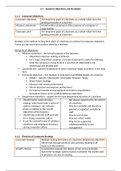
Finance – The function in a business that acquires funds for the firm and manages those funds
within the firm. Financial activities include preparing budgets, doing cash flow analysis and
planning for the expenditure of funds on assets such as plan, equipment and machinery.
Financial management – A set of theories and techniques used to optimize the receipt and use
of capital assets. Financial managers examine financial data prepared by accountants and
recommend strategies for improving the financial performance of the firm.
The Value of Understanding Finance
Three of the most common reasons a firm fails financially are:
1. Undercapitalisation (insufficient funds to start the business).
2. Poor control over cash flow.
3. Inadequate expense control.
, Financial Planning
Financial planning means analysing short-term and long-term money flows to and from the
firm. Its overall objective is to optimise the firm’s profitability and make the best use of its
money.
It has three steps:
1. Forecasting the firms short-term and long-term financial needs
2. Developing budgets to meet those needs
3. Establishing financial controls to see whether the company us achieving its goals
Forecasting Financial Needs
Forecasting is an important part of any firm’s financial plan. A short-term forecast predicts
revenues, costs and expenses for a period of one year or less. Part of the short-term forecast
may be a:
Cash flow forecast – Forecasts that predicts the cash inflows and outflows in future periods,
usually months or quarters. The inflows and outflows of cash recorded in the cash flow
forecast are based on expected sales revenues and various costs and expenses incurred, as
well as when they are dues for payment.
The company’s sales forecast estimates the projected sales for a particular period.
A business often uses its past financial statements as a basis for projecting expected sales and
various costs and expenses.
A long-term forecast predicts revenues, costs and expenses for a period longer than 1 year,
sometimes 5 or 10 years. This plays an important role in the company’s long-term strategic
plan. It helps in preparing the company’s budget.
Working with the Budget Process
Budget – A financial plan for the future based on the single level of operations a quantitative
expression of the use of resources necessary to achieve a business’s strategic goals.
A budget sets forth managements expectations for revenues and on the basis of those
expectations allocates the use of specific resources throughout the firm.
A budget becomes the primary guide for the firm’s financial operations and expected
financial needs.
Types of budgets:
• Capital budget – Highlights a firm’s spending plans for major assets purchases that
often require large sums of money. E.g. property, buildings and equipment.
• Cash budget – identifies when, how and why cash is expected to come into the
business, and when, how and why it is expected to leave. Helps managers anticipate
Financial Management
The Role of Finance and Financial Managers
Finance – The function in a business that acquires funds for the firm and manages those funds
within the firm. Financial activities include preparing budgets, doing cash flow analysis and
planning for the expenditure of funds on assets such as plan, equipment and machinery.
Financial management – A set of theories and techniques used to optimize the receipt and use
of capital assets. Financial managers examine financial data prepared by accountants and
recommend strategies for improving the financial performance of the firm.
The Value of Understanding Finance
Three of the most common reasons a firm fails financially are:
1. Undercapitalisation (insufficient funds to start the business).
2. Poor control over cash flow.
3. Inadequate expense control.
, Financial Planning
Financial planning means analysing short-term and long-term money flows to and from the
firm. Its overall objective is to optimise the firm’s profitability and make the best use of its
money.
It has three steps:
1. Forecasting the firms short-term and long-term financial needs
2. Developing budgets to meet those needs
3. Establishing financial controls to see whether the company us achieving its goals
Forecasting Financial Needs
Forecasting is an important part of any firm’s financial plan. A short-term forecast predicts
revenues, costs and expenses for a period of one year or less. Part of the short-term forecast
may be a:
Cash flow forecast – Forecasts that predicts the cash inflows and outflows in future periods,
usually months or quarters. The inflows and outflows of cash recorded in the cash flow
forecast are based on expected sales revenues and various costs and expenses incurred, as
well as when they are dues for payment.
The company’s sales forecast estimates the projected sales for a particular period.
A business often uses its past financial statements as a basis for projecting expected sales and
various costs and expenses.
A long-term forecast predicts revenues, costs and expenses for a period longer than 1 year,
sometimes 5 or 10 years. This plays an important role in the company’s long-term strategic
plan. It helps in preparing the company’s budget.
Working with the Budget Process
Budget – A financial plan for the future based on the single level of operations a quantitative
expression of the use of resources necessary to achieve a business’s strategic goals.
A budget sets forth managements expectations for revenues and on the basis of those
expectations allocates the use of specific resources throughout the firm.
A budget becomes the primary guide for the firm’s financial operations and expected
financial needs.
Types of budgets:
• Capital budget – Highlights a firm’s spending plans for major assets purchases that
often require large sums of money. E.g. property, buildings and equipment.
• Cash budget – identifies when, how and why cash is expected to come into the
business, and when, how and why it is expected to leave. Helps managers anticipate