2021
Consumer Behavior,
summary Books
PREMASTER MARKETING
VRIJE UNIVERSITEIT AMSTERDAM
Summary of Custom Edition, Consumer Behavior, by Kobe Millet.
Including Chapters of:
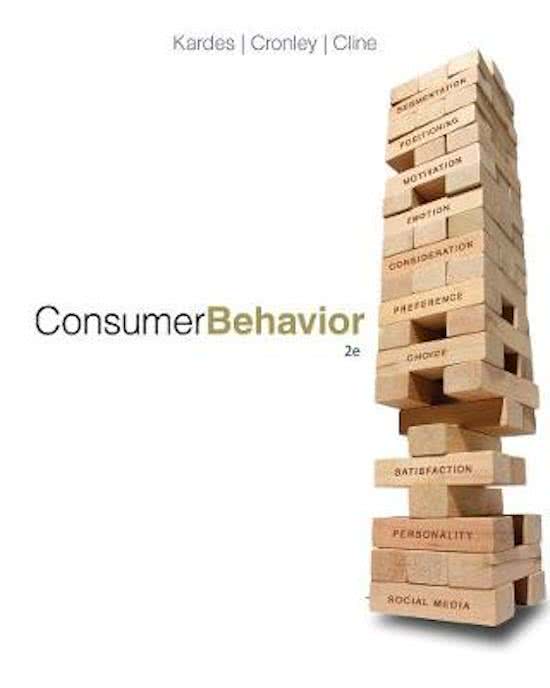
- Consumer behavior, second edition: Frank R. Kardes, Maria L. Cronley, Thomas W. Cline.
- Research Methods for Behavioral Sciences, Fith Edition: Frederick J Gravetter and Lori-Ann B. Forzano.
,Table of content
Chapter 1, Kardes: What is consumer behavior .............................................................................................. 3
1. What is consumer behavior? .................................................................................................................... 3
2. Why study consumer behavior? ............................................................................................................... 4
3. Consumer behavior as a field of study ...................................................................................................... 4
4. Developing consumer insights through research...................................................................................... 5
5. Marketing research process ..................................................................................................................... 5
Chapter 6, Gravetter: Research Strategies and Validity ................................................................................... 6
Chapter 12, Gravetter: The correlation Research Strategy .............................................................................. 9
1. Introduction correlational research .......................................................................................................... 9
2. Data and statistical analysis for correlational studies ............................................................................ 10
3. Applications of the correlational strategy .............................................................................................. 12
4. Strengths and weakness of the correlational research strategy ............................................................ 12
Chapter 7, Gravetter: The experimental research strategy ........................................................................... 12
Chapter 8, Gravetter: Experimental designs: between-subjects design ......................................................... 14
Chapter 11, Gravetter: Factorial Designs ...................................................................................................... 16
Chapter, 9 Kardes: Types of consumer decisions........................................................................................... 18
1. Types of consumer decisions (does not belong to the exam material) ................................................... 18
2. Traditional model of consumer decision making .................................................................................... 19
3. The nature of problem recognition ......................................................................................................... 20
4. The nature of information search ........................................................................................................... 20
5. Evaluation of alternatives: an uncertainty-reduction model (does not belong to the exam material)... 21
6. Post-purchase evaluation ............................................................................................................................. 22
Chapter 10, Kardes: Product consideration, evaluation, and choice .............................................................. 23
1. The consideration set: determining choice alternatives ......................................................................... 23
2. Influencing the consideration set............................................................................................................ 24
3. Stimulus-based, memory-based, and mixed choice ................................................................................ 24
4. Heuristic processing ................................................................................................................................ 25
5. Prediction heuristic ....................................................................................................................................... 25
Chapter 11, Kardes: Behavioral decision theory ............................................................................................ 26
1. Expected utility theory ............................................................................................................................ 26
2. The endorsement effect .......................................................................................................................... 27
3. Preference reversal ................................................................................................................................. 28
4. Singular versus comparative evaluation ................................................................................................. 28
5. Selective thinking .................................................................................................................................... 28
,Chapter 4, Kardes: Consumer perception ..................................................................................................... 29
1. Defining the perceptual process ............................................................................................................. 29
2. Sensory thresholds .................................................................................................................................. 29
3. Physical influences on attention ............................................................................................................. 30
4. Voluntary and involuntary ...................................................................................................................... 30
Chapter 8, Kardes: attitude and judgement formation and change ............................................................... 31
1. Nonevaluative judgement ...................................................................................................................... 31
2. Types of beliefs ....................................................................................................................................... 32
3. Expectancy-value models ....................................................................................................................... 33
4. The elaboration Likelihood model .......................................................................................................... 34
5. 5. Parameters of judgement ................................................................................................................... 35
Chapter 5, Kardes: Learning and memory ..................................................................................................... 35
1. The importance of learning and memory ............................................................................................... 35
6. 2. Operant conditioning .......................................................................................................................... 36
5. Comprehension and miscomprehension ................................................................................................. 37
4. The seven sins of memory ....................................................................................................................... 37
Chapter 6, Kardes: Automatic information processing .................................................................................. 39
1. Two styles of thinking ............................................................................................................................. 39
2. The adaptive unconscious....................................................................................................................... 39
3. Thin slice inferences ................................................................................................................................ 39
4. Implicit memory ...................................................................................................................................... 40
Chapter 7, Kardes: Motivation and emotion ................................................................................................. 41
1. An overview of motivation and emotion ................................................................................................ 41
2. Motivation and human needs................................................................................................................. 41
3. Attitude function theory ......................................................................................................................... 42
4. Balance theory ........................................................................................................................................ 42
Chapter 12, Kardes: ...................................................................................................................................... 42
Custom Edition, Consumer Behavior, by Kobe Millet
- Consumer behavior, second edition: Frank R. Kardes, Maria L. Cronley, Thomas W.
Cline.
- Research Methods for Behavioral Sciences, Fith Edition: Frederick J Gravetter and
Lori-Ann B. Forzano.
, Chapter 1, Kardes: What is consumer behavior
1. What is consumer behavior?
Definition consumer behavior not many years ago: usually called buyer behavior involves the study of
how consumers decide to buy products.
à nowadays accurate, but inadequate description of the full scope of activities in which consumers
engage prior to purchase and during and after consumption.
Consumer behavior: entails all consumer activities associated with the purchase, use and disposal of
goods and services, including the consumers emotional, mental and behavioral responses that
precede, determine or follow these activities.
Consumer: can describe individual or organizational consumers
- Individual consumers: purchase goods and services to satisfy their own personal needs and
wants or to satisfy needs and wants of others.
o Others: for example satisfying households, gift purchases, charitable contributions,
- Organizational consumers: purchase goods and services in order to:
o Produce other goods or services
o Resell them to other organizations or to individual consumers
o Help manage and run their organization
Consumer activities
Consumer behavior
Purchase use disposal activities
Why categorizing consumer behavior by type of activity?
- Consumers responses to stimuli (prikkels) may differ depending on whether they are
purchasing, using or disposing.
Purchase activities: are those through which consumers acquire goods and service.
- Everything done leading up to the purchase:
o Gathering and evaluating information about the product/service;
For example:
§ Additional services: such as paying methods, home delivery and installation,
and extended warranties.
§ Atmosphere of a store, design of a website
Use activities: describe where, when or how consumption takes place.
- Consumption immediately after purchase: ice cream, haircut
- Delay consumption: new clothing for an occasion, airline ticket
- Use daily or for special occasion: wedding, holiday, or toothpaste
- Entire product consumed before disposal: candy, movie ticket, or some left like chewing gum.
Disposal activities: ways consumers get rid of products and/ or packaging after consumption.
Includes:
- Discarding products
- Recycling
- Reuse
- Resale
Consumer Behavior,
summary Books
PREMASTER MARKETING
VRIJE UNIVERSITEIT AMSTERDAM
Summary of Custom Edition, Consumer Behavior, by Kobe Millet.
Including Chapters of:
- Consumer behavior, second edition: Frank R. Kardes, Maria L. Cronley, Thomas W. Cline.
- Research Methods for Behavioral Sciences, Fith Edition: Frederick J Gravetter and Lori-Ann B. Forzano.
,Table of content
Chapter 1, Kardes: What is consumer behavior .............................................................................................. 3
1. What is consumer behavior? .................................................................................................................... 3
2. Why study consumer behavior? ............................................................................................................... 4
3. Consumer behavior as a field of study ...................................................................................................... 4
4. Developing consumer insights through research...................................................................................... 5
5. Marketing research process ..................................................................................................................... 5
Chapter 6, Gravetter: Research Strategies and Validity ................................................................................... 6
Chapter 12, Gravetter: The correlation Research Strategy .............................................................................. 9
1. Introduction correlational research .......................................................................................................... 9
2. Data and statistical analysis for correlational studies ............................................................................ 10
3. Applications of the correlational strategy .............................................................................................. 12
4. Strengths and weakness of the correlational research strategy ............................................................ 12
Chapter 7, Gravetter: The experimental research strategy ........................................................................... 12
Chapter 8, Gravetter: Experimental designs: between-subjects design ......................................................... 14
Chapter 11, Gravetter: Factorial Designs ...................................................................................................... 16
Chapter, 9 Kardes: Types of consumer decisions........................................................................................... 18
1. Types of consumer decisions (does not belong to the exam material) ................................................... 18
2. Traditional model of consumer decision making .................................................................................... 19
3. The nature of problem recognition ......................................................................................................... 20
4. The nature of information search ........................................................................................................... 20
5. Evaluation of alternatives: an uncertainty-reduction model (does not belong to the exam material)... 21
6. Post-purchase evaluation ............................................................................................................................. 22
Chapter 10, Kardes: Product consideration, evaluation, and choice .............................................................. 23
1. The consideration set: determining choice alternatives ......................................................................... 23
2. Influencing the consideration set............................................................................................................ 24
3. Stimulus-based, memory-based, and mixed choice ................................................................................ 24
4. Heuristic processing ................................................................................................................................ 25
5. Prediction heuristic ....................................................................................................................................... 25
Chapter 11, Kardes: Behavioral decision theory ............................................................................................ 26
1. Expected utility theory ............................................................................................................................ 26
2. The endorsement effect .......................................................................................................................... 27
3. Preference reversal ................................................................................................................................. 28
4. Singular versus comparative evaluation ................................................................................................. 28
5. Selective thinking .................................................................................................................................... 28
,Chapter 4, Kardes: Consumer perception ..................................................................................................... 29
1. Defining the perceptual process ............................................................................................................. 29
2. Sensory thresholds .................................................................................................................................. 29
3. Physical influences on attention ............................................................................................................. 30
4. Voluntary and involuntary ...................................................................................................................... 30
Chapter 8, Kardes: attitude and judgement formation and change ............................................................... 31
1. Nonevaluative judgement ...................................................................................................................... 31
2. Types of beliefs ....................................................................................................................................... 32
3. Expectancy-value models ....................................................................................................................... 33
4. The elaboration Likelihood model .......................................................................................................... 34
5. 5. Parameters of judgement ................................................................................................................... 35
Chapter 5, Kardes: Learning and memory ..................................................................................................... 35
1. The importance of learning and memory ............................................................................................... 35
6. 2. Operant conditioning .......................................................................................................................... 36
5. Comprehension and miscomprehension ................................................................................................. 37
4. The seven sins of memory ....................................................................................................................... 37
Chapter 6, Kardes: Automatic information processing .................................................................................. 39
1. Two styles of thinking ............................................................................................................................. 39
2. The adaptive unconscious....................................................................................................................... 39
3. Thin slice inferences ................................................................................................................................ 39
4. Implicit memory ...................................................................................................................................... 40
Chapter 7, Kardes: Motivation and emotion ................................................................................................. 41
1. An overview of motivation and emotion ................................................................................................ 41
2. Motivation and human needs................................................................................................................. 41
3. Attitude function theory ......................................................................................................................... 42
4. Balance theory ........................................................................................................................................ 42
Chapter 12, Kardes: ...................................................................................................................................... 42
Custom Edition, Consumer Behavior, by Kobe Millet
- Consumer behavior, second edition: Frank R. Kardes, Maria L. Cronley, Thomas W.
Cline.
- Research Methods for Behavioral Sciences, Fith Edition: Frederick J Gravetter and
Lori-Ann B. Forzano.
, Chapter 1, Kardes: What is consumer behavior
1. What is consumer behavior?
Definition consumer behavior not many years ago: usually called buyer behavior involves the study of
how consumers decide to buy products.
à nowadays accurate, but inadequate description of the full scope of activities in which consumers
engage prior to purchase and during and after consumption.
Consumer behavior: entails all consumer activities associated with the purchase, use and disposal of
goods and services, including the consumers emotional, mental and behavioral responses that
precede, determine or follow these activities.
Consumer: can describe individual or organizational consumers
- Individual consumers: purchase goods and services to satisfy their own personal needs and
wants or to satisfy needs and wants of others.
o Others: for example satisfying households, gift purchases, charitable contributions,
- Organizational consumers: purchase goods and services in order to:
o Produce other goods or services
o Resell them to other organizations or to individual consumers
o Help manage and run their organization
Consumer activities
Consumer behavior
Purchase use disposal activities
Why categorizing consumer behavior by type of activity?
- Consumers responses to stimuli (prikkels) may differ depending on whether they are
purchasing, using or disposing.
Purchase activities: are those through which consumers acquire goods and service.
- Everything done leading up to the purchase:
o Gathering and evaluating information about the product/service;
For example:
§ Additional services: such as paying methods, home delivery and installation,
and extended warranties.
§ Atmosphere of a store, design of a website
Use activities: describe where, when or how consumption takes place.
- Consumption immediately after purchase: ice cream, haircut
- Delay consumption: new clothing for an occasion, airline ticket
- Use daily or for special occasion: wedding, holiday, or toothpaste
- Entire product consumed before disposal: candy, movie ticket, or some left like chewing gum.
Disposal activities: ways consumers get rid of products and/ or packaging after consumption.
Includes:
- Discarding products
- Recycling
- Reuse
- Resale