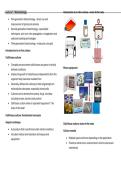
Lecture 1 - Biotechnology Introduction to in vitro culture – tools of the trade
• First-generation biotechnology – direct use and
improvement of plants and animals
• Second-generation biotechnology – specialized
techniques, such as in vitro propagation, mutagenesis and
selective breeding technologies
• Third-generation biotechnology – molecular concepts
Introduction to in vitro culture
Cell/tissue culture
• Complex process where cells/tissues are grown in strictly
defined conditions Minor equipment
• Implies the growth of cells/tissues independently from the
organism they have been isolated from
• Generally, defines the culturing of cells originating from
multicellular eukaryotes, especially animal cells
• Cultures can be derived from plants, fungi, microbes
including viruses, bacteria and protists
• Cell/tissue culture relies on specialist equipment: “the
tools of the trade”
Cell/tissue culture: fundamental concepts
Aseptic technique Cell/tissue culture: tools of the trade
• A procedure that is performed under sterile conditions Culture vessels
• Includes medical and laboratory techniques and
equipment • Multiple types and forms depending on the application
• Provide a sterile micro-environment in which cultures are
maintained
,The laminar flow hood Common methods of sterilization used in cell culture
• Aseptic technique essential to the success of working in a
flow hood
• Provides clean air to the working area
• Creates a constant airstream out of the work area –
prevents entry of air form the workroom
• Air outflow removes contaminants introduced by operators
• High EOiciency Particulate Air (HEPA) – most NB
component – filter removes nearly all microbial
contaminants
Cell/tissue culture: tools of the trade
The autoclave
• Analogous to a “pressure cooker”
• Sterilizes equipment and solution/media under high
temperature and pressure
• Under autoclave condition (1atmosphere above normal),
H! O will boil at 121° creating pressurized steam
• Generally, use 121° for a minimum of 15 minutes
• SuOicient to kill all life forms
,EFects of biological contaminations
• They compete for nutrients with host cells
• Secreted acidic of alkaline by-products ceases the growth
of the host cells
• Degraded arginine and purine inhibit the synthesis of
histone and nucleic acid
• They also produce H! O! which is directly toxic to cells
Dulbecco’s Modified Eagle’s Medium (DME) for animal culture
Growth substrate
• Either liquid or solid
• Contains all the necessary
nutrients for the successful
growth and maintenance of your
culture
• Like culture vessels, a multitude
exist depending on their
application
- E.g. Murashige and Skoog medium (plant culture)
- EMEM, DMEM (animal culture)
Murashige and Skoog (MS) medium for plant culture
Aseptic transfer techniques:
http://www.youtube.com/watch?v=zd0iVJrQwyY
, Introduction to in vitro culture Phyto-hormones
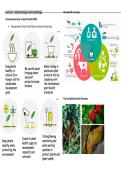
Lecture 2 – Types of plant culture • Auxins – promote cell growth and division
• Cytokinins – promote cell growth
Fundamental concepts
• The ratio of the Phyto-hormones allows assisted
Cell-totipotency exploitation of totipotency
• The ability of a cell (any cell) to regenerate into a whole
organism
• Plant cell/tissue culture is based on this phenomenon
• Animal cells lose their totipotency at an early stage in
embryonic development
Callus = mass of undiOerentiated cells
• Plants cells display this ability with assisted in vitro
techniques https://www.youtube.com/watch?v=oYkpu41LVgk
Introduction to plant in vitro culture
A working definition
• Growth of plant material in nutrient media under
controlled sterile conditions
• Involves alteration of the normal plant development
pattern
Factors that influence totipotency
• Source of explant = piece of tissue that was isolated and
used to initiate the culture
• Nutrient media and constituents
• Culture environment
• First-generation biotechnology – direct use and
improvement of plants and animals
• Second-generation biotechnology – specialized
techniques, such as in vitro propagation, mutagenesis and
selective breeding technologies
• Third-generation biotechnology – molecular concepts
Introduction to in vitro culture
Cell/tissue culture
• Complex process where cells/tissues are grown in strictly
defined conditions Minor equipment
• Implies the growth of cells/tissues independently from the
organism they have been isolated from
• Generally, defines the culturing of cells originating from
multicellular eukaryotes, especially animal cells
• Cultures can be derived from plants, fungi, microbes
including viruses, bacteria and protists
• Cell/tissue culture relies on specialist equipment: “the
tools of the trade”
Cell/tissue culture: fundamental concepts
Aseptic technique Cell/tissue culture: tools of the trade
• A procedure that is performed under sterile conditions Culture vessels
• Includes medical and laboratory techniques and
equipment • Multiple types and forms depending on the application
• Provide a sterile micro-environment in which cultures are
maintained
,The laminar flow hood Common methods of sterilization used in cell culture
• Aseptic technique essential to the success of working in a
flow hood
• Provides clean air to the working area
• Creates a constant airstream out of the work area –
prevents entry of air form the workroom
• Air outflow removes contaminants introduced by operators
• High EOiciency Particulate Air (HEPA) – most NB
component – filter removes nearly all microbial
contaminants
Cell/tissue culture: tools of the trade
The autoclave
• Analogous to a “pressure cooker”
• Sterilizes equipment and solution/media under high
temperature and pressure
• Under autoclave condition (1atmosphere above normal),
H! O will boil at 121° creating pressurized steam
• Generally, use 121° for a minimum of 15 minutes
• SuOicient to kill all life forms
,EFects of biological contaminations
• They compete for nutrients with host cells
• Secreted acidic of alkaline by-products ceases the growth
of the host cells
• Degraded arginine and purine inhibit the synthesis of
histone and nucleic acid
• They also produce H! O! which is directly toxic to cells
Dulbecco’s Modified Eagle’s Medium (DME) for animal culture
Growth substrate
• Either liquid or solid
• Contains all the necessary
nutrients for the successful
growth and maintenance of your
culture
• Like culture vessels, a multitude
exist depending on their
application
- E.g. Murashige and Skoog medium (plant culture)
- EMEM, DMEM (animal culture)
Murashige and Skoog (MS) medium for plant culture
Aseptic transfer techniques:
http://www.youtube.com/watch?v=zd0iVJrQwyY
, Introduction to in vitro culture Phyto-hormones
Lecture 2 – Types of plant culture • Auxins – promote cell growth and division
• Cytokinins – promote cell growth
Fundamental concepts
• The ratio of the Phyto-hormones allows assisted
Cell-totipotency exploitation of totipotency
• The ability of a cell (any cell) to regenerate into a whole
organism
• Plant cell/tissue culture is based on this phenomenon
• Animal cells lose their totipotency at an early stage in
embryonic development
Callus = mass of undiOerentiated cells
• Plants cells display this ability with assisted in vitro
techniques https://www.youtube.com/watch?v=oYkpu41LVgk
Introduction to plant in vitro culture
A working definition
• Growth of plant material in nutrient media under
controlled sterile conditions
• Involves alteration of the normal plant development
pattern
Factors that influence totipotency
• Source of explant = piece of tissue that was isolated and
used to initiate the culture
• Nutrient media and constituents
• Culture environment