Lecture 1 – biotechnology in plant pathology One health concept
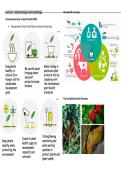
International year of plant health 2020
• Designated by the United Nations General Assembly
Current global plant diseases
,Current global plant diseases
,Plant pathogens causing concern Diagnose plant diseases
• SYMPTOMS – a visible or detectable expression of
abnormal physiology, development or behavior due to
disease
What is plant pathology?
• Defined as the study of the
organisms and environmental
conditions that cause disease in Diagnose plant diseases
plants
• The mechanisms by which this • SIGNS -any observable part of the causal agent (pathogen)
occurs, (how they cause disease) in disease
• The interactions between the - Common signs include reproductive structures of
organism and the plant (what pathogens like fungal mycelium and spores
effects it has on the plant), and
• The methods of managing or
controlling plant disease
, • USA: crop losses due to plant pathogens amount to $9.1
billion dollars
• Worldwide: plant diseases reduce crop productivity by 12%
(Food and Agriculture Organization, 1993)
• Worldwide: pesticide applications costing $26 billion
dollars annually are applied to manage pest losses
Introduction
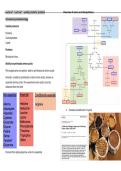
Transgenic crops
Plant pathologists aims to:
• Transgenic or genetically modified (GM) plant refers to
• Maintain healthy plants artificial transfer and expression of a gene in another
• Optimize crop yields organism
• Minimize pesticide usage • Transgenic crops grown commercially since 1996
• One of the ultimate aims of biotechnology in agricultural is • In 2008, transgenic crops grown in 25 countries world- wide
to feed an expanding world population on an estimated 125 million hectares
- Population increased 90% in last 40 years - Transgenic disease-resistant crops represents
- Food production only increased 25% per head miniscule proportion of total area, limited to virus
- Forecasted 1.5 billion additional mouths to feed by resistance in papaya and squash
2020, farmers will have to produce 39% more grain o Potato with virus resistance was released but
retracted due to consumer concerns
- Most transgenic crops provide herbicide resistance or
Bt resistance against insects
• Attitudes towards transgenic crops differ greatly
- USA: transgenics account for 50% of total transgenics
grown world-wide
- EU: account for less than 1% of transgenics
- Africa: more than 70% of commercially grown maize in
SA in GM;
International year of plant health 2020
• Designated by the United Nations General Assembly
Current global plant diseases
,Current global plant diseases
,Plant pathogens causing concern Diagnose plant diseases
• SYMPTOMS – a visible or detectable expression of
abnormal physiology, development or behavior due to
disease
What is plant pathology?
• Defined as the study of the
organisms and environmental
conditions that cause disease in Diagnose plant diseases
plants
• The mechanisms by which this • SIGNS -any observable part of the causal agent (pathogen)
occurs, (how they cause disease) in disease
• The interactions between the - Common signs include reproductive structures of
organism and the plant (what pathogens like fungal mycelium and spores
effects it has on the plant), and
• The methods of managing or
controlling plant disease
, • USA: crop losses due to plant pathogens amount to $9.1
billion dollars
• Worldwide: plant diseases reduce crop productivity by 12%
(Food and Agriculture Organization, 1993)
• Worldwide: pesticide applications costing $26 billion
dollars annually are applied to manage pest losses
Introduction
Transgenic crops
Plant pathologists aims to:
• Transgenic or genetically modified (GM) plant refers to
• Maintain healthy plants artificial transfer and expression of a gene in another
• Optimize crop yields organism
• Minimize pesticide usage • Transgenic crops grown commercially since 1996
• One of the ultimate aims of biotechnology in agricultural is • In 2008, transgenic crops grown in 25 countries world- wide
to feed an expanding world population on an estimated 125 million hectares
- Population increased 90% in last 40 years - Transgenic disease-resistant crops represents
- Food production only increased 25% per head miniscule proportion of total area, limited to virus
- Forecasted 1.5 billion additional mouths to feed by resistance in papaya and squash
2020, farmers will have to produce 39% more grain o Potato with virus resistance was released but
retracted due to consumer concerns
- Most transgenic crops provide herbicide resistance or
Bt resistance against insects
• Attitudes towards transgenic crops differ greatly
- USA: transgenics account for 50% of total transgenics
grown world-wide
- EU: account for less than 1% of transgenics
- Africa: more than 70% of commercially grown maize in
SA in GM;