Why did the international peace collapse? (1933-1939)
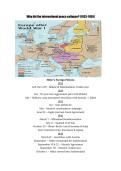
Hitler’s Foreign Policies
isabelle
1933
Left the LON - failure of Disarmament Conference
1934
Jan - 10-year non-aggression pact with Poland
July – Military coup attempted Anschluss with Austria → failed
1935
Jan - Saar plebiscite
Mar - Massive rearmament campaign
June 18 – Anglo-German Naval Agreement
1936
March 7 – Rhineland Remilitarisation
July 17 – Spanish Civil War
October 25 – Rome-Berlin Axis (Germany & Italy)
Anti-Comintern Pact (Germany & Japan)
1938
March 12 – Anschluss with Austria
September – Hitler demanded for Sudetenland
September 15 & 22 – Munich Agreement
September 29 – Munich Conference
October 1 – Hitler moved into Sudetenland
, 1939
March 15 – Occupation of Czechoslovakia
March 31 – Anglo-French Guarantee to Poland
May 22 – Pact of Steel (Germany & Italy)
June 15 – USSR started negotiations with Britain and France
August 2 – Failed negotiations between USSR and Britain and France
August 23 – Soviet-Nazi Pact (USSR & Germany)
September 1 – Invasion of Poland
October 6 – Successfully taken Poland
Failure of Disarmament Conference
● Only Germany expected to disarm - unfair basis
● No one was serious about it. France blatantly ignored the covenant
● Depression increased economic competition. Military provided jobs and
defense for colonies/markets. Depression led to extremism in badly
affected countries with few colonies like Germany, Italy & Japan
● Britain and France were divided on the issue
Causes of the outbreak of WW2
Britain & France’s fault
isabelle
1- Policy of Appeasement
The policy of Appeasement paved the way for Hitler’s growing confidence and
aggressiveness which eventually led to war. On many occasions, Hitler was actually
gambling on if the League and the Allies would take action on him. During the Rhineland
Remilitarisation, Hitler was gambling on the Allies and the League of Nation. Fortunately, the
Russian Mutual Assistance Pact, which was signed between France and the USSR was
used by Hitler to claim that Germany was under threat. Britain also felt that Germany had the
right to station their troops there. As the attention of the League was on the Abyssinian
Crisis, Hitler’s big gamble paid off. If the policy of appeasement had been stopped earlier,
Hitler wouldn't have dared to conquer more lands which later gave him courage for war
preparation. Hence, the policy was a mistake, as it backfired and failed to prevent another
war.
2- Attitude towards Stalin
The attitude and actions of Britain and France towards Stalin had resulted in the outbreak of
war. As Stalin was not invited to the Munich Conference, it led to the belief that Stalin had
been alienated. Despite Stalin wanting to form a military alliance with Britain and France
regardless of what happened in Munich, their negotiations fell through, due to distrust of
Stalin. Frustrated, Stalin began to lose faith with the Western powers. These factors then led
to the Soviet-Nazi Pact, which greatly benefited the Nazis as their prime obstacle of facing a
war with two fronts was eliminated. Hence, the one possibility of stopping war– countries
Hitler’s Foreign Policies
isabelle
1933
Left the LON - failure of Disarmament Conference
1934
Jan - 10-year non-aggression pact with Poland
July – Military coup attempted Anschluss with Austria → failed
1935
Jan - Saar plebiscite
Mar - Massive rearmament campaign
June 18 – Anglo-German Naval Agreement
1936
March 7 – Rhineland Remilitarisation
July 17 – Spanish Civil War
October 25 – Rome-Berlin Axis (Germany & Italy)
Anti-Comintern Pact (Germany & Japan)
1938
March 12 – Anschluss with Austria
September – Hitler demanded for Sudetenland
September 15 & 22 – Munich Agreement
September 29 – Munich Conference
October 1 – Hitler moved into Sudetenland
, 1939
March 15 – Occupation of Czechoslovakia
March 31 – Anglo-French Guarantee to Poland
May 22 – Pact of Steel (Germany & Italy)
June 15 – USSR started negotiations with Britain and France
August 2 – Failed negotiations between USSR and Britain and France
August 23 – Soviet-Nazi Pact (USSR & Germany)
September 1 – Invasion of Poland
October 6 – Successfully taken Poland
Failure of Disarmament Conference
● Only Germany expected to disarm - unfair basis
● No one was serious about it. France blatantly ignored the covenant
● Depression increased economic competition. Military provided jobs and
defense for colonies/markets. Depression led to extremism in badly
affected countries with few colonies like Germany, Italy & Japan
● Britain and France were divided on the issue
Causes of the outbreak of WW2
Britain & France’s fault
isabelle
1- Policy of Appeasement
The policy of Appeasement paved the way for Hitler’s growing confidence and
aggressiveness which eventually led to war. On many occasions, Hitler was actually
gambling on if the League and the Allies would take action on him. During the Rhineland
Remilitarisation, Hitler was gambling on the Allies and the League of Nation. Fortunately, the
Russian Mutual Assistance Pact, which was signed between France and the USSR was
used by Hitler to claim that Germany was under threat. Britain also felt that Germany had the
right to station their troops there. As the attention of the League was on the Abyssinian
Crisis, Hitler’s big gamble paid off. If the policy of appeasement had been stopped earlier,
Hitler wouldn't have dared to conquer more lands which later gave him courage for war
preparation. Hence, the policy was a mistake, as it backfired and failed to prevent another
war.
2- Attitude towards Stalin
The attitude and actions of Britain and France towards Stalin had resulted in the outbreak of
war. As Stalin was not invited to the Munich Conference, it led to the belief that Stalin had
been alienated. Despite Stalin wanting to form a military alliance with Britain and France
regardless of what happened in Munich, their negotiations fell through, due to distrust of
Stalin. Frustrated, Stalin began to lose faith with the Western powers. These factors then led
to the Soviet-Nazi Pact, which greatly benefited the Nazis as their prime obstacle of facing a
war with two fronts was eliminated. Hence, the one possibility of stopping war– countries