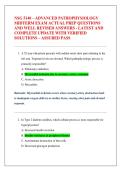
NSG 5140 – ADVANCED PATHOPHYSIOLOGY
MIDTERM EXAM ACTUAL PREP QUESTIONS
AND WELL REVISED ANSWERS - LATEST AND
COMPLETE UPDATE WITH VERIFIED
SOLUTIONS – ASSURED PASS
1. A 55-year-old patient presents with sudden-onset chest pain radiating to the
left arm. Troponin levels are elevated. Which pathophysiologic process is
primarily responsible?
A. Pulmonary embolism
B. Myocardial ischemia due to coronary artery occlusion
C. Aortic dissection
D. Pericarditis
Rationale: Myocardial ischemia occurs when coronary artery obstruction leads
to inadequate oxygen delivery to cardiac tissue, causing chest pain and elevated
troponin.
2. In Type 2 diabetes mellitus, which cellular process is most responsible for
hyperglycemia?
A. Increased insulin secretion
B. Insulin resistance at peripheral tissues
C. Autoimmune destruction of beta cells
D. Decreased glucagon production
,Rationale: Type 2 diabetes is characterized by insulin resistance, where target
tissues (muscle, liver, adipose) fail to respond to insulin, leading to persistent
hyperglycemia.
3. Which of the following is the best example of a type I hypersensitivity
reaction?
A. Contact dermatitis
B. Tuberculin skin test
C. Anaphylaxis after peanut ingestion
D. Hemolytic transfusion reaction
Rationale: Type I hypersensitivity involves IgE-mediated reactions to allergens,
resulting in rapid histamine release and anaphylaxis.
4. A patient with chronic liver disease develops confusion, asterixis, and
elevated ammonia levels. The underlying pathophysiology involves:
A. Increased bilirubin excretion
B. Failure of hepatic detoxification of ammonia
C. Excess renal urea synthesis
D. Autoimmune destruction of neurons
Rationale: Hepatic encephalopathy arises from the liver’s inability to convert
ammonia to urea, allowing neurotoxic ammonia to accumulate.
, 5. Which statement best describes the mechanism of cellular edema in heart
failure?
A. Decreased hydrostatic pressure
B. Increased plasma oncotic pressure
C. Increased hydrostatic pressure leading to fluid extravasation
D. Decreased capillary permeability
Rationale: In heart failure, elevated venous pressures increase hydrostatic
pressure in capillaries, pushing fluid into interstitial spaces and causing edema.
6. In a patient with chronic kidney disease, which electrolyte imbalance is most
likely to cause cardiac dysrhythmias?
A. Hypocalcemia
B. Hypomagnesemia
C. Hyperkalemia
D. Hyponatremia
Rationale: Impaired renal excretion in CKD leads to potassium retention.
Hyperkalemia alters cardiac membrane potentials, increasing the risk of
arrhythmias.
7. A 42-year-old woman presents with fatigue, cold intolerance, and
bradycardia. Lab tests reveal low T3 and T4 and elevated TSH. The most
likely pathophysiology is:
A. Secondary hypothyroidism
, B. Hyperthyroidism
C. Primary hypothyroidism due to thyroid gland failure
D. Thyroid hormone resistance
Rationale: Primary hypothyroidism involves direct thyroid failure, leading to low
thyroid hormones and compensatory high TSH from the pituitary.
8. Which of the following best describes the pathophysiology of asthma?
A. Neutrophilic infiltration of alveoli
B. Pulmonary fibrosis
C. Chronic airway inflammation with bronchoconstriction and mucus
hypersecretion
D. Pulmonary hypertension
Rationale: Asthma is characterized by reversible airway obstruction due to
smooth muscle constriction, inflammation, and excess mucus production.
9. A patient presents with jaundice, dark urine, and pale stools. Laboratory
studies show elevated conjugated bilirubin. The most likely mechanism is:
A. Hemolysis
B. Obstruction of bile flow
C. Impaired bilirubin conjugation
D. Hepatocellular necrosis
Rationale: Conjugated hyperbilirubinemia usually indicates cholestasis or
biliary obstruction, which prevents bilirubin excretion into the gut.
MIDTERM EXAM ACTUAL PREP QUESTIONS
AND WELL REVISED ANSWERS - LATEST AND
COMPLETE UPDATE WITH VERIFIED
SOLUTIONS – ASSURED PASS
1. A 55-year-old patient presents with sudden-onset chest pain radiating to the
left arm. Troponin levels are elevated. Which pathophysiologic process is
primarily responsible?
A. Pulmonary embolism
B. Myocardial ischemia due to coronary artery occlusion
C. Aortic dissection
D. Pericarditis
Rationale: Myocardial ischemia occurs when coronary artery obstruction leads
to inadequate oxygen delivery to cardiac tissue, causing chest pain and elevated
troponin.
2. In Type 2 diabetes mellitus, which cellular process is most responsible for
hyperglycemia?
A. Increased insulin secretion
B. Insulin resistance at peripheral tissues
C. Autoimmune destruction of beta cells
D. Decreased glucagon production
,Rationale: Type 2 diabetes is characterized by insulin resistance, where target
tissues (muscle, liver, adipose) fail to respond to insulin, leading to persistent
hyperglycemia.
3. Which of the following is the best example of a type I hypersensitivity
reaction?
A. Contact dermatitis
B. Tuberculin skin test
C. Anaphylaxis after peanut ingestion
D. Hemolytic transfusion reaction
Rationale: Type I hypersensitivity involves IgE-mediated reactions to allergens,
resulting in rapid histamine release and anaphylaxis.
4. A patient with chronic liver disease develops confusion, asterixis, and
elevated ammonia levels. The underlying pathophysiology involves:
A. Increased bilirubin excretion
B. Failure of hepatic detoxification of ammonia
C. Excess renal urea synthesis
D. Autoimmune destruction of neurons
Rationale: Hepatic encephalopathy arises from the liver’s inability to convert
ammonia to urea, allowing neurotoxic ammonia to accumulate.
, 5. Which statement best describes the mechanism of cellular edema in heart
failure?
A. Decreased hydrostatic pressure
B. Increased plasma oncotic pressure
C. Increased hydrostatic pressure leading to fluid extravasation
D. Decreased capillary permeability
Rationale: In heart failure, elevated venous pressures increase hydrostatic
pressure in capillaries, pushing fluid into interstitial spaces and causing edema.
6. In a patient with chronic kidney disease, which electrolyte imbalance is most
likely to cause cardiac dysrhythmias?
A. Hypocalcemia
B. Hypomagnesemia
C. Hyperkalemia
D. Hyponatremia
Rationale: Impaired renal excretion in CKD leads to potassium retention.
Hyperkalemia alters cardiac membrane potentials, increasing the risk of
arrhythmias.
7. A 42-year-old woman presents with fatigue, cold intolerance, and
bradycardia. Lab tests reveal low T3 and T4 and elevated TSH. The most
likely pathophysiology is:
A. Secondary hypothyroidism
, B. Hyperthyroidism
C. Primary hypothyroidism due to thyroid gland failure
D. Thyroid hormone resistance
Rationale: Primary hypothyroidism involves direct thyroid failure, leading to low
thyroid hormones and compensatory high TSH from the pituitary.
8. Which of the following best describes the pathophysiology of asthma?
A. Neutrophilic infiltration of alveoli
B. Pulmonary fibrosis
C. Chronic airway inflammation with bronchoconstriction and mucus
hypersecretion
D. Pulmonary hypertension
Rationale: Asthma is characterized by reversible airway obstruction due to
smooth muscle constriction, inflammation, and excess mucus production.
9. A patient presents with jaundice, dark urine, and pale stools. Laboratory
studies show elevated conjugated bilirubin. The most likely mechanism is:
A. Hemolysis
B. Obstruction of bile flow
C. Impaired bilirubin conjugation
D. Hepatocellular necrosis
Rationale: Conjugated hyperbilirubinemia usually indicates cholestasis or
biliary obstruction, which prevents bilirubin excretion into the gut.