Patho Exam 3 study guide /Review Notes for Advanced Patho Exam 3
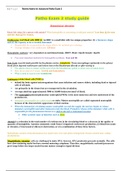
Patho Exam 3 study guide Hematological Alterations Know lab values for a person with anemia* What hemoglobin is concerning or indicates anemia? Less than 12 for men and less than 15 for women. Erythrocytes (red blood cells [RBCs]) An RBC is a small disk with two unique properties: (1) a biconcave shape and (2) the capacity to be reversibly deformed. • Responsible for oxygenation-the shape allows for optimal gas exchange • Average lifespan of an erythrocyte- 120 days Hemoglobin synthesis: very dependent on nutritional intake. IRON (Male: 16g/dl; female: 14g/dl) • Two most important nutrients for hemoglobin synthesis- Iron and B6 Iron Cycle recycled made possible by the plasma carrier, transferrin. Tissue macrophages (primarily in the spleen) break down ingested erythrocytes and return iron to the bloodstream directly or after storing it. • The spleen removes mature erythrocytes from the bloodstream; spleen is where iron is broken down • How do we store it (2 ways)- ferritin and hemosiderin • What is used to recycle iron- transferrin Leukocytes (white blood cells [WBCs]) • defend the body against microorganisms that cause infection and remove debris, including dead or injured cells of all kinds. • Act primarily in the tissues but are transported in the circulation. • Average adult has approximately 5000 to 10,000 leukocytes/mm3 of blood. • The neutrophil (polymorphonuclear neutrophil [PMN]) is the most numerous and best understood of the granulocytes. • Immature neutrophils are called bands or stabs. Mature neutrophils are called segmented neutrophils because of the characteristic appearance of their nucleus. • When the demand for circulating mature neutrophils exceeds the supply, the marrow begins to release immature neutrophils (and other leukocytes) into the blood. Premature release of the immature white cells is responsible for the phenomenon known as a shift-to-the-left or leukemoid reaction. o Other systemic signs of infection such as fever. o Anemia is a reduction in the total number of erythrocytes in the circulating blood or a decrease in the quality or quantity of hemoglobin. Anemias commonly result from (1) impaired erythrocyte production, (2) blood loss (acute or chronic), (3) increased erythrocyte destruction, or (4) a combination of these three factors. Sideroblastic anemia- hemochromatosis (too much iron), liver and spleen enlargement, bronze-colored skin, cardiac dysrhythmias Megaloblastic Anemias: cells are challenged to make DNA; however, RNA production proceeds normally. The cells have slow-maturing nuclei but have normal maturing cytoplasm. Therefore, megaloblastic erythroid precursors grow large before the larger nuclei become mature enough to signal division EXAMPLE OF A MEGOBLASTIC ANEMIA: • Vitamin B12 deficiency anemia (Pernicious) o The principal disorder in PA is an absence of intrinsic factor (IF). IF is secreted by gastric parietal cells and complexes with dietary vitamin B12 in the small intestine. o Deficiency can lead to a wide spectrum of hematologic and neuropsychiatric disorders that can often be reversed by early diagnosis and prompt treatment. o The use of gastric acid–blocking agents and the aging of the U.S. population into consideration, the actual prevalence of vitamin B12 deficiency may be even higher than statistics indicate. o When the hemoglobin level has decreased significantly (7 to 8 g/dL), the individual experiences the classic symptoms of anemia—weakness, fatigue, paresthesias of the feet and fingers, difficulty walking, loss of appetite, abdominal pains, weight loss, and a sore tongue that is smooth and beefy red secondary to atrophic glossitis. o What are some things that cause B12 deficiency anemia- H2 blockers o Symptoms that you have with B12 deficiency- peripheral numbness and tingling paresthesias o What's the normal B12 level -usually greater than 400 Microcytic-Hypochromic Anemias are characterized by abnormally small erythrocytes that contain unusually reduced amounts of hemoglobin. EXAMPLE: • Iron deficiency IDA can arise inadequate dietary intake or excessive blood loss. o The most common cause of IDA in developed countries is pregnancy and chronic blood loss. o A blood loss of 2 to 4 mL/day (1 to 2 mg of iron) is enough to cause IDA. o Menorrhagia (excessive menstrual bleeding) causes primary IDA in females. o Males may experience bleeding as a result of ulcers, hiatal hernia, esophageal varices, cirrhosis, hemorrhoids, ulcerative colitis, or cancer. o Early symptoms are nonspecific and include fatigue, heart palpitations, weakness, shortness of breath, and pale earlobes, palms, and conjunctivae. o Symptoms of IDA begin gradually, and individuals usually do not seek medical attention until hemoglobin levels have decreased to about 7 to 8 g/dL. o best place to look for an iron deficiency anemia if you're trying to do your physical exam- look at the conjunctival Aplastic Anemia a critical condition in most cases being caused by an autoimmune disease against hematopoiesis by activated cytotoxic T cells. It is characterized by pancytopenia, a reduction or absence of all three blood cell types, resulting from failure or suppression of bone marrow to produce adequate amounts of erythrocytes, leukocytes, and thrombocytes blood cells. Anemia of Chronic Disease is a common type of anemia in hospitalized individuals. ACD results from a combination of (1) decreased erythrocyte life span, (2) suppressed production of erythropoietin, (3) ineffective bone marrow erythroid progenitor response to erythropoietin, and (4) altered iron metabolism and iron sequestration in macrophages. Posthemorrhagic Anemia (Acute Blood Loss). Reduction in tissue oxygenation stimulates production of erythropoietin and increasing production of erythrocytes (reticulocytes) in the bone marrow. As the bone marrow begins to produce more erythrocytes, an increase in the number of reticulocytes (10% to 15% after 7 days) is seen. Hodgkin Lymphoma (HL) is a malignant lymphoma and characterized by its progression from one group of lymph nodes to another, the development of systemic symptoms, and the presence of Reed-Sternberg (RS) cells. RS cells are the hallmark of HL. The MOST indicative sign of HL is: Enlarged, painless lymph nodes in the neck (often the first sign of HL). Heparin-induced thrombocytopenia (HIT). Heparin is a common cause of drug-induced thrombocytopenia. • HIT is an immune-mediated, adverse drug reaction caused by IgG antibodies against the heparin–platelet factor 4 complex. • The hallmark of HIT is thrombocytopenia. A decrease of approximately 50% in the platelet count is seen in more than 95% of individuals. • Venous thrombosis is most common and results in deep venous thrombosis and pulmonary emboli. • Arterial thromboses affect the large arteries of the lower extremities, causing acute limb ischemia and may also lead to cerebrovascular accidents and myocardial infarctions. Disseminated intravascular coagulation (DIC) - An acquired clinical syndrome characterized by widespread activation of coagulation, resulting in the formation of fibrin clots in medium and small vessels throughout the body. • Gram Negative Sepsis is the most common condition associated with DIC. • Hemorrhage is secondary to the abnormally high consumption of clotting factors and platelets. However, platelet consumption exceeds production, resulting in a thrombocytopenia that increases bleeding. Extensive clotting consumes clotting factors and platelets, leading to widespread hemorrhage. Hormonal Regulation Diseases of the Anterior Pituitary Hyperpituitarism: Primary Adenoma – • Pituitary adenomas are usually benign slow-growing tumors that arise from cells of the anterior pituitary. • Local expansion of pituitary adenomas may cause both neurologic and secretory defects • Paradoxically, the pressure produced by a pituitary adenoma is also associated with hyposecretion of other anterior pituitary hormones-can cause hypothyroidism and hypocortisolism (thyroid and adrenal hypofunction) Hypersecretion of Prolactin: Prolactinoma – • Pituitary tumors that secrete prolactin and are the most common of the hormonally active pituitary adenomas. o Arise from anterior Pituitary • Renal failure and polycystic ovarian disease, can increase prolactin levels. • Medications that block the effects of dopamine that include antipsychotics (risperidone, chlorpromazine), metoclopramide, tricyclic antidepressants, and methyldopa. • The physiologic actions of prolactin include breast development during pregnancy, postpartum milk production, and suppression of ovarian function in nursing women. • Pathologic elevation of prolactin levels causes amenorrhea, infertility, nonpuerperal milk production (galactorrhea), and hirsutism in women. Hyperprolactinemia in men causes erectile dysfunction, infertility, and osteopenia. • Diseases of the Posterior Pituitary Diabetes insipidus • Insufficient, or not enough ADH (ADH holds onto water) (not enough AHD so peeing off a lot of fluids) • Polyuria • Polydipsia • Hypernatremia • High serum osmolality (>300 mOsm or more) (increased or hyper serum osmolality) • Lab value that is consistently low is urine specific gravity while sodium levels are high SIADH • Too much ADH (retaining water) • Hypotonic (dilutional) hyponatremia (extremely low sodium levels!) • Hypervolemia • Weight gain (usually no edema) • Severe Headache • Confusion • Most valuable lab: ADH level, urine osmolality Alterations of the Thyroid Gland Hypothyroidism • Lower levels of thyroid hormone • s/s: decreased energy metabolism resulting in constipation, bradycardia, and lethargy. Other s/s: confusion, syncope, slowed speech and thinking, memory loss, headaches, decreased libido, menorrhagia, erectile dysfunction, anemia, dyspnea, hypoventilation with subsequent increase in PaCO2 levels, reduced renal blood flow, reduced production of erythropoietin, weight gain, fluid retention, decreased absorption of most nutrients, dry, flaky skin, dry course hair, reduced growth of nails, slow wound healing, and hypothermia. • Causes include o autoimmune thyroiditis (Hashimoto disease) o iatrogenic loss of thyroid tissue after surgical or radioactive treatment for hyperthyroidism o head and neck radiation therapy o medications o endemic iodine deficiency • Any hematologic things that occur with hypothyroidism- anemia • A patient has Hashimoto’s Thyroiditis and a goiter. What clinical finding requires immediate action by the provider? An increased PACo2- this indicated dyspnea and poor ventilation. This should be addressed immediately. Hyperthyroid Conditions Graves Disease • Type II hypersensitivity in which there is stimulation of the thyroid by autoantibodies (thyroid-stimulating immunoglobins) directed against the TSH receptor. • The TSI stimulation of TSH receptors in the gland results in hyperplasia of the gland (goiter) and increased synthesis of TH. SYSTEM CLINICAL MANIFESTATIONS Endocrine Enlarged thyroid gland (goiter); bruit over thyroid; hypercalcemia and decreased PTH secretion Reproductive Oligomenorrhea or amenorrhea; erectile dysfunction and decreased libido Gastrointestinal Weight loss; increased peristalsis leading to less formed and more frequent stools Integumentary Excessive sweating, flushing, and warm skin; heat intolerance; hair loss Sensory (eyes) Elevated upper eyelid leading to decreased blinking and a staring quality; fine tremor of lid Cardiovascular Increased cardiac output and decreased peripheral resistance; tachycardia at rest; supraventricular dysrhythmias Nervous Restlessness; short attention span; compulsive movement; fatigue; tremor; insomnia; increased appetite; emotional lability Pulmonary Dyspnea Alterations of the Parathyroid Gland Hypoparathyroidism. - Hypoparathyroidism (abnormally low PTH levels) most commonly is caused by damage to the parathyroid glands during thyroid surgery and occurs because of the anatomic proximity of the parathyroid glands to the thyroid. • Calcium and phosphate balance is regulated by: parathyroid hormone (PTH) • decreased calcium levels increase release of PTH • increased calcium levels suppress secretion of PTH o Hormone imbalance that slows the rate of parathyroid secretion: Hypercalcemia Alterations of the Pancreas Diabetes Mellitus - What is a major complication of type 2 diabetes? Neuropathy. Diabetes ketoacidosis results from dehydration during a state of profound insulin deficiency. • Precipitated by infection, newly diagnosed, nonadherence to diabetes treatment • Symptoms o Kussmaul respirations (hyperventilation) o Metabolic acidosis o Osmotic diuresis o Hyperglycemia o Polyuria and dehydration result from the osmotic diuresis associated with hyperglycemia. o Polydipsia o Postural dizziness o Central nervous system depression o Ketonuria o Anorexia, nausea, abdominal pain pH: 7.36 (LOW-7.35-7.45-relative to perfect 7.4) PaCO2: 25 mm Hg compensatory mechanism – blowing off CO2 (acid) (LOW-35-45) HCO3: 9 mEq/L (LOW 22-26) Monitor the Anion Gap-will start closing as insulin administration will start decreasing the metabolic acidosis and less keytones will be produced How long has somebody really had diabetes before we discover it- 10 years (asymptomatic) What does a hemoglobin A1C tell the provider? The patient’s average blood glucose control over the last 3-4 months. Remember a person who has had DM II for years and has a heart attack may not feel chest pain due to autonomic neuropathy Diabetes insipidus and diabetes mellitus both exhibit thirst as a symptom due to osmotic diuresis Hyperosmolar hyperglycemic nonketotic syndrome (HHNKS) • life-threatening emergency most often precipitated by infections, medications, nonadherence to diabetes treatment, or coexisting disease. • More commonly seen with type 2 diabetes. • HHNKS differs from DKA in the degree of insulin deficiency (which is more profound in DKA) and the degree of fluid deficiency. • HHNKS is characterized by a lack of ketosis. Hypoglycemia • blood glucose levels are less than 45 to 60 mg/dl • tachycardia, palpitations, diaphoresis, tremors, pallor, arousal anxiety, headache, dizziness, irritability, fatigue, poor judgment, confusion, visual changes, hunger, seizures, and coma. Somogyi effect: • occurrence of hypoglycemia at about 3:00 AM caused by too much intermediate-acting insulin (i.e., NPH insulin) given at dinner time followed by rebound hyperglycemia caused by normal early morning secretion of counter-regulatory hormones (epinephrine, GH, corticosteroids), which are stimulated by hypoglycemia and cause gluconeogenesis. • The treatment is to decrease evening insulin level. • The Somogyi effect is becoming much less common because of the increasing use of long-acting bioengineered insulins. Dawn phenomenon • early morning rise in blood glucose concentration caused by nocturnal elevations of GH, which decreases metabolism of glucose by muscle and fat. • Increasing the dose of evening insulin manages the problem. Microvascular Disease: • Thickening of the capillary basement membrane, endothelial cell hyperplasia, and thrombosis. o The thickening eventually results in decreased tissue perfusion (adequate oxygenation). • Many individuals with type 2 DM present with microvascular complications because of the long duration of asymptomatic hyperglycemia that generally precedes diagnosis. • Leading cause of: Retinopathy with potential to lead to blindness, Kidney disease leading to end-stage kidney failure, Diabetic neuropathies. Macrovascular disease (lesions in large and medium sized arteries) • increases morbidity and mortality • increases risk for accelerated atherosclerosis and myocardial infarction, stroke, and peripheral vascular disease. • Individuals with diabetes mellitus have a higher mortality during the acute phase of myocardial infarctions because they are often asymptomatic as a result of sensory and autonomic neuropathy. Alterations in Adrenal Function Addison’s disease • characterized by inadequate corticosteroid and mineralocorticoid synthesis and elevated serum ACTH levels • hypocortisolism and hypoaldosteronism • hypovolemia • postural hypotension and dizziness • dehydration • hyperkalemia • salt cravings • weakness • nausea/vomiting/diarrhea • anorexia/weight loss • hypoglycemia • hyponatremia • tachycardia • hyperpigmentation of skin-bronze colored skin • vitiligo (white patchy areas of depigmented skin) Addisonian crisis: severe hypotension and vascular collapse Cushing disease • resulting from chronic exposure to excess endogenous cortisol • more common in women • hypersecretion of ACTH (corticotropin) • may develop as a side effect of long-term pharmacologic administration of glucocorticoids • Polyuria is a manifestation of hyperglycemia and resultant glycosuria. Transient weight gain from sodium and water retention may be present because of the mineralocorticoid effects of cortisol, exhibited when cortisol is present in high levels. Weight gain: “truncal [central] obesity,” “moon face,” and “buffalo hump”. Glucose intolerance (Hyperglycemia) Protein wasting: muscle weakness. purple striae and easy bruising. With an increased secretion of the anterior pituitary hormones (ACTH). Increased urinary cortisol would be an expected lab result related to this condition Cushing's Disease they don't have the diurnal or circadian secretion patterns of ACTH and cortisol; in response to stress they don't increase their ACTH or their cortisol secretion A patient has an increased anterior pituitary hormone. What labs will reflect this? An increased urine cortisol. Obesity and Nutrition • leading causes of death associated with obesity: cardiovascular disease, type 2 diabetes mellitus, and cancer. • Overweight is defined as a BMI greater than 25 kg/m2 and obesity is a BMI greater than 30 kg/m2. • Waist circumference for obesity: 34 Cardiac Alterations Trace the electrical activity of the heart. - The sympathetic nervous system increases heart rate and shortens the conduction time through the nodes, the parasympathetic nervous system slows heart rate and prolongs intranodal conduction time, and both systems cause coronary vasodilation. What nervous system causes the heart to increase its rate and rate of conduction- sympathetic Electrical activity of the heart- SA node to AV node, bundle of his, to the purkinje fibers to the ventricles What comes first signal or contraction? - the signal you have to have the electrical activity and then that stimulates the mechanical response but if you have electrical activity with no mechanical response you get PE a pulseless electrical activity Atrial fibrillation • most common cardiac rhythm disorder. • Occurs when electrical impulses in the heart become disorganized leading to a rapid and irregular heart rhythm. • People with AF have a four- to fivefold increased risk of stroke Left-ventricular end diastolic pressure (preload) • Frank-Starling law; cardiac muscle increases its strength of contraction when it is stretched. • Left ventricular preload is the pressure generated in the left ventricle at the end of diastole or left ventricular end-diastolic pressure (LVEDP). • It is determined by the left ventricular end-diastolic volume (LVEDV), which stretches the cardiac muscle fibers and in turn develops tension, or force, for contraction. • Increased preload (volume) – thus increase force of contraction – OUTCOME: increase cardiac output. Effect of angiotensin II on the heart. • When present in abnormal amounts, Ang II contribute to hypertensive hypertrophy due to increase peripheral vascular resistance by Ang II • Further, ang II mediates arteriolar remodeling, which is a structural change in the vessel wall that results in permanent increases in peripheral resistance. • Ang II is associated with end-organ effects of hypertension, including atherosclerosis, renal disease, and cardiac hypertrophy, and fibrosis of heart muscle, decreased contractility, and an increased susceptibility to arrhythmias and heart failure. • Drugs that block this RAAS include ACE inhibitors, direct renin inhibitors, Ang II receptor blockers (ARBs), and aldosterone inhibitors. o These medications are used widely in managing hypertension, myocardial infarction, and heart failure to lower blood pressure and to protect and improve cardiovascular and renal function. How does HTN effect the glomerula of the kidneys? Causes ischemia. Effects of angiotensin II related to an Myocardial Ischemia/Infarction: Ang II is released during myocardial ischemia and contributes to the pathogenesis of MI in several ways. MOST IMPORTANTLY: it results in the systemic effects of peripheral vasoconstriction and fluid retention. POTENTIAL IMPACT: These homeostatic responses are counterproductive in that they increase myocardial work on a heart that may be struggling and could potentially exacerbate the effects of the loss of myocyte contractility. Microalbuminuria is the clinical manifestation most indicative of complications related to chronic hypertension In patients with chronic HTN, what are we looking for in their urine? Assessing for microalbumin (protein). Albumin in urine indicates that the repeated effects of HTN have lead to poor perfusion to the kidney leading to poor kidney performance. This is also secondary to DM. Coronary Artery Disease Nonmodifiable include: (1) advanced age, (2) male gender or women after menopause, and (3) family history. Modifiable risks include: (1) dyslipidemia, (2) hypertension, (3) cigarette smoking, (4) diabetes and insulin resistance, (5) obesity, (6) sedentary lifestyle, and (7) an atherogenic diet. What are some diagnoses that typically accompany dyslipidemia? Obesity, HTN, CAD, sometimes glucose intolerance. OPTIMAL NEAR OPTIMAL DESIRABLE LOW BORDERLINE HIGH VERY HIGH Total cholesterol <200 200–239 ≥240 LDL <100 100–129 130–159 160–189 ≥190 Triglycerides <150 150–199 200–499 ≥500 HDL <40 ≥60 An increased serum concentration of LDL is an indicator of coronary risk; however, the relative risk of elevated LDL depends on the presence of other risk factors such as age, diabetes, and chronic kidney disease. LDL is responsible for the delivery of cholesterol to the tissues. Low levels of HDL cholesterol also are a strong indicator of coronary risk. HDL is responsible for “reverse cholesterol transport,” which returns excess cholesterol from the tissues to the liver. ACS (Acute Coronary Syndrome). Unstable angina - Plaque progression, disruption, and subsequent clot formation is the same for myocardial infarction as it is for unstable angina. However, the results (outcome) is very different in that the myocardial ischemia is REVERSIBLE. Differentiating Stable angina from Unstable Angina: Stable angina is predictable and the pain does not change – the patient will describe the pain as not changing over time. Stable angina is relieved with the usual interventions that the patient utilizes such as the use of nitro or simply resting. VERSUS unstable angina the pain is worse (different) and the “usual interventions” do not relieve the pain – call 911!!!! NSTEMI: (non-ST elevation MI) The duration of ischemia determines the size and character of the infarction. If the thrombus breaks up before complete distal tissue necrosis has occurred, the infarction will involve only the myocardium directly beneath the endocardium (subendocardial MI). This infarction usually presents with ST depression and T-wave inversion and is termed non-STEMI. STEMI: (ST elevation MI) If the thrombus lodges permanently in the vessel, the infarction will extend through the myocardium all the way from endocardium to epicardium (transmural MI), resulting in severe cardiac dysfunction. Transmural infarction usually causes marked elevations in the ST segments on ECG. Individuals with elevations are categorized as having STEMI. Cardiac Markers: Cardiac troponin I (cTnI) is the most specific indicator of MI and should be obtained on admission to the emergency department. cTnI elevation is detectable 2 to 4 hours after onset of symptoms. Other biomarkers released by myocardial cells include CPK-MB and LDH. Remember than an individual who is demonstrating elevated levels of troponin, creatine kinase, and lactic dehydrogenase is most probably having a myocardial infarction Remember an individual who is demonstrating elevated ST segment on the EKG tracing and increased level of troponin is most likely having an myocardial infarction What happens after an MI? - A collagen matrix is deposited and is initially weak, mushy, and vulnerable to reinjury. Unfortunately, it is at this time in the recovery period (10 to 14 days after infarction) that individuals feel more capable of increasing activities and thus may stress the newly formed scar tissue. Remember cardiac tamponade is compression of the heart by pericardial fluid Acute pericarditis is acute inflammation of the pericardium. The etiology of acute pericarditis is most often idiopathic or caused by viral infection. Other causes include MI, trauma, neoplasm, surgery, uremia, bacterial infection (especially tuberculosis), connective tissue disease (especially systemic lupus erythematosus and rheumatoid arthritis), or radiation therapy. The pericardial membranes become inflamed and roughened, and a pericardial effusion may develop that can be serous, purulent, or fibrinous. Symptoms may follow several days of fever and usually begin with the sudden onset of severe, retrosternal chest pain that worsens with respiratory movements and when assuming a recumbent position. Individuals with acute pericarditis also report dysphagia, restlessness, irritability, anxiety, weakness, and malaise. Possible sequelae of pericarditis include recurrent pericarditis, pericardial constriction, and cardiac tamponade (compression of the heart by pericardial fluid). What is one of the complications of an acute MI- pericarditis Pericarditis, pericardial constriction, and cardiac tamponade can all be the result of a bad outcome for an MI Heart Failure Heart failure (HF) is defined as the pathophysiologic condition in which the heart is unable to generate an adequate cardiac output such that inadequate perfusion of tissues or increased diastolic filling pressure of the left ventricle, or both, occurs; consequently, pulmonary capillary pressures are increased. Left Heart Failure. - Heart failure with reduced ejection fraction, or HFrEF (systolic heart failure), is defined as an ejection fraction of <40% and an inability of the heart to generate an adequate cardiac output to perfuse vital tissues. • Cardiac output depends on the heart rate and stroke volume. Stroke volume is influenced by three major factors: contractility, preload, and afterload. • Contractility is reduced by diseases that disrupt myocyte activity. • Myocardial infarction is the most common cause of decreased contractility; other causes include myocarditis and cardiomyopathies. These diseases contribute to inflammatory, immune, and neurohumoral changes (activation of the SNS and RAAS) that mediate a process called ventricular remodeling. Ventricular remodeling results in disruption of the normal myocardial extracellular structure with resultant dilation of the myocardium and causes progressive myocyte contractile dysfunction over time (Fig. 33.37). When contractility is decreased, stroke volume falls, and left ventricular end-diastolic volume (LVEDV) increases. This causes dilation of the heart and an increase in preload. • Left sided heart failure- secondary to HTN, continued effort to pump against high resistance • Sx left sided- fluid volume overload (crackles from pulmonary edema you can have pink frothy sputum, lose ability to hear S3 and S4 heart sounds) • What kinds of things do we need to do for people who are in heart failure- diuresis MAIN PLAYERS in the vicious cycle of increased Preload and Afterload with decreased Contractility in HF: Catecholamines. Sympathetic nervous system activation initially compensates for a decrease in cardiac output by increasing heart rate and peripheral vascular resistance. However, catecholamines cause numerous deleterious effects on the myocardium, including direct toxicity to myocytes, induction of myocyte apoptosis, myocardial remodeling, downregulation of adrenergic receptors, facilitation of dysrhythmias, and potentiation of autoimmune effects on the heart muscle. Remember catecholamines can shorten the conduction time of the action potential through the atrioventricular (AV) node What do both systems do- Coronary Vasodilatation RAAS - Angiotensin II (Ang II). Activation of the RAAS causes not only increases in preload and afterload, but also causes direct toxicity to the myocardium. Ang II mediates remodeling of the ventricular wall, contributing to sarcomere death, loss of the normal collagen matrix, and interstitial fibrosis. This leads to decreased contractility, changes in myocardial compliance, and ventricular dilation. If I have elevated Angiotensin 2 and elevated aldosterone- HTN and hypertrophy caused by increased peripheral vascular resistance Remember Angiotensin II is responsible for the hypertrophy of the myocardium associated with hypertension Aldosterone. Aldosterone not only causes salt and water retention by the kidney but also contributes to myocardial fibrosis, autonomic dysfunction, and dysrhythmias. It also has been implicated in endothelial dysfunction and prothrombotic effects. Arginine vasopressin. Arginine vasopressin is also known as antidiuretic hormone and causes both peripheral vasoconstriction and renal fluid retention. These actions exacerbate hyponatremia and edema in heart failure. Natriuretic peptides. Atrial natriuretic peptides (ANPs) and B-type natriuretic peptides (BNPs) are increased and may have some protective effect by decreasing preload; however, their compensatory mechanisms are inadequate in heart failure. Heart failure with preserved ejection fraction, or HFpEF (diastolic heart failure), can occur singly or along with systolic heart failure. Isolated diastolic heart failure is defined as pulmonary congestion despite a normal stroke volume and cardiac output. The major causes of HFpEF include hypertension-induced myocardial hypertrophy and myocardial ischemia with resultant ventricular remodeling. Diabetes also increases the risk for diastolic dysfunction. Remember that an increase in left ventricular end-diastolic volume leads to an increased force of contraction Know clinical manifestations for right sided heart failure and left sided heart failure a. Right-side: ankle edema, jugular vein dissension and hepatomegaly; pulmonary disease and elevated pulmonary vascular resistance Right sided heart failure- usually caused by pulmonary HTN (backs up to the right side), sleep apnea What are some signs and symptoms of right sided heart failure? JVD, SOB, Edema, weight gain, tachycardia, hepatomegaly Right heart failure is defined as the inability of the right ventricle to provide adequate blood flow into the pulmonary circulation at a normal central venous pressure. It most often results from severe left heart failure when the increased left ventricular filling pressure is reflected back into the pulmonary circulation. As pressure in the pulmonary circulation rises, the resistance to right ventricular emptying increases. The right ventricle hypertrophies in response to this increased workload, however it undergoes progressive diastolic and systolic deterioration and will dilate and fail. When right heart failure occurs in the absence of left heart failure, it is caused most commonly by pulmonary hypertension resulting from diffuse hypoxic pulmonary disease, such as chronic obstructive pulmonary disease (COPD) and cystic fibrosis, or from primary pulmonary arterial hypertension. Right-sided HF Left-sided HF ↑ HR Jugular venous distention (JVD) Edema (ankles, lower legs) Weight gain Ascites Hepatomegaly (liver enlargement) Fatigue Anorexia and GI bloating Nausea ↑ HR S3 and S4 heart sounds ↓ PaO2, slight ↑ PaCO2 (poor O2 exchange) Crackles (pulmonary edema) Frothy, pink-tinged sputum (advanced pulmonary edema) Dyspnea Paroxysmal nocturnal dyspnea Orthopnea (shortness of breath in recumbent position) Dry, hacking cough Pleural effusion Changes in mental status Weakness, fatigue Nocturia Brain natriuretic peptide (BNP) is produced and released in response to pressure and volume overload of the cardiac chambers. This occurs in both systolic and diastolic heart failure (HF). BNP causes arterial and venous dilation, natriuresis, and suppression of the renin-angiotensin-aldosterone system and the sympathetic nervous system. BNP inhibits myocardial fibrosis and hypertrophy and enhances diastolic function. Excellent lab value along with other signs/symptoms to determine if patient is experiencing an exacerbation of HF as well as monitoring whether treatment modalities are effective. What lab value can be used to diagnose heart failure? BNP. Remember that the B-type natriuretic peptide (BNP) is diagnostic test will be most useful in determining whether a patient admitted with acute shortness of breath has heart failure Enzymes we can measure for to see if we're having left-sided heart failure- BNP BNP causes arterial and venous dilatation, causes suppression of the renin-angiotensin-aldosterone system and the sympathetic nervous system Positive thing with BNP- enhances diastolic function Cardiomyopathy Dilated cardiomyopathy is characterized by diminished myocardial contractility, which is reflected in diminished systolic performance of the heart. This impaired systolic function leads to increases in intracardiac volume, biventricular dilation, and systolic heart failure. Dilated cardiomyopathy- decrease in your myocardial contractility Hypertrophic obstructive cardiomyopathy is the most common inherited heart defect, through autosomal dominant inheritance. The thickening of the septum results in a hyperdynamic state, especially with exercise. Diastolic relaxation also is impaired and ventricular compliance is decreased: significant risk for serious ventricular arrhythmias and sudden death. Hypertrophic obstructive cardiomyopathy: is an inherited heart defect it's an autosomal dominant inheritance (thickening of the septum) The type of cardiomyopathy associated with an inherited heart defect is hypertrophic Which cardiomyopathy is caused by an autosomal dominant trait? Hypertrophic Obstructive Cardiomyopathy. What are some signs and symptoms of Hypertrophic Obstructive Cardiomyopathy? Septal thickening. This puts the heart into a hyper-dynamic (high cardiac output) state. Restrictive cardiomyopathy is characterized by restrictive filling and reduced diastolic volume of either or both ventricles with normal or near-normal systolic function and wall thickness. It may occur idiopathically or as a cardiac manifestation of systemic diseases, such as scleroderma, amyloidosis, sarcoidosis, lymphoma, and hemochromatosis, or a number of inherited storage diseases. The myocardium becomes rigid with decreased compliance, impeding ventricular filling and raising filling pressures during diastole. The most common clinical manifestation of restrictive cardiomyopathy is right heart failure with systemic venous congestion. PATHOPHYSIOLOGY TYPE OF CARDIOMYOPATHY DILATED HYPERTROPHIC RESTRICTIVE Associated conditions Ischemic heart disease, alcoholism, pregnancy, infection, nutritional deficiency, exposure to toxins Untreated hypertension and inherited defect of muscle growth and development Infiltrative disease Alterations of chamber volume Volume increased Volume decreased, particularly in left ventricle Volume normal to decreased Alterations of chamber compliance Compliance increased Compliance decreased, particularly in left ventricle Compliance decreased, particularly in left ventricle Alterations of myocardial contractility Contractility decreased in left ventricle Contractility normal None Dysrhythmias Sinoatrial tachycardia; atrial and ventricular dysrhythmias Atrial and ventricular dysrhythmias Tachydysrhythmias Eventual cardiovascular event Left heart failure Left heart failure Right heart failure HTN and target organ disease. Sodium retention leads to water retention and increased blood volume, which contributes to an increase in blood pressure. Tissue ischemia causes inflammation of the kidney and contributes to dysfunction of the glomeruli and tubules and promotes additional sodium retention. Vasoconstriction and the resultant decreased renal perfusion causes tubular ischemia. One sign and lab value to monitor to determine effects of HTN on kidneys is the manifestation of microalbuminuria. Hypertension is one of the biggest problems and causing targeted organ disease How does HTN effect the glomerula of the kidneys? Causes ischemia. Heart valve dysfunction. - Normal blood flow through the heart is dependent on functioning, structurally sound heart valves. The pumping action of the heart consists of contraction and relaxation of the heart muscle or myocardium. Each ventricular contraction and the relaxation that follows it constitute one cardiac cycle. During the period of relaxation, termed diastole, blood fills the ventricles. The ventricular contraction that follows, termed systole, propels the blood out of the ventricles and into the pulmonary and systemic circulations. Phases of the Cardiac Cycle. 1) Blood flows from veins into the relaxed atria (atrial diastole). 2) Atrial systole: Atria contract, pushing blood through the open tricuspid and mitral valves (AV VALVES) into the ventricles. Semilunar valves (PULMONIC & AORTIC) are closed. 3) Ventricular systole: Ventricles contract (tricuspid and mitral valves close). Semilunar valves (PULMONIC & AORTIC) open. Blood spurts into the aorta (to go to systemic circulation and pulmonary arteries to go to lungs). 4) Ventricular diastole: Semilunar valves (PULMONIC & AORTIC) snap shut. 5) REPEAT Valvular disease is diagnosed by echocardiography, which can be used to assess the severity of valvular obstruction or regurgitation before the onset of symptoms. Management almost always includes careful fluid management, valvular repair, or valve replacement with a prosthetic valve followed by long-term anticoagulation. In the case of mechanical valve replacement, lifelong antibiotic prophylaxis prior to invasive procedures is required Mitral stenosis impairs the flow of blood from the left atrium to the left ventricle. A common cause of mitral stenosis is acute rheumatic fever. Results in incomplete emptying of the left atrium and elevated atrial pressure as the chamber tries to force blood through the stenotic valve. The outcomes of untreated chronic mitral stenosis are pulmonary hypertension, edema, and right ventricular failure. What disease causes mitral valve stenosis? Rheumatic Fever. Mitral regurgitation permits backflow of blood from the left ventricle into the left atrium during ventricular systole. As mitral valve regurgitation progresses, left ventricular function may become impaired to the point of failure. Eventually, increased atrial pressure also causes pulmonary hypertension and failure of the right ventricle. Understand the pathophysiologic processes related to mitral valve regurgitation* Describe Mitral Valve Reguritation? A backflow of blood from Left Ventricle to Left Atrium during Left Ventricular systole Aneurysms - What are two common things that people that have aneurysms- HTN and atherosclerosis Remember the pathological process that causes an aneurysm associated with atherosclerosis is eroding of the vessel wall. True aneurysms involve all three layers of the arterial wall and are best described as a weakening of the vessel wall. Most are fusiform and circumferential. If an Abdominal Aortic Aneurysm (AAA) includes all 3 layers of the vessel wall, what type of aneurysm is it? A true aneurysm. False aneurysm is an extravascular hematoma that communicates with the intravascular space. A common cause of this type of lesion is a leak between a vascular graft and a natural artery. Arteriosclerosis and hypertension are found in more than half of all individuals with aneurysms. Chronic hypertension results in mechanical and shear forces that contribute to remodeling and weakening of the vessel wall. Atherosclerosis is a common cause of aneurysms because plaque formation erodes the vessel wall. Peripheral vascular diseases - Peripheral artery disease (PAD) refers to atherosclerotic disease of arteries that perfuse the limbs, especially the lower extremities. In most individuals gradually increasing obstruction to arterial blood flow to the legs caused by atherosclerosis in the iliofemoral vessels results in pain with ambulation called intermittent claudication but subsides with rest. A patient reports pain in their legs while walking that is relieved by rest. What is your initial differential diagnosis? Intermittent Claudication (PAD). Varicose Veins and Chronic Venous Insufficiency - Varicose veins are superficial veins in which blood has pooled. Varicose veins are caused by (1) trauma to the saphenous veins that damages one or more valves, or (2) gradual venous distention caused by the action of gravity on blood in the legs. Varicose veins can progress to chronic venous insufficiency (CVI), which is defined as sustained inadequate venous return. Signs include edema of the lower extremities (ankles & feet) and hyperpigmentation of the skin of the feet and ankles. A patient shares that he is unable to put his shoes on at the end of the day. What are your initial differential diagnoses? CHF, PVD- chronic venous insufficiency.
Written for
- Institution
- Pathophysiology
- Course
- Pathophysiology
Document information
- Uploaded on
- March 9, 2021
- Number of pages
- 15
- Written in
- 2020/2021
- Type
- Exam (elaborations)
- Contains
- Questions & answers
Subjects
-
patho exam 3 study guide hematological alterations know lab values for a person with anemia what hemoglobin is concerning or indicates anemia less than 12 for men and less than 15 for women ery
Also available in package deal