
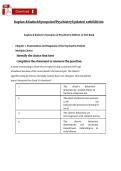
Kaplan & SadockSynopsis ofPsychiatryUpdated 12thEdition
I I I I I I I I
Kaplan I&ISadock's ISynopsis IofIPsychiatry IEdition I12 Test Bank
ChapterI 1. Examination and DiagnosisI ofI theI PsychiatricIPatient
Multiple Choice
IdentifyIthe choice that best
completesItheIstatementIorIanswersItheIquestion.
AInurseIisIassessingIaIclientIwhoIisIexperiencing occasional feeli ngs
ofIsadnessIbecauseIofItheIrecentIdeath ofIaIbelovedIpet.ITheIclient’s
appetite,sleepIpa tterns,Iand dailyIroutineIhave not changed. HowIshouldIthe
nurse interpret the client’sIb ehaviors?
1. The client’s behaviors
demonstrateI mental illness in
theIform ofIdepress ion.
2. TheIclient’sIbehaviorsIareIextensiv
e,Iwh ichI
indicatesItheIpresenceIofImentalIill
ne ss.
3. The client’s behaviors are
notIcongruent with cultural norms.
4. The client’s behaviors
demonstrate noIf unctional
impairment, indicatingIno m
ental illness.
, 1. At what point should the nurse determine that a client
isIat riskfor developing a mental illness?
1. When thoughts, feelings, and
behaviorsa re not reflective of the
DSM-5 criteria.
2. When maladaptive responsesIto
stressIa
reIcoupledIwithIinterferenceIinIdai
lyIfun ctioning.
3. WhenIaIclientIcommunicatesIs
ignificantIdistress.
4. WhenIaIclient
usesIdefenseImechanismsIa
sIegoIprotection.
1. ReactionsItoIstressIare
relativeIratherIth
anIabsolute;Iindividual
responsesItoIstr essIvary.
2. ItIisIabnormalIforIidentical twinsItoIre
actIdifferentlyItoIsimilar stressors.
,3. Identical twins should share the
same te mperamentIand respond
similarly to str ess.
4. Environmental influences
toIstress weigh more heavily
than genetic in fluences.
1. ReactionsItoIstressIareIrelativeIrat
herIth
anIabsolute;IindividualIresponsesI
toIstr essIvary.
2. ItIisIabnormal for
identicalItwinsItoIre actIdifferently
toIsimilarIstressors.
3. IdenticalItwinsIshouldIshareItheIs
ameIte
mperamentIandIrespondIsimilarly
ItoIstr ess.
4. EnvironmentalIinfluences
toIstressI weighImoreIheavily
than geneticIin fluences.
1. AIJewish,Ifemale social worker.
2. AIBaptist, homeless male.
3. AICatholic, black male.
4. AIProtestant,
SwedishIbusinessIexecutive.
1. Defense mechanisms can
beIapprop riate responsesIto
stress andneed no t be
eliminated.
, 2. Defense mechanisms are a
maladaptiv e attempt of the ego
to manage anxiety and should
always beeliminated.
3. Defense mechanisms, used by
indivi duals
withIweakIegoIintegrity,should
be
discouragedIandInotIeliminated.
4. Defense mechanisms cause
disintegrationI of the ego and
should beIfostered and enco uraged.
6. During an intake assessment, a nurse asksIboth
physiological an
dIpsychosocialIquestions.ITheIclientIangrilyIresponds,I“I’mIhereIforImyIheart,
InotImyIhea dIproblems.”IWhichIisItheInurse’sIbestIresponse?
1. “ItIisIjustIaIroutineIpartIofIourIassessment
.IA
llIclientsIareIaskedItheseIsameIquestions.
”
2. “WhyIare
youIconcernedIaboutItheseItypesIo
fIquestions?”
3. “PsychologicalIfactors,IlikeIexcessiv
eIstre ss,I
haveIbeenIfoundItoIaffectImedicalIco
nd itions.”
4. “WeIcanIskipItheseIquestions,
ifIyouIlike.ItI
isn’tIimperativeIthatIwe
completeIthisIsecti on.”
2. “WhyIareIyouIconcerned
aboutItheseItypesIo fIquestions?”
I I I I I I I I
Kaplan I&ISadock's ISynopsis IofIPsychiatry IEdition I12 Test Bank
ChapterI 1. Examination and DiagnosisI ofI theI PsychiatricIPatient
Multiple Choice
IdentifyIthe choice that best
completesItheIstatementIorIanswersItheIquestion.
AInurseIisIassessingIaIclientIwhoIisIexperiencing occasional feeli ngs
ofIsadnessIbecauseIofItheIrecentIdeath ofIaIbelovedIpet.ITheIclient’s
appetite,sleepIpa tterns,Iand dailyIroutineIhave not changed. HowIshouldIthe
nurse interpret the client’sIb ehaviors?
1. The client’s behaviors
demonstrateI mental illness in
theIform ofIdepress ion.
2. TheIclient’sIbehaviorsIareIextensiv
e,Iwh ichI
indicatesItheIpresenceIofImentalIill
ne ss.
3. The client’s behaviors are
notIcongruent with cultural norms.
4. The client’s behaviors
demonstrate noIf unctional
impairment, indicatingIno m
ental illness.
, 1. At what point should the nurse determine that a client
isIat riskfor developing a mental illness?
1. When thoughts, feelings, and
behaviorsa re not reflective of the
DSM-5 criteria.
2. When maladaptive responsesIto
stressIa
reIcoupledIwithIinterferenceIinIdai
lyIfun ctioning.
3. WhenIaIclientIcommunicatesIs
ignificantIdistress.
4. WhenIaIclient
usesIdefenseImechanismsIa
sIegoIprotection.
1. ReactionsItoIstressIare
relativeIratherIth
anIabsolute;Iindividual
responsesItoIstr essIvary.
2. ItIisIabnormalIforIidentical twinsItoIre
actIdifferentlyItoIsimilar stressors.
,3. Identical twins should share the
same te mperamentIand respond
similarly to str ess.
4. Environmental influences
toIstress weigh more heavily
than genetic in fluences.
1. ReactionsItoIstressIareIrelativeIrat
herIth
anIabsolute;IindividualIresponsesI
toIstr essIvary.
2. ItIisIabnormal for
identicalItwinsItoIre actIdifferently
toIsimilarIstressors.
3. IdenticalItwinsIshouldIshareItheIs
ameIte
mperamentIandIrespondIsimilarly
ItoIstr ess.
4. EnvironmentalIinfluences
toIstressI weighImoreIheavily
than geneticIin fluences.
1. AIJewish,Ifemale social worker.
2. AIBaptist, homeless male.
3. AICatholic, black male.
4. AIProtestant,
SwedishIbusinessIexecutive.
1. Defense mechanisms can
beIapprop riate responsesIto
stress andneed no t be
eliminated.
, 2. Defense mechanisms are a
maladaptiv e attempt of the ego
to manage anxiety and should
always beeliminated.
3. Defense mechanisms, used by
indivi duals
withIweakIegoIintegrity,should
be
discouragedIandInotIeliminated.
4. Defense mechanisms cause
disintegrationI of the ego and
should beIfostered and enco uraged.
6. During an intake assessment, a nurse asksIboth
physiological an
dIpsychosocialIquestions.ITheIclientIangrilyIresponds,I“I’mIhereIforImyIheart,
InotImyIhea dIproblems.”IWhichIisItheInurse’sIbestIresponse?
1. “ItIisIjustIaIroutineIpartIofIourIassessment
.IA
llIclientsIareIaskedItheseIsameIquestions.
”
2. “WhyIare
youIconcernedIaboutItheseItypesIo
fIquestions?”
3. “PsychologicalIfactors,IlikeIexcessiv
eIstre ss,I
haveIbeenIfoundItoIaffectImedicalIco
nd itions.”
4. “WeIcanIskipItheseIquestions,
ifIyouIlike.ItI
isn’tIimperativeIthatIwe
completeIthisIsecti on.”
2. “WhyIareIyouIconcerned
aboutItheseItypesIo fIquestions?”


