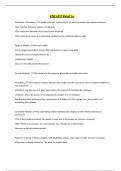
Nurs 400 Exam 3 – Questions With Fully Explained
Solutions
Save
Terms in this set (80)
The chromosomal error that causes d. 21
down syndrome is located on which "trisomy 21" three copies of 21st chromosome
chromosome?
a. 18
b. 19
c. 20
d. 21
Which of the following are risk factors b. maternal age 35+
for down syndrome? SATA d. previous child with down syndrome
a. vaccination Advanced maternal age and family history of down
b. maternal age 35+ syndrome are risk factors according to the slides and
c. fluoride in water supply CDC.
d. previous child with down syndrome
What may increase a child with down a. short neck
syndrome's risk of developing sleep c. big tongue with small mouth
apnea? SATA HYPOtonia is expected, not hypertonia.
a. short neck Bradycephalic head does not cause sleep apnea.
b. hypertonia
c. big tongue with small mouth
d. bradycephalic head
,You are assessing a child with down a. Flat nose and eyes
syndrome. What objective data would b. Short neck
you expect to see? Select 3. e. Hyperflexibility (loose joints, injury risk)
a. Flat nose and eyes Small mouth and increased space between large and
b. Short neck second toe would be expected.
c. Large mouth
d. Decreased space between large
and second toe
e. Hyperflexibility
Which of the following tests for down a. Amniocentesis
syndrome are performed on the b. Maternal alpha fetoprotein
mother? SATA d. Prenatal ultrasound
a. Amniocentesis Textbook pg 1826
b. Maternal alpha fetoprotein
c. Chromosomal analysis
d. Prenatal ultrasound
Which of the following diagnostic a. echocardiogram (detect cardiac defects, 40-50%
tests would you expect to be ordered have CHD)
for a baby with down syndrome? b. vision screening (detect vision abnormalities- 60%
SATA have eye disease)
a. echocardiogram c. thyroid hormone level (most often hypothyroidism)
b. vision screening d. cervical radiograph (assess for atlantoaxial
c. thyroid hormone level instability, infants will have "floppy" neck)
d. cervical radiograph e. ultrasound (detect GI malformation)
e. ultrasound Textbook pages 1823, 1826
An infant with down syndrome is b. use of bulb syringe
having difficulty with breast feeding. c. humidification
Which interventions can help lessen d. change infant position
the problem? SATA e. support infant's chin and throat
a. longer, less frequent breastfeeding Infants with down syndrome may take longer to
sessions nurse and struggle to get nutrients, they need to be
b. use of bulb syringe fed frequently.
c. humidification textbook page 1827
d. change infant position
e. support infant's chin and throat
, True/False Treatment for Down True
Syndrome is mainly symptomatic and
supportive.
What medication is given to babies c. ibuprofen
that have a patent foramen ovale?
a. acetaminophen
b. tylenol
c. ibuprofen
d. paracetamol
Cystic fibrosis is an autosomal a. 7
recessive disorder that occurs due to This causes generalized dysfunction of exocrine
deletion on chromosome _____. glands.
a. 7 (exocrine glands include sweat glands, lacrimal
b. 13 glands, salivary glands, digestive glands, etc.)
c. 17
d. 21
A mom and her child come into the a. "When I lick my child, the skin is salty."
clinic for a pediatric checkup. What c. "My child is always coughing, it is getting
subjective data from the mom would annoying."
lead the nurse to suspect the child has d. "I feel like my child is always constipated, they do
cystic fibrosis? SATA not poop often and are irritable."
a. "When I lick my child, the skin is Would be poor weight gain with good appetite (child
salty." cannot absorb the food)
b. "My child is gaining a lot of weight."
c. "My child is always coughing, it is
getting annoying."
d. "I feel like my child is always
constipated, they do not poop often
and are irritable."
Solutions
Save
Terms in this set (80)
The chromosomal error that causes d. 21
down syndrome is located on which "trisomy 21" three copies of 21st chromosome
chromosome?
a. 18
b. 19
c. 20
d. 21
Which of the following are risk factors b. maternal age 35+
for down syndrome? SATA d. previous child with down syndrome
a. vaccination Advanced maternal age and family history of down
b. maternal age 35+ syndrome are risk factors according to the slides and
c. fluoride in water supply CDC.
d. previous child with down syndrome
What may increase a child with down a. short neck
syndrome's risk of developing sleep c. big tongue with small mouth
apnea? SATA HYPOtonia is expected, not hypertonia.
a. short neck Bradycephalic head does not cause sleep apnea.
b. hypertonia
c. big tongue with small mouth
d. bradycephalic head
,You are assessing a child with down a. Flat nose and eyes
syndrome. What objective data would b. Short neck
you expect to see? Select 3. e. Hyperflexibility (loose joints, injury risk)
a. Flat nose and eyes Small mouth and increased space between large and
b. Short neck second toe would be expected.
c. Large mouth
d. Decreased space between large
and second toe
e. Hyperflexibility
Which of the following tests for down a. Amniocentesis
syndrome are performed on the b. Maternal alpha fetoprotein
mother? SATA d. Prenatal ultrasound
a. Amniocentesis Textbook pg 1826
b. Maternal alpha fetoprotein
c. Chromosomal analysis
d. Prenatal ultrasound
Which of the following diagnostic a. echocardiogram (detect cardiac defects, 40-50%
tests would you expect to be ordered have CHD)
for a baby with down syndrome? b. vision screening (detect vision abnormalities- 60%
SATA have eye disease)
a. echocardiogram c. thyroid hormone level (most often hypothyroidism)
b. vision screening d. cervical radiograph (assess for atlantoaxial
c. thyroid hormone level instability, infants will have "floppy" neck)
d. cervical radiograph e. ultrasound (detect GI malformation)
e. ultrasound Textbook pages 1823, 1826
An infant with down syndrome is b. use of bulb syringe
having difficulty with breast feeding. c. humidification
Which interventions can help lessen d. change infant position
the problem? SATA e. support infant's chin and throat
a. longer, less frequent breastfeeding Infants with down syndrome may take longer to
sessions nurse and struggle to get nutrients, they need to be
b. use of bulb syringe fed frequently.
c. humidification textbook page 1827
d. change infant position
e. support infant's chin and throat
, True/False Treatment for Down True
Syndrome is mainly symptomatic and
supportive.
What medication is given to babies c. ibuprofen
that have a patent foramen ovale?
a. acetaminophen
b. tylenol
c. ibuprofen
d. paracetamol
Cystic fibrosis is an autosomal a. 7
recessive disorder that occurs due to This causes generalized dysfunction of exocrine
deletion on chromosome _____. glands.
a. 7 (exocrine glands include sweat glands, lacrimal
b. 13 glands, salivary glands, digestive glands, etc.)
c. 17
d. 21
A mom and her child come into the a. "When I lick my child, the skin is salty."
clinic for a pediatric checkup. What c. "My child is always coughing, it is getting
subjective data from the mom would annoying."
lead the nurse to suspect the child has d. "I feel like my child is always constipated, they do
cystic fibrosis? SATA not poop often and are irritable."
a. "When I lick my child, the skin is Would be poor weight gain with good appetite (child
salty." cannot absorb the food)
b. "My child is gaining a lot of weight."
c. "My child is always coughing, it is
getting annoying."
d. "I feel like my child is always
constipated, they do not poop often
and are irritable."