Page | 1
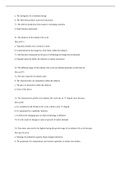
CRITICAL CARE EXAM 3 FINALS 2025 QUESTIONS
AND ANSWERS
Question 1 of 10The patient is admitted with severe abdominal pain due to
pancreatitis. The patient asks the nurse, "What causes this? Why does it hurt so
much?" The nurse should answer: (Points : 1)
"Pancreatitis is extremely rare and no one knows why it causes pain."
"Pancreatitis is caused by diabetes; you should be checked."
"Injury to certain cells in the pancreas causes it to digest (eat) itself, causing
pain."
"The pain is localized to the pancreas. Fortunately, it will not affect anything
else." - correct answer - C
The nurse is caring for a patient with severe pancreatitis and who is orally
intubated and on mechanical ventilation. The patient's calcium level this
morning was 5.5 mg/dL. The nurse notifies the provider and: (Points : 1)
places the patient on seizure precautions
expects that the provider will come and remove the endotracheal tube.
withhold any further calcium treatments.
place an oral airway at the bedside. - correct answer - A 9-
10 calcium
The patient is diagnosed with hepatitis. In caring for this patient, the nurse
should: (Points : 1)
administer antiinflammatory medications.
, Page | 2
provide rest, nutrition, and antiemetics if needed.
provide antianxiety medications freely to decrease agitation.
instruct the patient to take over-the-counter antiinflammatory medications at
home. - correct answer - B
Vascular sounds such as bruits, heard in the abdomen during physical
assessment, may indicate which of the following? (Select all that apply.) (Points
: 1)
Obstructed portal circulation
Dilated vessels
Tortuous vessels Constricted
vessels
Presence of an abscess - correct answer - BCD
The nurse is caring for a critically ill patient with respiratory failure who is
being treated with mechanical ventilation. As part of the patient's care to
prevent stress ulcers, the nurse would provide: (Select all that apply.) (Points :
1)
vagal stimulation proton
pump inhibitors.
anticholinergic drugs
antacids.
cholinergic drugs. - correct answer - BCD
, Page | 3
When caring for the patient with upper GI bleeding, the nurse assesses for
which of the following? (Select all that apply.) (Points : 1)
Severity of blood loss
Hemodynamic stability
Vital signs every 30 minutes Signs
of hypervolemic shock
Necessity for fluid resuscitation - correct answer - ABE
A 20-year-old female with a history of type 1diabetes and an eating disorder
is found unconscious. In the emergency department, the following lab values
are obtained:
Glucose648 mg/dL
pH6.88
PaCO220 mm Hg
PaO295 mm Hg
HCO3- undetectable
Anion gap>31
Na+127 mEq/L
K+ 3.5 mEq/L
Creatinine1.8 mg/dLAfter the patient's airway and ventilation have been
established, the next priority for this patient is: (Points : 1)
administration of a 1-L normal saline fluid bolus.
administration of 0.1 unit of regular insulin IV push followed by an insulin
infusion.
administration of 20 mEq KCl in 100 mL.
, Page | 4
IV push administration of 1 amp of sodium bicarbonate. - correct answer - A
Which of the following are appropriate nursing interventions for the patient in
myxedema coma? (Select all that apply.) (Points : 1)
Administer levothyroxine (Synthroid) as ordered. Encourage
the intake of foods high in sodium.
Initiate passive rewarming interventions Monitor
airway and respiratory effort.
Monitor urine osmolality - correct answer - ADE
Question 9 of 10What psychosocial factors may potentially contribute to the
development of diabetic ketoacidosis? (Select all that apply.) (Points : 1)
Altered sleep/rest patterns
Eating disorder
Exposure to influenza
High levels of stress
Lack of financial resources - correct answer - ABDE
Factors associated with the development of nephrogenic diabetes insipidus
include which of the following? (Select all that apply.) (Points : 1)
Heredity
Medications, including phenytoin (Dilantin) and lithium carbonate Meningitis
CRITICAL CARE EXAM 3 FINALS 2025 QUESTIONS
AND ANSWERS
Question 1 of 10The patient is admitted with severe abdominal pain due to
pancreatitis. The patient asks the nurse, "What causes this? Why does it hurt so
much?" The nurse should answer: (Points : 1)
"Pancreatitis is extremely rare and no one knows why it causes pain."
"Pancreatitis is caused by diabetes; you should be checked."
"Injury to certain cells in the pancreas causes it to digest (eat) itself, causing
pain."
"The pain is localized to the pancreas. Fortunately, it will not affect anything
else." - correct answer - C
The nurse is caring for a patient with severe pancreatitis and who is orally
intubated and on mechanical ventilation. The patient's calcium level this
morning was 5.5 mg/dL. The nurse notifies the provider and: (Points : 1)
places the patient on seizure precautions
expects that the provider will come and remove the endotracheal tube.
withhold any further calcium treatments.
place an oral airway at the bedside. - correct answer - A 9-
10 calcium
The patient is diagnosed with hepatitis. In caring for this patient, the nurse
should: (Points : 1)
administer antiinflammatory medications.
, Page | 2
provide rest, nutrition, and antiemetics if needed.
provide antianxiety medications freely to decrease agitation.
instruct the patient to take over-the-counter antiinflammatory medications at
home. - correct answer - B
Vascular sounds such as bruits, heard in the abdomen during physical
assessment, may indicate which of the following? (Select all that apply.) (Points
: 1)
Obstructed portal circulation
Dilated vessels
Tortuous vessels Constricted
vessels
Presence of an abscess - correct answer - BCD
The nurse is caring for a critically ill patient with respiratory failure who is
being treated with mechanical ventilation. As part of the patient's care to
prevent stress ulcers, the nurse would provide: (Select all that apply.) (Points :
1)
vagal stimulation proton
pump inhibitors.
anticholinergic drugs
antacids.
cholinergic drugs. - correct answer - BCD
, Page | 3
When caring for the patient with upper GI bleeding, the nurse assesses for
which of the following? (Select all that apply.) (Points : 1)
Severity of blood loss
Hemodynamic stability
Vital signs every 30 minutes Signs
of hypervolemic shock
Necessity for fluid resuscitation - correct answer - ABE
A 20-year-old female with a history of type 1diabetes and an eating disorder
is found unconscious. In the emergency department, the following lab values
are obtained:
Glucose648 mg/dL
pH6.88
PaCO220 mm Hg
PaO295 mm Hg
HCO3- undetectable
Anion gap>31
Na+127 mEq/L
K+ 3.5 mEq/L
Creatinine1.8 mg/dLAfter the patient's airway and ventilation have been
established, the next priority for this patient is: (Points : 1)
administration of a 1-L normal saline fluid bolus.
administration of 0.1 unit of regular insulin IV push followed by an insulin
infusion.
administration of 20 mEq KCl in 100 mL.
, Page | 4
IV push administration of 1 amp of sodium bicarbonate. - correct answer - A
Which of the following are appropriate nursing interventions for the patient in
myxedema coma? (Select all that apply.) (Points : 1)
Administer levothyroxine (Synthroid) as ordered. Encourage
the intake of foods high in sodium.
Initiate passive rewarming interventions Monitor
airway and respiratory effort.
Monitor urine osmolality - correct answer - ADE
Question 9 of 10What psychosocial factors may potentially contribute to the
development of diabetic ketoacidosis? (Select all that apply.) (Points : 1)
Altered sleep/rest patterns
Eating disorder
Exposure to influenza
High levels of stress
Lack of financial resources - correct answer - ABDE
Factors associated with the development of nephrogenic diabetes insipidus
include which of the following? (Select all that apply.) (Points : 1)
Heredity
Medications, including phenytoin (Dilantin) and lithium carbonate Meningitis