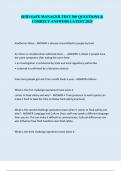
CRC FINAL PAPER 2026 QUESTIONS WITH
ANSWERS GRADED A+
◉ Who typically employs risk adjustment coders?
A.Physician offices
B. Hospitals
C. Ambulatory surgical centers
D. Health plans. Answer: D. Health Plans
◉ Is a health plan required to follow the minimum necessary rule?
A. Yes, health plans are covered entities and are required to follow the
rule
B. Yes, health plans are not covered entities but as business associates
are required to follow the rule
C. No, health plans are not covered entities and are not required to
follow the rule
D. No, health plans are covered entities but are not requried to follow the
rule. Answer: A. Health plans are covered entities and are required to
follow the minimum necessary rule
◉ Which examples is considered fraud?
A. Reporting a diagnosis or co-morbidity that does not exist to obtain
higher reimbursement
,B. Reporting an additional diagnosis for a patient that is documented in
the medical record
C. Reporting a diagnosis that only relates to documentation
D. Reporting additional diagnoses that affect the care of the patient..
Answer: A. Reporting a diagnosis or co-morbidity to obtain a higher
reimbursement
◉ Which part of Medicare is also called Medicare Advantage?
A. Part A
B. Bart B
C. Part C
D. Part D. Answer: C. Part C this combines the benefits from Medicare
A, B and sometimes D.
◉ Which Health insurance assistance program is sponsored by federal
and state governments?
A. Medicare
B. Medicaid
C. Commercial Carriers
D. Private payers. Answer: B. Medicaid
◉ What OIG Document should a Medicare Advantage participant
review for potential problem areas that will receive special scrutiny in
the upcoming year?
, A. Compliance program Guideance
B. Safe Harbor Regulations
C. Red Flag Rules
D. OIG Work Plan. Answer: D. OIG Work plan
◉ Which code set is used by risk adjustment coders?
A.CPT
B. ICD-10-CM
C. ICD-10-PCS
D. HCPCS LEVEL II. Answer: B. ICD-10-CM
◉ Which regulation strengthens HIPAA rules by addressing privacy and
security concerns associated with the electronic transmission of health
information?
A. Social Security Act (SSA)
B. Deficit Reduction Act (DRA)
C. Health Information Techology for Economic and Clinical Health Act
(HITECH)
D. Medicare Access and CHIP Reauthorization Act (MACRA). Answer:
C. Health Information Technology for Economic and Clinical Health Act
(HITECH)
◉ What is coding?
ANSWERS GRADED A+
◉ Who typically employs risk adjustment coders?
A.Physician offices
B. Hospitals
C. Ambulatory surgical centers
D. Health plans. Answer: D. Health Plans
◉ Is a health plan required to follow the minimum necessary rule?
A. Yes, health plans are covered entities and are required to follow the
rule
B. Yes, health plans are not covered entities but as business associates
are required to follow the rule
C. No, health plans are not covered entities and are not required to
follow the rule
D. No, health plans are covered entities but are not requried to follow the
rule. Answer: A. Health plans are covered entities and are required to
follow the minimum necessary rule
◉ Which examples is considered fraud?
A. Reporting a diagnosis or co-morbidity that does not exist to obtain
higher reimbursement
,B. Reporting an additional diagnosis for a patient that is documented in
the medical record
C. Reporting a diagnosis that only relates to documentation
D. Reporting additional diagnoses that affect the care of the patient..
Answer: A. Reporting a diagnosis or co-morbidity to obtain a higher
reimbursement
◉ Which part of Medicare is also called Medicare Advantage?
A. Part A
B. Bart B
C. Part C
D. Part D. Answer: C. Part C this combines the benefits from Medicare
A, B and sometimes D.
◉ Which Health insurance assistance program is sponsored by federal
and state governments?
A. Medicare
B. Medicaid
C. Commercial Carriers
D. Private payers. Answer: B. Medicaid
◉ What OIG Document should a Medicare Advantage participant
review for potential problem areas that will receive special scrutiny in
the upcoming year?
, A. Compliance program Guideance
B. Safe Harbor Regulations
C. Red Flag Rules
D. OIG Work Plan. Answer: D. OIG Work plan
◉ Which code set is used by risk adjustment coders?
A.CPT
B. ICD-10-CM
C. ICD-10-PCS
D. HCPCS LEVEL II. Answer: B. ICD-10-CM
◉ Which regulation strengthens HIPAA rules by addressing privacy and
security concerns associated with the electronic transmission of health
information?
A. Social Security Act (SSA)
B. Deficit Reduction Act (DRA)
C. Health Information Techology for Economic and Clinical Health Act
(HITECH)
D. Medicare Access and CHIP Reauthorization Act (MACRA). Answer:
C. Health Information Technology for Economic and Clinical Health Act
(HITECH)
◉ What is coding?