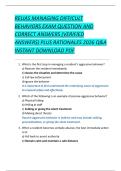
RELIAS WORKPLACE VIOLENCE
PREVENTION EXAM QUESTION AND
CORRECT ANSWERS (VERIFIED
ANSWERS) PLUS RATIONALES 2026 Q&A
INSTANT DOWNLOAD PDF
1. Which of the following is considered workplace violence?
A. Verbal threats
B. Physical assault
C. Harassment
D. All of the above
All of these behaviors constitute workplace violence and are taken
seriously under workplace safety policies.
2. What is the first step in preventing workplace violence?
A. Confronting the aggressor
B. Recognizing warning signs
C. Ignoring minor incidents
D. Carrying self-defense tools
Recognizing early warning signs allows intervention before situations
escalate.
3. Which of the following is a warning sign of potential workplace
violence?
A. Frequent lateness
B. Excessive friendliness
, C. Threatening language
D. Punctuality
Threatening language indicates possible intent to harm and should
be reported immediately.
4. Which group is most commonly affected by workplace violence in
healthcare?
A. Administrators
B. Direct care staff
C. IT personnel
D. Maintenance workers
Direct care staff have frequent patient interactions, increasing
exposure risk.
5. Which action should an employee take if they feel threatened at work?
A. Ignore the threat
B. Report it immediately to a supervisor
C. Handle it alone
D. Wait until the end of the shift
Reporting threats promptly ensures timely intervention and
protection.
6. Which of the following behaviors may indicate escalating aggression?
A. Calm discussion
B. Asking for help
C. Clenching fists or pacing
D. Smiling politely
Physical signs such as clenching fists or pacing are common indicators
of escalating aggression.
7. Workplace violence can include:
A. Physical attacks only
B. Physical, verbal, and psychological abuse
, C. Only verbal threats
D. Only theft
Workplace violence encompasses a range of harmful behaviors, not
just physical attacks.
8. Which federal agency provides guidelines for workplace violence
prevention?
A. FDA
B. OSHA
C. CDC
D. EPA
OSHA offers regulations and guidelines to protect employees from
workplace violence.
9. Employees should receive training on workplace violence prevention:
A. Once a year
B. Only after an incident
C. Regularly and upon hire
D. Only supervisors
Training upon hire and regularly ensures awareness and
preparedness.
10. Which of the following is an environmental measure to reduce
workplace violence?
A. Encouraging personal retaliation
B. Securing entrances and exits
C. Ignoring safety protocols
D. Limiting reporting
Controlling access points and monitoring entrances improves
workplace safety.
11. What is the best response when a patient or coworker becomes
verbally aggressive?
PREVENTION EXAM QUESTION AND
CORRECT ANSWERS (VERIFIED
ANSWERS) PLUS RATIONALES 2026 Q&A
INSTANT DOWNLOAD PDF
1. Which of the following is considered workplace violence?
A. Verbal threats
B. Physical assault
C. Harassment
D. All of the above
All of these behaviors constitute workplace violence and are taken
seriously under workplace safety policies.
2. What is the first step in preventing workplace violence?
A. Confronting the aggressor
B. Recognizing warning signs
C. Ignoring minor incidents
D. Carrying self-defense tools
Recognizing early warning signs allows intervention before situations
escalate.
3. Which of the following is a warning sign of potential workplace
violence?
A. Frequent lateness
B. Excessive friendliness
, C. Threatening language
D. Punctuality
Threatening language indicates possible intent to harm and should
be reported immediately.
4. Which group is most commonly affected by workplace violence in
healthcare?
A. Administrators
B. Direct care staff
C. IT personnel
D. Maintenance workers
Direct care staff have frequent patient interactions, increasing
exposure risk.
5. Which action should an employee take if they feel threatened at work?
A. Ignore the threat
B. Report it immediately to a supervisor
C. Handle it alone
D. Wait until the end of the shift
Reporting threats promptly ensures timely intervention and
protection.
6. Which of the following behaviors may indicate escalating aggression?
A. Calm discussion
B. Asking for help
C. Clenching fists or pacing
D. Smiling politely
Physical signs such as clenching fists or pacing are common indicators
of escalating aggression.
7. Workplace violence can include:
A. Physical attacks only
B. Physical, verbal, and psychological abuse
, C. Only verbal threats
D. Only theft
Workplace violence encompasses a range of harmful behaviors, not
just physical attacks.
8. Which federal agency provides guidelines for workplace violence
prevention?
A. FDA
B. OSHA
C. CDC
D. EPA
OSHA offers regulations and guidelines to protect employees from
workplace violence.
9. Employees should receive training on workplace violence prevention:
A. Once a year
B. Only after an incident
C. Regularly and upon hire
D. Only supervisors
Training upon hire and regularly ensures awareness and
preparedness.
10. Which of the following is an environmental measure to reduce
workplace violence?
A. Encouraging personal retaliation
B. Securing entrances and exits
C. Ignoring safety protocols
D. Limiting reporting
Controlling access points and monitoring entrances improves
workplace safety.
11. What is the best response when a patient or coworker becomes
verbally aggressive?