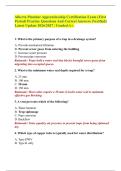
Alberta Plumber Apprenticeship Certification Exam (First
Period) Practice Questions And Correct Answers (Verified)
Latest Update 2026/2027 | Graded A+.
1. What is the primary purpose of a trap in a drainage system?
A. Provide mechanical filtration
B. Prevent sewer gases from entering the building
C. Increase water pressure
D. Prevent pipe corrosion
Rationale: Traps hold a water seal that blocks harmful sewer gases from
migrating into occupied spaces.
2. What is the minimum water seal depth required for a trap?
A. 25 mm
B. 100 mm
C. 50 mm
D. 150 mm
Rationale: Most codes require a 50 mm (2-inch) water seal to maintain
effective gas blocking.
3. A vent prevents which of the following?
A. Water hammer
B. Trap siphonage
C. Pipe corrosion
D. Backflow
Rationale: Vents equalize air pressure to prevent traps from being siphoned
dry.
4. Which type of copper tube is typically used for water distribution?
A. Type DWV
B. Type K only
,C. Type L
D. Type M
Rationale: Type L strikes a balance between wall thickness and cost,
making it suitable for water supply lines.
5. What material is commonly used for DWV systems?
A. Steel
B. Copper
C. PEX
D. PVC
Rationale: PVC is lightweight, easy to install, and widely allowed in DWV
systems.
8. A backflow preventer protects against…
A. Clogging
B. Contamination of potable water
C. Pipe corrosion
D. Air circulation in vents
Rationale: Backflow prevention ensures contaminants cannot enter the
clean water system.
9. Hard water contains high levels of:
A. Sodium
B. Iron
C. Calcium and magnesium
D. Carbon dioxide
Rationale: Hardness is caused by calcium and magnesium mineral content.
10. The term “fixture unit” measures:
A. Weight of a fixture
B. Probable discharge load of a fixture
C. Size of drain
D. Pressure rating
, Rationale: Fixture units estimate probable demand on a drainage or water
system.
11. What is the minimum size for a building drain?
A. 2"
B. 3"
C. 4" D. 6"
Rationale: Building drains normally require at least 4 inches for capacity
and code compliance.
12. Galvanic corrosion occurs when:
A. Water is too pure
B. Dissimilar metals contact in presence of an electrolyte
C. Pressure is too high
D. Venting is inadequate
Rationale: Different metals create an electrical reaction causing
accelerated corrosion.
13. Soldering copper requires heating to approximately:
A. 150°C
B. 230°C
C. 600°C
D. 900°C
Rationale: Soft solder melts between 180–230°C depending on alloy.
What is the primary purpose of a cleanout?
A. Increase flow velocity
B. Allow water hammer control
C. Provide access for cleaning the drainage system
D. Prevent siphonage
Rationale: Cleanouts give access points for clearing blockages.
Period) Practice Questions And Correct Answers (Verified)
Latest Update 2026/2027 | Graded A+.
1. What is the primary purpose of a trap in a drainage system?
A. Provide mechanical filtration
B. Prevent sewer gases from entering the building
C. Increase water pressure
D. Prevent pipe corrosion
Rationale: Traps hold a water seal that blocks harmful sewer gases from
migrating into occupied spaces.
2. What is the minimum water seal depth required for a trap?
A. 25 mm
B. 100 mm
C. 50 mm
D. 150 mm
Rationale: Most codes require a 50 mm (2-inch) water seal to maintain
effective gas blocking.
3. A vent prevents which of the following?
A. Water hammer
B. Trap siphonage
C. Pipe corrosion
D. Backflow
Rationale: Vents equalize air pressure to prevent traps from being siphoned
dry.
4. Which type of copper tube is typically used for water distribution?
A. Type DWV
B. Type K only
,C. Type L
D. Type M
Rationale: Type L strikes a balance between wall thickness and cost,
making it suitable for water supply lines.
5. What material is commonly used for DWV systems?
A. Steel
B. Copper
C. PEX
D. PVC
Rationale: PVC is lightweight, easy to install, and widely allowed in DWV
systems.
8. A backflow preventer protects against…
A. Clogging
B. Contamination of potable water
C. Pipe corrosion
D. Air circulation in vents
Rationale: Backflow prevention ensures contaminants cannot enter the
clean water system.
9. Hard water contains high levels of:
A. Sodium
B. Iron
C. Calcium and magnesium
D. Carbon dioxide
Rationale: Hardness is caused by calcium and magnesium mineral content.
10. The term “fixture unit” measures:
A. Weight of a fixture
B. Probable discharge load of a fixture
C. Size of drain
D. Pressure rating
, Rationale: Fixture units estimate probable demand on a drainage or water
system.
11. What is the minimum size for a building drain?
A. 2"
B. 3"
C. 4" D. 6"
Rationale: Building drains normally require at least 4 inches for capacity
and code compliance.
12. Galvanic corrosion occurs when:
A. Water is too pure
B. Dissimilar metals contact in presence of an electrolyte
C. Pressure is too high
D. Venting is inadequate
Rationale: Different metals create an electrical reaction causing
accelerated corrosion.
13. Soldering copper requires heating to approximately:
A. 150°C
B. 230°C
C. 600°C
D. 900°C
Rationale: Soft solder melts between 180–230°C depending on alloy.
What is the primary purpose of a cleanout?
A. Increase flow velocity
B. Allow water hammer control
C. Provide access for cleaning the drainage system
D. Prevent siphonage
Rationale: Cleanouts give access points for clearing blockages.