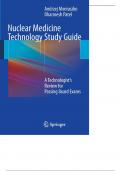
Emt module 6 exam
study guide2026
Document Highlights
• Comprehensive study guide and practice questions for EMT
Module 6
• Updated for 2026 exam standards
• Covers all key topics in Module 6, including:
o Patient assessment and management
o Trauma care and emergency response
o Medical emergencies and protocols
o Safety, communication, and legal/ethical considerations
• Includes practice questions and answers to reinforce learning
• Designed to help EMT students prepare for exams effectively
• Useful for self-study, review sessions, and exam readiness
1
, List the amount of blood that is considered significant if lost in
infants/children/adults.
(Ans - infants-150CC; children-500CC; adults-1000CC
What is the most common cause of shock in trauma patients?
(Ans - Hemorrhage
Describe the appearance of blood from a venous bleed.
(Ans - Dark red/Maroon and has a steady flow
What is the most common and effective way to control external bleeding?
(Ans - Direct Pressure
The type of shock most commonly seen by EMT's.
(Ans - Hypovolemic Shock
Nose bleeds are also called and are frequently caused by ,
, and .
(Ans - epistaxix, hypertension, sinus infection and digital trauma
what is the leading cause of internal bleeding?
(Ans - Blunt Force Trauma
what is the goal of the treatment of internal bleeding?
(Ans - Prevention and treatment of shock
Describe the categories of severity in regards to shock.
(Ans - COMPENSATED SHOCK: body compensates by increasing
pulse/respiratory rate; Normal blood pressure; cool, pale, clammy skin.
DECOMPENSATED SHOCK: body cannot compensate any more showing
hypotension.
2
study guide2026
Document Highlights
• Comprehensive study guide and practice questions for EMT
Module 6
• Updated for 2026 exam standards
• Covers all key topics in Module 6, including:
o Patient assessment and management
o Trauma care and emergency response
o Medical emergencies and protocols
o Safety, communication, and legal/ethical considerations
• Includes practice questions and answers to reinforce learning
• Designed to help EMT students prepare for exams effectively
• Useful for self-study, review sessions, and exam readiness
1
, List the amount of blood that is considered significant if lost in
infants/children/adults.
(Ans - infants-150CC; children-500CC; adults-1000CC
What is the most common cause of shock in trauma patients?
(Ans - Hemorrhage
Describe the appearance of blood from a venous bleed.
(Ans - Dark red/Maroon and has a steady flow
What is the most common and effective way to control external bleeding?
(Ans - Direct Pressure
The type of shock most commonly seen by EMT's.
(Ans - Hypovolemic Shock
Nose bleeds are also called and are frequently caused by ,
, and .
(Ans - epistaxix, hypertension, sinus infection and digital trauma
what is the leading cause of internal bleeding?
(Ans - Blunt Force Trauma
what is the goal of the treatment of internal bleeding?
(Ans - Prevention and treatment of shock
Describe the categories of severity in regards to shock.
(Ans - COMPENSATED SHOCK: body compensates by increasing
pulse/respiratory rate; Normal blood pressure; cool, pale, clammy skin.
DECOMPENSATED SHOCK: body cannot compensate any more showing
hypotension.
2