EU Criminal Law
Lecture 1
Tuesday, September 11, 2018
10:35 AM
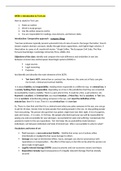
INTRODUCTION TO EUROPEAN CRIMINAL LAW
Subjects for class discussion:
Definition, History and Policy Tools
- From the ECSC to the EU pp. 15-17;
- Two Converging Areas: the Internal Market and the AFSJ pp. 17-22; - Harmonisation
and Approximation pp. 33-37;
Institutions
- Institutions, Agencies, Bodies and Offices pp.43-50;
Competencies
- Competence of the Court pp. 133-136;
- Legislative Competences of the EU in Criminal Law pp. 180-195
PART ONE
Definition
• European: EU, Council of Europe, European countries, others
• Criminal: Article 6 ECHR + Engels Criteria (1976)
o The domestic classification
o The nature of the offence, and
o The severity of the potential penalty which the defendant risks incurring
• Law: "something laid down, that which is fixed or set"
• Hybrid character:
o Multilevel:
• Legislation - European level and higher
• Implementation and enforcement - National level(s)
o Normative (and mutual) influence between EU law and National law
o Substantive criminal law / criminal procedure or on co-operation
History
• 1951 ECSC
• 1957 EEC +EAEC
• 1975 TREVI
• 1979 Giscard's espace judiciaire vetoed by NL
• 1985 Schengen Agreement
• 1992 Treaty of Maastricht
o Three pillars structure, Europeanisation of national criminal systems under the
competencies of the Council
• 1999 Treaty of Amsterdam
o Introduction of Framework decision as legislative instrument in pillar 3
• 2009 Treaty of Lisbon
o Merger of Internal Market and AFSJ (Art 3(2) and 3 TEU)
Maastricht 3 pillars structure
• European Union
, o Supranational - community method - (principle of subsidiarity)
• Pillar 1:
§ European Communities
o Intergovernmental co-operation
• Pillar 2:
§ Common Foreign and Security Policy
• Pillar 3
§ Cooperation in the Field of Justice and Home Affairs
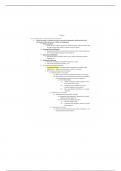
Policy Tools
Normative Influence under the Maastricht Three Pillars
Structure
, Normative Influence under the Lisbon Unitary Structure
Some relevant provisions
• Art 3(2) TEU – AFSJ as an objective of the EU
• Art 5 TFEU – principle of conferral, subsidiarity and proportionality
• Art. 4(2)(J) TEU – AFSJ
• Art 67 TFEU – Shared competencies in the AFSJ
• Art 68 TFEU – European Council to set strategic guidelines and operational planning in
AFSJ
• Art 82-83 TFEU – EU legislative powers (cfr. Art 115 TFEU)
Lecture 1
Tuesday, September 11, 2018
10:35 AM
INTRODUCTION TO EUROPEAN CRIMINAL LAW
Subjects for class discussion:
Definition, History and Policy Tools
- From the ECSC to the EU pp. 15-17;
- Two Converging Areas: the Internal Market and the AFSJ pp. 17-22; - Harmonisation
and Approximation pp. 33-37;
Institutions
- Institutions, Agencies, Bodies and Offices pp.43-50;
Competencies
- Competence of the Court pp. 133-136;
- Legislative Competences of the EU in Criminal Law pp. 180-195
PART ONE
Definition
• European: EU, Council of Europe, European countries, others
• Criminal: Article 6 ECHR + Engels Criteria (1976)
o The domestic classification
o The nature of the offence, and
o The severity of the potential penalty which the defendant risks incurring
• Law: "something laid down, that which is fixed or set"
• Hybrid character:
o Multilevel:
• Legislation - European level and higher
• Implementation and enforcement - National level(s)
o Normative (and mutual) influence between EU law and National law
o Substantive criminal law / criminal procedure or on co-operation
History
• 1951 ECSC
• 1957 EEC +EAEC
• 1975 TREVI
• 1979 Giscard's espace judiciaire vetoed by NL
• 1985 Schengen Agreement
• 1992 Treaty of Maastricht
o Three pillars structure, Europeanisation of national criminal systems under the
competencies of the Council
• 1999 Treaty of Amsterdam
o Introduction of Framework decision as legislative instrument in pillar 3
• 2009 Treaty of Lisbon
o Merger of Internal Market and AFSJ (Art 3(2) and 3 TEU)
Maastricht 3 pillars structure
• European Union
, o Supranational - community method - (principle of subsidiarity)
• Pillar 1:
§ European Communities
o Intergovernmental co-operation
• Pillar 2:
§ Common Foreign and Security Policy
• Pillar 3
§ Cooperation in the Field of Justice and Home Affairs
Policy Tools
Normative Influence under the Maastricht Three Pillars
Structure
, Normative Influence under the Lisbon Unitary Structure
Some relevant provisions
• Art 3(2) TEU – AFSJ as an objective of the EU
• Art 5 TFEU – principle of conferral, subsidiarity and proportionality
• Art. 4(2)(J) TEU – AFSJ
• Art 67 TFEU – Shared competencies in the AFSJ
• Art 68 TFEU – European Council to set strategic guidelines and operational planning in
AFSJ
• Art 82-83 TFEU – EU legislative powers (cfr. Art 115 TFEU)