COMP 1
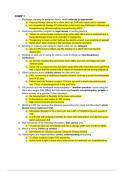
1. Discharge planning for assigned clients, which referrals is appropriate:
a. Physical therapy referral for a client who had TNR and needs use of crutches.
b. An occupational therapy OT referral for a client who has Parkinson’s disease and
is experiencing difficulty bathing and performing ADLs
2. Continuing education program on legal issues in nursing practice:
a. ‘Failure to communicate concerns of an older adult client who is confused and is
being discharged home is an example of negligence’
b. Threatening to touch a client without the clients consent is an example of assault
c. Defamation: false statement that damages someone reputation
3. Working on medsurg unit caring for clients what can you delegate:
a. ask an LPN nurse to obtain cap BG reading on a client who has become
diaphoretic.
4. Working on pedi unit is caring for clients, nurse to initiate an interdisciplinary
conference:
a. 2yr old has impaired fine and gross motor skills, and was just diagnosed with
cerebral palsy.
b. 3 year old or 3 days old who has been readmitted with rhinorrhea and hyperflexia
and a report that the mother has a history of substance abuse during pregnancy
5. Client situations, nurse initially assess the client who has:
a. CAD, is receiving a continuous heparin infusion, and has a partial thromboplastin
time of 90 secs.
b. Patient who had thoracic surgery 12 hours ago with a chest tube draining and
has 175mL of serosanguinous in the past hour.
6. 150 pounds and has developed encephalopathy - (another question: nurse caring for
client who weighs 50lb (68kg) and has developed hepatic encephalopathy; priority to
inform primary care provider if client develops:
a. the development of flaccidity to the lower extremities.
b. A decrease in urine output to 450 mL/day
c. High ammonia levels give lactulose
7. Working in ED has received the following prescriptions for newly admitted client; which
should nurse implement first
a. Administer labetalol IV to a client who has a BP of 192/98mmHg and a pulse of
138.
b. IV 0.9%NS with potassium 40mEq for client with dehydration and diarrhea and a
serum potassium 2.9
8. Pedi unit aware of the following information, first assess who:
a. 13 year old who has hemophilia and has a change of BP from 112/60 to 90/54.
9. Which is wrong; follow up needed
a. Administers an influenza vaccine using the Z-track method
10.Clients rights and responsibilities; correct understanding of teaching
a. To refuse treatment even if life sustaining
b. clients have a right to know about alternatives to treatment and hospitalizations
,11.Child who has pediculosis (LICE) - (another question: Nurse caring for child who has
impetigo)
a. Soak combs and hairbrushes in boiling water for 10 minutes
b. towels are to be washed separately from other family members
c. 14 days sealed bag-other option correct teaching
12.Restraints immediate follow up
a. The client whose wrist restraints are removed every 4 hours
13.Administer wrong drug first action - (another question: administer wrong drug; nurse
performed assessment and does not identify adverse effect; which following steps
should nurse take next)
a. determine if client is experiencing any adverse effects
b. Notify the clients PCP
14.Mass casualty disaster using tag system, who do you assess first
a. client who has burns to anterior chest and neck
b. Client who has multiple compound fractures and is reporting chest pain
15.Newly written treatment plans; necessary for nurse to verify accuracy of a treatment
plan that states (wrong)
a. maintain contact precautions for a child who has sickle cell crisis
b. Preoperative atropine for a 60 year old client who has glaucoma
16.Incident report for which situation
a. nurse realizes they missed giving him medication 2hrs ago and proceeds with
giving the med.
b. Staff member witnesses a visitor fall in the cafeteria
17.Risk of developing heparin induced thrombocytopenia
a. 59 yr old female who has been receiving SUBQ heparin 5,000 units twice per day
for the past 10 days
18.Negative rubella titer, which is correct - Positive rubella titer which is correct
a. you require the rubella immunization following the delivery of the baby
b. You are immune to the rubella virus and can fight off exposure to the virus
19.Pre-college physical assessment on 18yr old client - (another question: community
health fair about guidelines for health related screening, examinations and
immunizations; correct for nurse to state that:)
a. meningococcal polysaccharide vaccine
b. Children who are between the ages of 10 and 14 should be screened annually for
scoliosis
20.Discharge teaching for client who has fiberglass cast LLE; correct teaching
a. I should report any warm areas of the cast and odor to my doc
b. I can apply ice to my left lower leg for the next 1-2 days
21.Bipolar and severe depression, what is priority
a. restore clients nutritional status
22.ESRD refuses dialysis, in denial
a. Probably got the labs wrong
b. I want to get another opinion from the cancer institute
23.OCD first action
, a. identify precipitating factors for ritualistic behaviors
24.Overdose on aspirin - amitriptyline
a. “Im glad you called and I want to send an ambulance to you”
25.Transfer from bed to chair
a. determine if client can bear weight
26.Dietary requirement
a. Diverticulosis should consume a high fiber diet
b. Crohns disease should avoid caffeinated beverages
27.Chemotherapy not eating well but denys N/V best meal
a. Scrambled eggs, steamed carrots, and applesauce
b. Broiled chicken, green beans, cottage cheese
28.Glasses correct teaching/Hearing aids
a. I will clean my glasses using warm water and mild soap
b. “I will turn the hearing aid off before removing it from my ear”
29.Unstable angina, chest pain severity of 6/10, admin one nitro then severity at 3. Which
action should nurse be prepared to take - (another question: teaching patient with
angina regard nitro PRN; requires additional teaching if:)
a. admin another sublingual nitro tab
b. “I will need to get RX filled 3 months after I open the container” (discard after
three months)
30.RBC actions (BOX)
a. (3,1,4,2,5)
i. Ensure that the client has a 20 gauge or larger IV catheter
ii. inspect the blood for any discoloration or gas bubbles
iii. verify the blood product at the bedside with another nurse
iv. prime the Y tubing set with 0.9% sodium chloride normal saline
v. prime the white tubing with the blood product
31.Peripheral IV (wrong)
a. preparing left FA, of a client who had a left mastectomy five years ago
32.IV mag sulfate side effects
a. A respiratory rate (RR) of 12
i. Pg 382!!!
33.(math question) Admin 30mg/kg/day divided equally every 12 hours to toddler who
weighs 32 pounds; available amoxicillin 200mg/5mL suspension. How many mL should
nurse administer per dose
a. 5.5mL
34.Nurse caring for client receiving TPN; which action will the nurse take
a. clients temp greater than 100.8 orally
b. Ensure the client has CVD access device
c. Give 10% dextrose if no more TPN available, so BG doesn’t bottom
35.Demopressin acetate therapeutic effect (DI)
a. decrease in urine output from 5,000 to 2,000mL in 24hrs.
36.Infection and prescribed gentamicin; peak and trough level is required
a. Peak 30min after completion and trough is immediately prior to infusion (3,1)
1. Discharge planning for assigned clients, which referrals is appropriate:
a. Physical therapy referral for a client who had TNR and needs use of crutches.
b. An occupational therapy OT referral for a client who has Parkinson’s disease and
is experiencing difficulty bathing and performing ADLs
2. Continuing education program on legal issues in nursing practice:
a. ‘Failure to communicate concerns of an older adult client who is confused and is
being discharged home is an example of negligence’
b. Threatening to touch a client without the clients consent is an example of assault
c. Defamation: false statement that damages someone reputation
3. Working on medsurg unit caring for clients what can you delegate:
a. ask an LPN nurse to obtain cap BG reading on a client who has become
diaphoretic.
4. Working on pedi unit is caring for clients, nurse to initiate an interdisciplinary
conference:
a. 2yr old has impaired fine and gross motor skills, and was just diagnosed with
cerebral palsy.
b. 3 year old or 3 days old who has been readmitted with rhinorrhea and hyperflexia
and a report that the mother has a history of substance abuse during pregnancy
5. Client situations, nurse initially assess the client who has:
a. CAD, is receiving a continuous heparin infusion, and has a partial thromboplastin
time of 90 secs.
b. Patient who had thoracic surgery 12 hours ago with a chest tube draining and
has 175mL of serosanguinous in the past hour.
6. 150 pounds and has developed encephalopathy - (another question: nurse caring for
client who weighs 50lb (68kg) and has developed hepatic encephalopathy; priority to
inform primary care provider if client develops:
a. the development of flaccidity to the lower extremities.
b. A decrease in urine output to 450 mL/day
c. High ammonia levels give lactulose
7. Working in ED has received the following prescriptions for newly admitted client; which
should nurse implement first
a. Administer labetalol IV to a client who has a BP of 192/98mmHg and a pulse of
138.
b. IV 0.9%NS with potassium 40mEq for client with dehydration and diarrhea and a
serum potassium 2.9
8. Pedi unit aware of the following information, first assess who:
a. 13 year old who has hemophilia and has a change of BP from 112/60 to 90/54.
9. Which is wrong; follow up needed
a. Administers an influenza vaccine using the Z-track method
10.Clients rights and responsibilities; correct understanding of teaching
a. To refuse treatment even if life sustaining
b. clients have a right to know about alternatives to treatment and hospitalizations
,11.Child who has pediculosis (LICE) - (another question: Nurse caring for child who has
impetigo)
a. Soak combs and hairbrushes in boiling water for 10 minutes
b. towels are to be washed separately from other family members
c. 14 days sealed bag-other option correct teaching
12.Restraints immediate follow up
a. The client whose wrist restraints are removed every 4 hours
13.Administer wrong drug first action - (another question: administer wrong drug; nurse
performed assessment and does not identify adverse effect; which following steps
should nurse take next)
a. determine if client is experiencing any adverse effects
b. Notify the clients PCP
14.Mass casualty disaster using tag system, who do you assess first
a. client who has burns to anterior chest and neck
b. Client who has multiple compound fractures and is reporting chest pain
15.Newly written treatment plans; necessary for nurse to verify accuracy of a treatment
plan that states (wrong)
a. maintain contact precautions for a child who has sickle cell crisis
b. Preoperative atropine for a 60 year old client who has glaucoma
16.Incident report for which situation
a. nurse realizes they missed giving him medication 2hrs ago and proceeds with
giving the med.
b. Staff member witnesses a visitor fall in the cafeteria
17.Risk of developing heparin induced thrombocytopenia
a. 59 yr old female who has been receiving SUBQ heparin 5,000 units twice per day
for the past 10 days
18.Negative rubella titer, which is correct - Positive rubella titer which is correct
a. you require the rubella immunization following the delivery of the baby
b. You are immune to the rubella virus and can fight off exposure to the virus
19.Pre-college physical assessment on 18yr old client - (another question: community
health fair about guidelines for health related screening, examinations and
immunizations; correct for nurse to state that:)
a. meningococcal polysaccharide vaccine
b. Children who are between the ages of 10 and 14 should be screened annually for
scoliosis
20.Discharge teaching for client who has fiberglass cast LLE; correct teaching
a. I should report any warm areas of the cast and odor to my doc
b. I can apply ice to my left lower leg for the next 1-2 days
21.Bipolar and severe depression, what is priority
a. restore clients nutritional status
22.ESRD refuses dialysis, in denial
a. Probably got the labs wrong
b. I want to get another opinion from the cancer institute
23.OCD first action
, a. identify precipitating factors for ritualistic behaviors
24.Overdose on aspirin - amitriptyline
a. “Im glad you called and I want to send an ambulance to you”
25.Transfer from bed to chair
a. determine if client can bear weight
26.Dietary requirement
a. Diverticulosis should consume a high fiber diet
b. Crohns disease should avoid caffeinated beverages
27.Chemotherapy not eating well but denys N/V best meal
a. Scrambled eggs, steamed carrots, and applesauce
b. Broiled chicken, green beans, cottage cheese
28.Glasses correct teaching/Hearing aids
a. I will clean my glasses using warm water and mild soap
b. “I will turn the hearing aid off before removing it from my ear”
29.Unstable angina, chest pain severity of 6/10, admin one nitro then severity at 3. Which
action should nurse be prepared to take - (another question: teaching patient with
angina regard nitro PRN; requires additional teaching if:)
a. admin another sublingual nitro tab
b. “I will need to get RX filled 3 months after I open the container” (discard after
three months)
30.RBC actions (BOX)
a. (3,1,4,2,5)
i. Ensure that the client has a 20 gauge or larger IV catheter
ii. inspect the blood for any discoloration or gas bubbles
iii. verify the blood product at the bedside with another nurse
iv. prime the Y tubing set with 0.9% sodium chloride normal saline
v. prime the white tubing with the blood product
31.Peripheral IV (wrong)
a. preparing left FA, of a client who had a left mastectomy five years ago
32.IV mag sulfate side effects
a. A respiratory rate (RR) of 12
i. Pg 382!!!
33.(math question) Admin 30mg/kg/day divided equally every 12 hours to toddler who
weighs 32 pounds; available amoxicillin 200mg/5mL suspension. How many mL should
nurse administer per dose
a. 5.5mL
34.Nurse caring for client receiving TPN; which action will the nurse take
a. clients temp greater than 100.8 orally
b. Ensure the client has CVD access device
c. Give 10% dextrose if no more TPN available, so BG doesn’t bottom
35.Demopressin acetate therapeutic effect (DI)
a. decrease in urine output from 5,000 to 2,000mL in 24hrs.
36.Infection and prescribed gentamicin; peak and trough level is required
a. Peak 30min after completion and trough is immediately prior to infusion (3,1)