MIS 245 Chapter 12 - Managerial Roles, Decision Making, and Data Analytics Questions
Answered Correctly
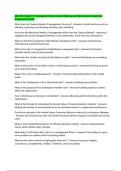
What does the Classical Model of management focus on? - Answers Formal functions such as
planning, organizing, coordinating, deciding, and controlling.
How does the Behavioral Model of management differ from the Classical Model? - Answers It
suggests that actual managerial behavior is less systematic, more informal, and reactive.
What are the three categories of Mintzberg's managerial roles? - Answers Interpersonal,
Informational, and Decisional roles.
What is the role of a 'Figurehead' in Mintzberg's managerial roles? - Answers Performing
symbolic duties, such as giving awards.
What does the 'Leader' role entail in Mintzberg's model? - Answers Motivating and counseling
employees.
What is the function of the 'Nerve Center' in informational roles? - Answers Receiving concrete,
up-to-date information.
What is the role of a 'Spokesperson'? - Answers Communicating information to the outside
world.
What is the 'Entrepreneur' role in decisional roles? - Answers Initiating new activities.
What is the purpose of the 'Disturbance Handler' role? - Answers Handling unrest or conflict
within the organization.
How is the 'Resource Allocator' role defined? - Answers Allocating staff and funding within the
organization.
What is the formula for calculating the Annual Value of improved decision making? - Answers
Multiply the number of annual decisions by the estimated value of a single improved decision.
Provide an example of the Annual Value of improved decision making for an Inventory Manager.
- Answers 365 decisions per year with $5,000 saved per decision equals $1,825,000 total annual
value.
What is a key organizational barrier to effective decision making? - Answers Organizational
Inertia, which resists major changes.
What does 'Confirmation Bias' refer to in management filters? - Answers The tendency to give
more credence to evidence that fits existing beliefs.
What are the seven criteria for high-quality decisions? - Answers Accuracy, Integrity,
Consistency, Completeness, Validity, Timeliness, and Accessibility.
Answered Correctly
What does the Classical Model of management focus on? - Answers Formal functions such as
planning, organizing, coordinating, deciding, and controlling.
How does the Behavioral Model of management differ from the Classical Model? - Answers It
suggests that actual managerial behavior is less systematic, more informal, and reactive.
What are the three categories of Mintzberg's managerial roles? - Answers Interpersonal,
Informational, and Decisional roles.
What is the role of a 'Figurehead' in Mintzberg's managerial roles? - Answers Performing
symbolic duties, such as giving awards.
What does the 'Leader' role entail in Mintzberg's model? - Answers Motivating and counseling
employees.
What is the function of the 'Nerve Center' in informational roles? - Answers Receiving concrete,
up-to-date information.
What is the role of a 'Spokesperson'? - Answers Communicating information to the outside
world.
What is the 'Entrepreneur' role in decisional roles? - Answers Initiating new activities.
What is the purpose of the 'Disturbance Handler' role? - Answers Handling unrest or conflict
within the organization.
How is the 'Resource Allocator' role defined? - Answers Allocating staff and funding within the
organization.
What is the formula for calculating the Annual Value of improved decision making? - Answers
Multiply the number of annual decisions by the estimated value of a single improved decision.
Provide an example of the Annual Value of improved decision making for an Inventory Manager.
- Answers 365 decisions per year with $5,000 saved per decision equals $1,825,000 total annual
value.
What is a key organizational barrier to effective decision making? - Answers Organizational
Inertia, which resists major changes.
What does 'Confirmation Bias' refer to in management filters? - Answers The tendency to give
more credence to evidence that fits existing beliefs.
What are the seven criteria for high-quality decisions? - Answers Accuracy, Integrity,
Consistency, Completeness, Validity, Timeliness, and Accessibility.