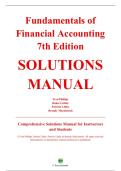
Fundamentals of
Financial Accounting
ST
7th Edition
UV
SOLUTIONS
IA
_A
MANUAL
PP
Fred Phillips
RO
Robert Libby
Patricia Libby
Brandy Mackintosh
VE
────────────────────────────────────────────────────
Comprehensive Solutions Manual for Instructors
and Students
D?
© Fred Phillips, Robert Libby, Patricia Libby & Brandy Mackintosh. All rights reserved.
Reproduction or distribution without permission is prohibited.
?
© Successhands
, Solutions Manual for Fundamentals of Financial Accounting (7th Edition)
Fred Phillips, Robert Libby, Patricia Libby & Brandy Mackintosh
ISBN: 9781264836147
ST
UNIT 1: FINANCIAL ACCOUNTING AND BUSINESS DECISIONS
1. Business Decisions and Financial Accounting
UNIT 2: FINANCIAL STATEMENTS AND ADJUSTMENTS
UV
2. The Balance Sheet
3. The Income Statement
4. Adjustments, Financial Statements, and Financial Results
UNIT 3: INTERNAL CONTROL AND MERCHANDISING
IA
OPERATIONS
5. Fraud, Internal Control, and Cash
6. Merchandising Operations and the Multi-step Income Statement
_A
UNIT 4: ASSETS AND REVENUE RECOGNITION
7. Inventory and Cost of Goods Sold
8. Receivables, Bad Debt Expense, and Interest Revenue
9. Long-Lived Tangible Assets, Intangible Assets, and Goodwill
PP
UNIT 5: LIABILITIES AND EQUITY
10. Liabilities
11. Shareholders’ Equity
RO
UNIT 6: CASH FLOWS AND PERFORMANCE ANALYSIS
12. Statement of Cash Flows
13. Measuring and Evaluating Financial Performance
VE
D?
?
© Successhands
, Solution Manual For
Fundamentals of Financial Accounting 7e Phillips
SMT
Chapter 1-13 with Appendix C&D
Chapter 1
UEDV
Business Decisions and Financial Accounting
ANSWERS TO QUESTIONS
ICAO
1. Accounting is a system of analyzing, recording, and summarizing the results of a
business‘s activities and then reporting them to decision makers.
2. An advantage of operating as a sole proprietorship, rather than a corporation, is that
_NA
it is easy to establish. Another advantage is that income from a sole proprietorship
is taxed only once in the hands of the individual proprietor (income from a
corporation is taxed in the corporation and then again in the hands of the individual
shareholder). A disadvantage of operating as a sole proprietorship, rather than a
corporation, is that the individual proprietor can be held responsible for the debts of
PNPO
the business.
3. Financial accounting focuses on preparing and using the financial statements that
are made available to owners and external users such as customers, creditors, and
potential investors who are interested in reading them. Managerial accounting
RISO
focuses on other accounting reports that are not released to the general public, but
instead are prepared for internal decision making and used by employees,
supervisors, and managers who run the company.
4. Financial reports are used by both internal and external groups and individuals. The
SVE
internal groups are comprised of the various managers of the business. The
external groups include investors, creditors, governmental agencies, other
interested parties, and the public at large.
EDU
5. The business itself, not the individual stockholders who own the business, is viewed
as owning the assets and owing the liabilities on its balance sheet. A business‘s
balance sheet includes the assets, liabilities, and stockholders‘ equity of only that
business and not the personal assets, liabilities, and equity of the stockholders.
The financial statements of a company show the results of the business activities of
?R?
only that company.
Fundamentals of Financial Accounting, 7/e 1-1
© 2022 by McGraw Hill LLC. All rights reserved. No reproduction or distribution without the prior written consent of McGraw Hill LLC.
, 6. (a) Operating – These activities are directly related to earning profits. They include
buying supplies, making products, serving customers, cleaning the premises,
advertising, renting a building, repairing equipment, and obtaining insurance
coverage.
(b) Investing – These activities involve buying and selling productive resources with
long lives (such as buildings, land, equipment, and tools), purchasing investments,
SMT
and lending to others.
(c) Financing – Any borrowing from banks, repaying bank loans, receiving
contributions from stockholders, or paying dividends to stockholders are considered
financing activities.
UEDV
7. The heading of each of the four primary financial statements should include the
following:
(a) Name of the business
(b) Name of the statement
(c) Date of the statement, or the period of time that the statement covers
ICAO
8. (a) The purpose of the balance sheet is to report the financial position (assets,
liabilities and stockholders‘ equity) of a business at a point in time.
(b) The purpose of the income statement is to present information about the
_NA
revenues, expenses, and net income of a business for a specified period of time.
(c) The statement of retained earnings reports the way that net income and the
distribution of dividends affected the financial position of the company during the
period.
(d) The purpose of the statement of cash flows is to summarize how a business‘s
PNPO
operating, investing, and financing activities caused its cash balance to change
over a particular period of time.
9. The income statement, statement of retained earnings, and statement of cash flows
would be dated ―For the Year Ended December 31, 2021,‖ because they report the
RISO
inflows and outflows of resources over a period of time. In contrast, the balance
sheet would be dated ―At December 31, 2021,‖ because it represents the assets,
liabilities and stockholders‘ equity at a specific date.
10. Net income is the excess of total revenues over total expenses. A net loss occurs if
SVE
total expenses exceed total revenues.
11. The accounting equation for the balance sheet is: Assets = Liabilities +
Stockholders‘ Equity. Assets are the economic resources controlled by the
EDU
company. Liabilities are amounts owed by the business. Stockholders‘ equity is
the owners‘ claims to the business. It includes amounts contributed to the business
(by investors through purchasing the company‘s stock) and the amounts earned
and accumulated through profitable business operations.
?R?
Fundamentals of Financial Accounting, 7/e 1-2
© 2022 by McGraw Hill LLC. All rights reserved. No reproduction or distribution without the prior written consent of McGraw Hill LLC.
Financial Accounting
ST
7th Edition
UV
SOLUTIONS
IA
_A
MANUAL
PP
Fred Phillips
RO
Robert Libby
Patricia Libby
Brandy Mackintosh
VE
────────────────────────────────────────────────────
Comprehensive Solutions Manual for Instructors
and Students
D?
© Fred Phillips, Robert Libby, Patricia Libby & Brandy Mackintosh. All rights reserved.
Reproduction or distribution without permission is prohibited.
?
© Successhands
, Solutions Manual for Fundamentals of Financial Accounting (7th Edition)
Fred Phillips, Robert Libby, Patricia Libby & Brandy Mackintosh
ISBN: 9781264836147
ST
UNIT 1: FINANCIAL ACCOUNTING AND BUSINESS DECISIONS
1. Business Decisions and Financial Accounting
UNIT 2: FINANCIAL STATEMENTS AND ADJUSTMENTS
UV
2. The Balance Sheet
3. The Income Statement
4. Adjustments, Financial Statements, and Financial Results
UNIT 3: INTERNAL CONTROL AND MERCHANDISING
IA
OPERATIONS
5. Fraud, Internal Control, and Cash
6. Merchandising Operations and the Multi-step Income Statement
_A
UNIT 4: ASSETS AND REVENUE RECOGNITION
7. Inventory and Cost of Goods Sold
8. Receivables, Bad Debt Expense, and Interest Revenue
9. Long-Lived Tangible Assets, Intangible Assets, and Goodwill
PP
UNIT 5: LIABILITIES AND EQUITY
10. Liabilities
11. Shareholders’ Equity
RO
UNIT 6: CASH FLOWS AND PERFORMANCE ANALYSIS
12. Statement of Cash Flows
13. Measuring and Evaluating Financial Performance
VE
D?
?
© Successhands
, Solution Manual For
Fundamentals of Financial Accounting 7e Phillips
SMT
Chapter 1-13 with Appendix C&D
Chapter 1
UEDV
Business Decisions and Financial Accounting
ANSWERS TO QUESTIONS
ICAO
1. Accounting is a system of analyzing, recording, and summarizing the results of a
business‘s activities and then reporting them to decision makers.
2. An advantage of operating as a sole proprietorship, rather than a corporation, is that
_NA
it is easy to establish. Another advantage is that income from a sole proprietorship
is taxed only once in the hands of the individual proprietor (income from a
corporation is taxed in the corporation and then again in the hands of the individual
shareholder). A disadvantage of operating as a sole proprietorship, rather than a
corporation, is that the individual proprietor can be held responsible for the debts of
PNPO
the business.
3. Financial accounting focuses on preparing and using the financial statements that
are made available to owners and external users such as customers, creditors, and
potential investors who are interested in reading them. Managerial accounting
RISO
focuses on other accounting reports that are not released to the general public, but
instead are prepared for internal decision making and used by employees,
supervisors, and managers who run the company.
4. Financial reports are used by both internal and external groups and individuals. The
SVE
internal groups are comprised of the various managers of the business. The
external groups include investors, creditors, governmental agencies, other
interested parties, and the public at large.
EDU
5. The business itself, not the individual stockholders who own the business, is viewed
as owning the assets and owing the liabilities on its balance sheet. A business‘s
balance sheet includes the assets, liabilities, and stockholders‘ equity of only that
business and not the personal assets, liabilities, and equity of the stockholders.
The financial statements of a company show the results of the business activities of
?R?
only that company.
Fundamentals of Financial Accounting, 7/e 1-1
© 2022 by McGraw Hill LLC. All rights reserved. No reproduction or distribution without the prior written consent of McGraw Hill LLC.
, 6. (a) Operating – These activities are directly related to earning profits. They include
buying supplies, making products, serving customers, cleaning the premises,
advertising, renting a building, repairing equipment, and obtaining insurance
coverage.
(b) Investing – These activities involve buying and selling productive resources with
long lives (such as buildings, land, equipment, and tools), purchasing investments,
SMT
and lending to others.
(c) Financing – Any borrowing from banks, repaying bank loans, receiving
contributions from stockholders, or paying dividends to stockholders are considered
financing activities.
UEDV
7. The heading of each of the four primary financial statements should include the
following:
(a) Name of the business
(b) Name of the statement
(c) Date of the statement, or the period of time that the statement covers
ICAO
8. (a) The purpose of the balance sheet is to report the financial position (assets,
liabilities and stockholders‘ equity) of a business at a point in time.
(b) The purpose of the income statement is to present information about the
_NA
revenues, expenses, and net income of a business for a specified period of time.
(c) The statement of retained earnings reports the way that net income and the
distribution of dividends affected the financial position of the company during the
period.
(d) The purpose of the statement of cash flows is to summarize how a business‘s
PNPO
operating, investing, and financing activities caused its cash balance to change
over a particular period of time.
9. The income statement, statement of retained earnings, and statement of cash flows
would be dated ―For the Year Ended December 31, 2021,‖ because they report the
RISO
inflows and outflows of resources over a period of time. In contrast, the balance
sheet would be dated ―At December 31, 2021,‖ because it represents the assets,
liabilities and stockholders‘ equity at a specific date.
10. Net income is the excess of total revenues over total expenses. A net loss occurs if
SVE
total expenses exceed total revenues.
11. The accounting equation for the balance sheet is: Assets = Liabilities +
Stockholders‘ Equity. Assets are the economic resources controlled by the
EDU
company. Liabilities are amounts owed by the business. Stockholders‘ equity is
the owners‘ claims to the business. It includes amounts contributed to the business
(by investors through purchasing the company‘s stock) and the amounts earned
and accumulated through profitable business operations.
?R?
Fundamentals of Financial Accounting, 7/e 1-2
© 2022 by McGraw Hill LLC. All rights reserved. No reproduction or distribution without the prior written consent of McGraw Hill LLC.