Nutrition 2
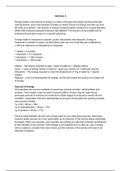
Energy intake is the amount of energy you take in through food mainly produced through
macronutrients. Each macronutrient contains a certain amount of energy and that you burn
off when you perform. The amount of energy someone needs to perform to a good standard
differs with everyone because everyone has different. The amount of food intake that an
individual should take varies on a specific performer.
Energy intake is measured in calories, joules, kilocalories and kilojoules. Energy is
measured in calories or joules. As both these units are very small they are multiplied by
1,000 and referred to as kilocalories or kilojoules.
1 calorie = 4.2 joules
1 kilocalorie = 4.2 kilojoules
1 kilocalorie = 1,000 calories
1 kilocalorie = 1,000 joules
Calorie - The energy required to raise 1 gram of water by 1 degree celsius.
Joule - 1 joule of energy moves a mass of 1 gram at a velocity of 1 metre per second.
Kilocalorie - The energy required to raise the temperature of 1kg of water by 1 degree
celsius.
Kilojoule - a unit of measurement for energy, but like the calorie the joule is not a large unit
of energy.
Sources of energy
The potential fuel sources available to exercising muscles are fats, carbohydrates and
proteins. Their relative value as fuels for activity differs. Protein may be used during
prolonged periods of exercise and towards the latter stages of endurance events like the
marathon, particularly if fat and carbohydrate as sources of fuel within the working muscles
have become limited.
1g of fat = 9Kcal = 38kJ
1g of carbohydrates = 4Kcal = 17kJ
1g of proteins = 4Kcal = 17kJ
Fat and carbohydrates are the main energy fuels for your exercising muscles. Exercising
muscles prefer glucose as a fuel, particularly as the intensity of the activity being undertaken
increases. When you exercise, your muscles use energy at a rate that is directly proportional
to the intensity of your activity. If this energy is not replaced as it is used up, your muscles
will be unable to maintain their rate of work and the intensity of the activity will need to be
reduced or stopped.
, Different methods of measuring body fat
Skinfold test - This technique uses callipers to measure the thickness of skinfolds at various
anatomical sites, usually the biceps, triceps, subscapular and suprailiac crest. The sum of
these measurements is used to calculate percentage of body fat, using equations or tables
that take into account the subjects age and gender.
Bioelectrical impedance analysis - Bioelectrical impedance analysis is fast becoming a
standard technique for assessment of body composition, particularly in the health and fitness
sector. BIA machines provide a quick easy and non invasive method of estimating
percentage body fat. Some equipment requires the attachment of electrodes to the hands
and feet. It measures the resistance to the flow of an electrical current through the body,
using the fact that different body tissues display different impedance to the flow of the
current. Tissues that contain a large amount of water, such as lean tissue provide a lower
impedance than tissues such as bone and fat. One potential drawback is that impedance
measurements are related to the water content of tissues, so for accurate result subjects
must be fully hydrated.
Body weight - Usually measured in kilograms. Some individuals have problems controlling
their body weight often resulting in obesity. Some sports are categorized based on body
weight. Energy and nutrient requirements may also be expressed relative to body mass.
Calorimetry - Energy expenditure can be assessed by direct or indirect calorimetry,
essentially through the measurement of heat production. Direct calorimetry measures the
actual amount of heat produced by the body. It uses an airtight chamber where heat
produced by the subject warms water surrounding it. Indirect calorimetry estimates heat
production by measuring respiratory gases. The most common technique is via mouthpiece
and Douglas bag collection or mouthpiece and gas analysis system, with energy
consumption calculated from the amount of oxygen consumed. The consumption of 1 litre of
oxygen equates to approximately 4.8kcal of energy expended, assuming a mixture of fats
and carbohydrates are oxidised.
Hydrodensitometry - It is considered to be one of the most accurate methods of assessing
body consumption. However, it is expensive and time consuming and can be stressful as it
requires the subject to be submerged in water. The technique measures body density that
can be translated mathematically into percentage of body fat. It relies on Archimedes’
principle of water displacement to estimate body density.
Energy Balance
Energy intake is the amount of energy you take in through food mainly produced through
macronutrients. Each macronutrient contains a certain amount of energy and that you burn
off when you perform. The amount of energy someone needs to perform to a good standard
differs with everyone because everyone has different. The amount of food intake that an
individual should take varies on a specific performer.
Energy intake is measured in calories, joules, kilocalories and kilojoules. Energy is
measured in calories or joules. As both these units are very small they are multiplied by
1,000 and referred to as kilocalories or kilojoules.
1 calorie = 4.2 joules
1 kilocalorie = 4.2 kilojoules
1 kilocalorie = 1,000 calories
1 kilocalorie = 1,000 joules
Calorie - The energy required to raise 1 gram of water by 1 degree celsius.
Joule - 1 joule of energy moves a mass of 1 gram at a velocity of 1 metre per second.
Kilocalorie - The energy required to raise the temperature of 1kg of water by 1 degree
celsius.
Kilojoule - a unit of measurement for energy, but like the calorie the joule is not a large unit
of energy.
Sources of energy
The potential fuel sources available to exercising muscles are fats, carbohydrates and
proteins. Their relative value as fuels for activity differs. Protein may be used during
prolonged periods of exercise and towards the latter stages of endurance events like the
marathon, particularly if fat and carbohydrate as sources of fuel within the working muscles
have become limited.
1g of fat = 9Kcal = 38kJ
1g of carbohydrates = 4Kcal = 17kJ
1g of proteins = 4Kcal = 17kJ
Fat and carbohydrates are the main energy fuels for your exercising muscles. Exercising
muscles prefer glucose as a fuel, particularly as the intensity of the activity being undertaken
increases. When you exercise, your muscles use energy at a rate that is directly proportional
to the intensity of your activity. If this energy is not replaced as it is used up, your muscles
will be unable to maintain their rate of work and the intensity of the activity will need to be
reduced or stopped.
, Different methods of measuring body fat
Skinfold test - This technique uses callipers to measure the thickness of skinfolds at various
anatomical sites, usually the biceps, triceps, subscapular and suprailiac crest. The sum of
these measurements is used to calculate percentage of body fat, using equations or tables
that take into account the subjects age and gender.
Bioelectrical impedance analysis - Bioelectrical impedance analysis is fast becoming a
standard technique for assessment of body composition, particularly in the health and fitness
sector. BIA machines provide a quick easy and non invasive method of estimating
percentage body fat. Some equipment requires the attachment of electrodes to the hands
and feet. It measures the resistance to the flow of an electrical current through the body,
using the fact that different body tissues display different impedance to the flow of the
current. Tissues that contain a large amount of water, such as lean tissue provide a lower
impedance than tissues such as bone and fat. One potential drawback is that impedance
measurements are related to the water content of tissues, so for accurate result subjects
must be fully hydrated.
Body weight - Usually measured in kilograms. Some individuals have problems controlling
their body weight often resulting in obesity. Some sports are categorized based on body
weight. Energy and nutrient requirements may also be expressed relative to body mass.
Calorimetry - Energy expenditure can be assessed by direct or indirect calorimetry,
essentially through the measurement of heat production. Direct calorimetry measures the
actual amount of heat produced by the body. It uses an airtight chamber where heat
produced by the subject warms water surrounding it. Indirect calorimetry estimates heat
production by measuring respiratory gases. The most common technique is via mouthpiece
and Douglas bag collection or mouthpiece and gas analysis system, with energy
consumption calculated from the amount of oxygen consumed. The consumption of 1 litre of
oxygen equates to approximately 4.8kcal of energy expended, assuming a mixture of fats
and carbohydrates are oxidised.
Hydrodensitometry - It is considered to be one of the most accurate methods of assessing
body consumption. However, it is expensive and time consuming and can be stressful as it
requires the subject to be submerged in water. The technique measures body density that
can be translated mathematically into percentage of body fat. It relies on Archimedes’
principle of water displacement to estimate body density.
Energy Balance