
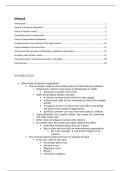
Inhoud
Introduction............................................................................................................................................1
History of European integration.............................................................................................................2
Union of Member States........................................................................................................................5
Group Discussion: Foreign policy............................................................................................................9
Union of Supranational institutions........................................................................................................9
Group discussion: law-making for the single market............................................................................12
Union founded on the rule of law........................................................................................................12
Group discussion: European Citizenship, constitutions and cultures...................................................15
Economic and monetary Union............................................................................................................16
Group Discussion: macroeconomic policy in the EMU.........................................................................18
Guest Lecture.......................................................................................................................................18
Introduction
Why study European integration?
o The sovereign state as the building block of international relations
Historically rooted in the peace of Westphalia in 1648
Growing in number over time
State sovereignty always includes:
A certain territory (over which its laws apply)
A presumed right to non-interference (from the outside
world)
A capacity to act to enforce the law within and shield
the state (from external aggression)
(political systems can vary from one state to another
State formation are usually violent “war made the state and
the state made war”
Often (but not always) overlap with nations
EU makes laws like states do (apply withing the EEA)
State-like characteristics but not a state
Not a state and not fully an international organization
o EU is far stronger has direct impact on its
citizens
o The central historical phenomenon of postwar Europe
From one crisis to the next
Sovereign debt crisis
Ukraine crisis
Migration crisis
Brexit
Climate emergency
, Covid 19 emergency
Putin’s war with UKR and the cost of living crisis
More often than not, the European level plays a key
role in generating policy based on EU competences
and coordination with the member states
NATO (&EU) enlargement
A success story for Euro-Atlantic & European
Integration (from the perspective of the European
Union)
o 1990 German reunification
o Expanding the free & single market
o CEE states anxious to plug into democratic
model and security
A nightmare for Putin
o Appeal of democracy
o Buffer space dwindles
o Who makes the rules? not Moscow
o In crisis, political contestation is never far away
Taxation, poverty, and the redistribution of wealth
Citizenship and identity issues: belonging to political
communities
Political values: freedom, democracy, sovereignty, rule of law,
pluralism, etc.
History of European integration
Two stories to be told of Security and economic cooperation
o Succession of several treaties that amend each other
o Start after the 2nd world war
Continent reduced to rubble
Starting with 6 member states until growing to 28 (27 after
BREXIT)
spreading an economic and political model
signs of partial disintegration
o French “empty chair” crisis in 1965-6
o Brexit 2016 2020 UK withdrawal
o “Rule of law” debate concerns about other
exits
“Some founding fathers”
o Konrad Adenauer
German chancellor
Germany split in two
o George Marschall
US General during the second world war
Junior officer during the first world war
o Jean Monnet
Intellectual creator of European integration
, Public Servant
Grain shipments during the first world war
Deputy secretary general of the League of Nations
o Robert Schuman
Schuman declaration
French Foreign Minister
From Elzas Lothringian region
o Paul-Henri Spaak
PM and Foreign minister of Belgium
Belgium got twice overrun during war
o (Many others: Churchill, etc.)
Story line of the integration
o Economic storyline
Starting from the US
1947 Marschall speech
1948 European Recovery program
1950 Schuman Declaration
1951 Paris Treaty (EGKS) (European Coal and Steal
Community ECSC)
1957 Rome Treaties (TFEU)
1986 Single European Act
1992 Maastricht treaty (TEU)
1997 Amsterdam Treaty
2001 Nice Treaty
2007 Lisbon Treaty
Started by the US but Europeans would take ownership of the
process
o Security cooperation
Starting from European countries being afraid of threats
1947 Dunkirk Treaty
1948 Brussel treaty (WEU; Western European Union)
1949 Washington Treaty (founding of NATO)
Binding the USA to European security
Mainly built on strategic concepts due to its military
character
European Recovery Program (Marschall Plan)
o Came on the background of Washington/London relations with
Moscow decreasing
George Kennan’s 1946 “Long Telegram” from US Embassy in
Moscow
Wanting Washington to take up a Role in defending
Europe against Russia/Soviets
European Recovery program as an effort to outbid Soviet
competition
Basis for what becomes the OECD
o Marschall Speech: European countries have to take initiative in
saying what they need
ECSC (European Coal and Steel Community
o US economic support and military guarantees where given
European countries start collaborating more closely
Introduction............................................................................................................................................1
History of European integration.............................................................................................................2
Union of Member States........................................................................................................................5
Group Discussion: Foreign policy............................................................................................................9
Union of Supranational institutions........................................................................................................9
Group discussion: law-making for the single market............................................................................12
Union founded on the rule of law........................................................................................................12
Group discussion: European Citizenship, constitutions and cultures...................................................15
Economic and monetary Union............................................................................................................16
Group Discussion: macroeconomic policy in the EMU.........................................................................18
Guest Lecture.......................................................................................................................................18
Introduction
Why study European integration?
o The sovereign state as the building block of international relations
Historically rooted in the peace of Westphalia in 1648
Growing in number over time
State sovereignty always includes:
A certain territory (over which its laws apply)
A presumed right to non-interference (from the outside
world)
A capacity to act to enforce the law within and shield
the state (from external aggression)
(political systems can vary from one state to another
State formation are usually violent “war made the state and
the state made war”
Often (but not always) overlap with nations
EU makes laws like states do (apply withing the EEA)
State-like characteristics but not a state
Not a state and not fully an international organization
o EU is far stronger has direct impact on its
citizens
o The central historical phenomenon of postwar Europe
From one crisis to the next
Sovereign debt crisis
Ukraine crisis
Migration crisis
Brexit
Climate emergency
, Covid 19 emergency
Putin’s war with UKR and the cost of living crisis
More often than not, the European level plays a key
role in generating policy based on EU competences
and coordination with the member states
NATO (&EU) enlargement
A success story for Euro-Atlantic & European
Integration (from the perspective of the European
Union)
o 1990 German reunification
o Expanding the free & single market
o CEE states anxious to plug into democratic
model and security
A nightmare for Putin
o Appeal of democracy
o Buffer space dwindles
o Who makes the rules? not Moscow
o In crisis, political contestation is never far away
Taxation, poverty, and the redistribution of wealth
Citizenship and identity issues: belonging to political
communities
Political values: freedom, democracy, sovereignty, rule of law,
pluralism, etc.
History of European integration
Two stories to be told of Security and economic cooperation
o Succession of several treaties that amend each other
o Start after the 2nd world war
Continent reduced to rubble
Starting with 6 member states until growing to 28 (27 after
BREXIT)
spreading an economic and political model
signs of partial disintegration
o French “empty chair” crisis in 1965-6
o Brexit 2016 2020 UK withdrawal
o “Rule of law” debate concerns about other
exits
“Some founding fathers”
o Konrad Adenauer
German chancellor
Germany split in two
o George Marschall
US General during the second world war
Junior officer during the first world war
o Jean Monnet
Intellectual creator of European integration
, Public Servant
Grain shipments during the first world war
Deputy secretary general of the League of Nations
o Robert Schuman
Schuman declaration
French Foreign Minister
From Elzas Lothringian region
o Paul-Henri Spaak
PM and Foreign minister of Belgium
Belgium got twice overrun during war
o (Many others: Churchill, etc.)
Story line of the integration
o Economic storyline
Starting from the US
1947 Marschall speech
1948 European Recovery program
1950 Schuman Declaration
1951 Paris Treaty (EGKS) (European Coal and Steal
Community ECSC)
1957 Rome Treaties (TFEU)
1986 Single European Act
1992 Maastricht treaty (TEU)
1997 Amsterdam Treaty
2001 Nice Treaty
2007 Lisbon Treaty
Started by the US but Europeans would take ownership of the
process
o Security cooperation
Starting from European countries being afraid of threats
1947 Dunkirk Treaty
1948 Brussel treaty (WEU; Western European Union)
1949 Washington Treaty (founding of NATO)
Binding the USA to European security
Mainly built on strategic concepts due to its military
character
European Recovery Program (Marschall Plan)
o Came on the background of Washington/London relations with
Moscow decreasing
George Kennan’s 1946 “Long Telegram” from US Embassy in
Moscow
Wanting Washington to take up a Role in defending
Europe against Russia/Soviets
European Recovery program as an effort to outbid Soviet
competition
Basis for what becomes the OECD
o Marschall Speech: European countries have to take initiative in
saying what they need
ECSC (European Coal and Steel Community
o US economic support and military guarantees where given
European countries start collaborating more closely


