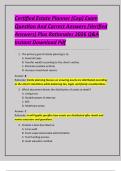
CERTIFIED ALTERNATIVE INVESTMENT
PROFESSIONAL (CAIP) QUESTION AND
CORRECT ANSWERS (VERIFIED
ANSWERS) PLUS RATIONALES 2026 Q&A
INSTANT DOWNLOAD PDF
1. Which of the following best defines alternative investments?
A. Publicly traded equities only
B. Fixed-income securities issued by governments
C. Investments outside traditional stocks, bonds, and cash
D. Short-term money market instruments
Answer: C
Rationale: Alternative investments include assets such as private equity, hedge
funds, real estate, commodities, and infrastructure that fall outside traditional
asset classes.
2. Which characteristic is most commonly associated with alternative
investments?
A. High liquidity
B. Daily pricing
C. Lower transparency
D. Guaranteed returns
Answer: C
Rationale: Many alternative investments have limited disclosure, infrequent
valuation, and less regulatory oversight compared to traditional assets.
, 3. Which alternative investment typically has the longest investment horizon?
A. Hedge funds
B. Commodities
C. Private equity
D. REITs
Answer: C
Rationale: Private equity investments often require holding periods of 7–10
years or more before exit.
4. What is a primary objective of including alternative investments in a
portfolio?
A. Increase transaction frequency
B. Enhance diversification
C. Eliminate risk
D. Guarantee income
Answer: B
Rationale: Alternatives often have low correlation with traditional assets,
improving portfolio diversification.
5. Which risk is most prominent in alternative investments?
A. Inflation risk
B. Currency risk
C. Liquidity risk
D. Interest rate risk
Answer: C
Rationale: Many alternative assets cannot be quickly sold without significant
price concessions.
, 6. Hedge funds are best described as:
A. Highly regulated mutual funds
B. Pooled investment vehicles using flexible strategies
C. Insurance-based products
D. Government-sponsored funds
Answer: B
Rationale: Hedge funds employ diverse strategies, leverage, and derivatives
with fewer regulatory constraints.
7. Which hedge fund strategy seeks to exploit pricing inefficiencies between
related securities?
A. Global macro
B. Event-driven
C. Relative value
D. Managed futures
Answer: C
Rationale: Relative value strategies focus on price discrepancies between
correlated instruments.
8. Long/short equity hedge funds primarily aim to:
A. Track equity indices
B. Profit from both rising and falling stocks
C. Provide fixed income
D. Hedge currency exposure
Answer: B
Rationale: These funds take long positions in undervalued stocks and short
positions in overvalued ones.
PROFESSIONAL (CAIP) QUESTION AND
CORRECT ANSWERS (VERIFIED
ANSWERS) PLUS RATIONALES 2026 Q&A
INSTANT DOWNLOAD PDF
1. Which of the following best defines alternative investments?
A. Publicly traded equities only
B. Fixed-income securities issued by governments
C. Investments outside traditional stocks, bonds, and cash
D. Short-term money market instruments
Answer: C
Rationale: Alternative investments include assets such as private equity, hedge
funds, real estate, commodities, and infrastructure that fall outside traditional
asset classes.
2. Which characteristic is most commonly associated with alternative
investments?
A. High liquidity
B. Daily pricing
C. Lower transparency
D. Guaranteed returns
Answer: C
Rationale: Many alternative investments have limited disclosure, infrequent
valuation, and less regulatory oversight compared to traditional assets.
, 3. Which alternative investment typically has the longest investment horizon?
A. Hedge funds
B. Commodities
C. Private equity
D. REITs
Answer: C
Rationale: Private equity investments often require holding periods of 7–10
years or more before exit.
4. What is a primary objective of including alternative investments in a
portfolio?
A. Increase transaction frequency
B. Enhance diversification
C. Eliminate risk
D. Guarantee income
Answer: B
Rationale: Alternatives often have low correlation with traditional assets,
improving portfolio diversification.
5. Which risk is most prominent in alternative investments?
A. Inflation risk
B. Currency risk
C. Liquidity risk
D. Interest rate risk
Answer: C
Rationale: Many alternative assets cannot be quickly sold without significant
price concessions.
, 6. Hedge funds are best described as:
A. Highly regulated mutual funds
B. Pooled investment vehicles using flexible strategies
C. Insurance-based products
D. Government-sponsored funds
Answer: B
Rationale: Hedge funds employ diverse strategies, leverage, and derivatives
with fewer regulatory constraints.
7. Which hedge fund strategy seeks to exploit pricing inefficiencies between
related securities?
A. Global macro
B. Event-driven
C. Relative value
D. Managed futures
Answer: C
Rationale: Relative value strategies focus on price discrepancies between
correlated instruments.
8. Long/short equity hedge funds primarily aim to:
A. Track equity indices
B. Profit from both rising and falling stocks
C. Provide fixed income
D. Hedge currency exposure
Answer: B
Rationale: These funds take long positions in undervalued stocks and short
positions in overvalued ones.