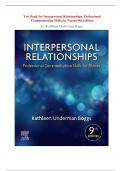
CURRENT MEDICAL DIAGNOSIS AND
TREATMENT 2026
65TH EDITION
Author(s)Maxine A. Papadakis; Michael
W. Rabow; Kenneth R. McQuaid; Paul L.
Nadler; Erika Leemann Price
TEST BANK
1
Reference
Ch. 1 — Disease Prevention & Health Promotion — Lung cancer
screening (LDCT) eligibility
Stem
A 63-year-old man with a 40-pack-year smoking history quit 10
years ago and requests lung cancer screening. He has no
,respiratory symptoms and is otherwise healthy. You must
decide whether to offer low-dose CT screening.
Options
A. No screening — stop because he quit >10 years ago.
B. Offer annual low-dose CT because he is 50–80 years old with
≥20 pack-year history and quit ≤15 years ago.
C. Offer a one-time chest radiograph as the preferred screening
strategy.
D. Screen only if he reports hemoptysis or new weight loss.
Correct answer
B
Rationale — Correct (B)
Annual low-dose CT is indicated for asymptomatic adults aged
~50–80 with at least a 20 pack-year smoking history who
currently smoke or quit within the past 15 years; this patient
meets those criteria and should be offered LDCT screening.
CMDT summarizes guideline-based eligibility and the rationale
that LDCT reduces lung-cancer mortality in this high-risk group.
AccessMedicine+1
Rationale — Incorrect
A. Stopping solely because he quit >10 years ago is incorrect;
the usual discontinuation threshold is 15 years since cessation,
not 10.
C. Chest radiograph is not recommended for lung-cancer
screening because it does not reduce mortality and has low
sensitivity.
,D. Waiting for symptoms like hemoptysis defeats the purpose of
screening, which targets asymptomatic, high-risk individuals.
Teaching point
Offer annual LDCT for eligible high-risk adults (50–80 years, ≥20
pack-years, quit ≤15 years).
Citation (simplified APA)
Papadakis, M. A., McPhee, S. J., & Rabow, M. W. (2026). Current
Medical Diagnosis & Treatment (65th ed.). Ch. 1.
2
Reference
Ch. 1 — Disease Prevention & Health Promotion — Lung cancer
screening: stopping criteria
Stem
A 79-year-old woman with a 25-pack-year history quit 5 years
ago and had annual LDCT screening for 4 years with no
suspicious nodules. She asks whether to continue annual LDCT.
Options
A. Continue indefinitely because prior negative scans guarantee
safety.
B. Stop screening at age >80 or when comorbidity limits life
expectancy; continue only if surgical candidates and life
expectancy adequate.
C. Replace LDCT with annual chest radiographs.
D. Continue only if she develops respiratory symptoms.
, Correct answer
B
Rationale — Correct (B)
Guideline recommendations advise discontinuing routine
annual LDCT once a patient is older than the upper
recommended age range (~80 years) or when comorbidities
make them unlikely surgical candidates; continuing screening in
frail older adults offers little net benefit. CMDT emphasizes
balancing life expectancy and ability to tolerate curative therapy
when deciding to stop screening. AccessMedicine+1
Rationale — Incorrect
A. Prior negative scans do not justify indefinite screening—
benefit declines with age/comorbidity.
C. Chest radiographs are not a screening substitute.
D. Symptom-triggered imaging is diagnostic, not screening;
waiting for symptoms misses early, potentially curable disease.
Teaching point
Stop LDCT screening when age, comorbidity, or limited life
expectancy negate benefit.
Citation (simplified APA)
Papadakis, M. A., McPhee, S. J., & Rabow, M. W. (2026). Current
Medical Diagnosis & Treatment (65th ed.). Ch. 1.
3
TREATMENT 2026
65TH EDITION
Author(s)Maxine A. Papadakis; Michael
W. Rabow; Kenneth R. McQuaid; Paul L.
Nadler; Erika Leemann Price
TEST BANK
1
Reference
Ch. 1 — Disease Prevention & Health Promotion — Lung cancer
screening (LDCT) eligibility
Stem
A 63-year-old man with a 40-pack-year smoking history quit 10
years ago and requests lung cancer screening. He has no
,respiratory symptoms and is otherwise healthy. You must
decide whether to offer low-dose CT screening.
Options
A. No screening — stop because he quit >10 years ago.
B. Offer annual low-dose CT because he is 50–80 years old with
≥20 pack-year history and quit ≤15 years ago.
C. Offer a one-time chest radiograph as the preferred screening
strategy.
D. Screen only if he reports hemoptysis or new weight loss.
Correct answer
B
Rationale — Correct (B)
Annual low-dose CT is indicated for asymptomatic adults aged
~50–80 with at least a 20 pack-year smoking history who
currently smoke or quit within the past 15 years; this patient
meets those criteria and should be offered LDCT screening.
CMDT summarizes guideline-based eligibility and the rationale
that LDCT reduces lung-cancer mortality in this high-risk group.
AccessMedicine+1
Rationale — Incorrect
A. Stopping solely because he quit >10 years ago is incorrect;
the usual discontinuation threshold is 15 years since cessation,
not 10.
C. Chest radiograph is not recommended for lung-cancer
screening because it does not reduce mortality and has low
sensitivity.
,D. Waiting for symptoms like hemoptysis defeats the purpose of
screening, which targets asymptomatic, high-risk individuals.
Teaching point
Offer annual LDCT for eligible high-risk adults (50–80 years, ≥20
pack-years, quit ≤15 years).
Citation (simplified APA)
Papadakis, M. A., McPhee, S. J., & Rabow, M. W. (2026). Current
Medical Diagnosis & Treatment (65th ed.). Ch. 1.
2
Reference
Ch. 1 — Disease Prevention & Health Promotion — Lung cancer
screening: stopping criteria
Stem
A 79-year-old woman with a 25-pack-year history quit 5 years
ago and had annual LDCT screening for 4 years with no
suspicious nodules. She asks whether to continue annual LDCT.
Options
A. Continue indefinitely because prior negative scans guarantee
safety.
B. Stop screening at age >80 or when comorbidity limits life
expectancy; continue only if surgical candidates and life
expectancy adequate.
C. Replace LDCT with annual chest radiographs.
D. Continue only if she develops respiratory symptoms.
, Correct answer
B
Rationale — Correct (B)
Guideline recommendations advise discontinuing routine
annual LDCT once a patient is older than the upper
recommended age range (~80 years) or when comorbidities
make them unlikely surgical candidates; continuing screening in
frail older adults offers little net benefit. CMDT emphasizes
balancing life expectancy and ability to tolerate curative therapy
when deciding to stop screening. AccessMedicine+1
Rationale — Incorrect
A. Prior negative scans do not justify indefinite screening—
benefit declines with age/comorbidity.
C. Chest radiographs are not a screening substitute.
D. Symptom-triggered imaging is diagnostic, not screening;
waiting for symptoms misses early, potentially curable disease.
Teaching point
Stop LDCT screening when age, comorbidity, or limited life
expectancy negate benefit.
Citation (simplified APA)
Papadakis, M. A., McPhee, S. J., & Rabow, M. W. (2026). Current
Medical Diagnosis & Treatment (65th ed.). Ch. 1.
3