AO3 Evaluations - Social Psychological Factors
Evaluations
Supporting Research
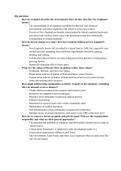
A strength of the Agentic State explanation of obedience is that it has
supporting research. Blass & Schmitt showed a film of Milgram's study to
students, and asked them to identify who they thought was responsible
for the learner's harm, Mr. Wallace. Rather than the participant, the
students blamed the 'experimenter'. The students also indicated that the
responsibility was due to legitimate authority (the 'experimenter' was top
of the hierarchy and therefore had legitimate authority) but also to expert
authority (because he was a scientist). The students recognised that
legitimate authority, supporting this explanation, is the cause of
obedience.
Limited Explanation
A limitation of the Agentic State explanation of obedience is that many of
the research findings are not explained by the Agentic Shift. An example
of this is how it does not clarify why some of the respondents have not
obeyed. Also, the Agentic Shift explanation does not explain the results of
the study by Hofling et al. As the nurses handed over responsibility to the
doctor, the Agentic shift explanation predicts that they should have shown
levels of anxiety similar to Milgram's participants, as they understood their
role in a destructive process; this was not the case. This suggests that
only some situations of obedience can be accounted for by the Agentic
Shift.
Cultural Differences
One strength of the legitimacy of the explanation of obedience by
authority is that it demonstrates the cultural differences in obedience.
Many studies show that in the sense of how individuals are obedient to
authority, countries differ. An instance of this is how Kilham and Mann
replicated the procedure of Milgram in Australia and found that only 16%
of their respondents went all the way to the top of the voltage scale. For
Evaluations
Supporting Research
A strength of the Agentic State explanation of obedience is that it has
supporting research. Blass & Schmitt showed a film of Milgram's study to
students, and asked them to identify who they thought was responsible
for the learner's harm, Mr. Wallace. Rather than the participant, the
students blamed the 'experimenter'. The students also indicated that the
responsibility was due to legitimate authority (the 'experimenter' was top
of the hierarchy and therefore had legitimate authority) but also to expert
authority (because he was a scientist). The students recognised that
legitimate authority, supporting this explanation, is the cause of
obedience.
Limited Explanation
A limitation of the Agentic State explanation of obedience is that many of
the research findings are not explained by the Agentic Shift. An example
of this is how it does not clarify why some of the respondents have not
obeyed. Also, the Agentic Shift explanation does not explain the results of
the study by Hofling et al. As the nurses handed over responsibility to the
doctor, the Agentic shift explanation predicts that they should have shown
levels of anxiety similar to Milgram's participants, as they understood their
role in a destructive process; this was not the case. This suggests that
only some situations of obedience can be accounted for by the Agentic
Shift.
Cultural Differences
One strength of the legitimacy of the explanation of obedience by
authority is that it demonstrates the cultural differences in obedience.
Many studies show that in the sense of how individuals are obedient to
authority, countries differ. An instance of this is how Kilham and Mann
replicated the procedure of Milgram in Australia and found that only 16%
of their respondents went all the way to the top of the voltage scale. For