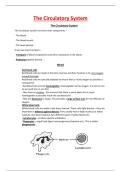
The Circulatory System
The Circulatory System
The circulatory system has three main components –
- The blood
- The blood vessels
- The heart (pump)
It has two main functions –
- Transport of blood components and other substances in the blood
- Protection against disease
Blood
- Red blood cells
Red blood cells are made in the bone marrow and their function is to carry oxygen
around the body.
Red blood cells are specially adapted to ensure that as much oxygen as possible is
transported:
-Red blood cells contain haemoglobin. Haemoglobin carries oxygen. It is rich in iron
so we need iron in our diet.
-They have no nucleus - this ensures that there is more space for as much
haemoglobin as possible inside the red blood cell.
-They are biconcave in shape. This provides a large surface area for the diffusion of
oxygen.
- White blood cells
White blood cells are made in the bone marrow. These cells fight disease – they are
important in defence against disease. They usually have a large nucleus (or lobed
nucleus). Our blood contains two different types of white blood cell -
-Lymphocytes – produce specific antibodies.
-Phagocytes – engulf and digest microorganisms (bacteria etc.). This is called
phagocytosis.
, - Platelets
Platelets are very small (cell fragments). Platelets are essential in blood clotting and
formation of scabs. Requires a lot of other chemicals called clotting factors too – this
is to prevent blood clots forming too easily.
Platelets convert the protein fibrinogen into fibrin. Fibrinogen is soluble but fibrin is
insoluble. The insoluble fibrin then forms a mesh network to trap the blood
components. Eventually a scab will form. The conversion from fibrinogen into fibrin
happens when platelets are activated (when damage occurs).
- Plasma
Plasma is the liquid part of blood. All of the blood cells, absorbed soluble food
molecules (glucose, amino acids, vitamins etc), hormones, urea (waste product) and
carbon dioxide are transported in the plasma.
The concentration of the plasma must be very similar to the concentration inside the
blood cells. This is essential because osmosis could occur. If the plasma was too
dilute (too much water) then the red blood cells (all blood cells) would gain water, by
osmosis, and they may burst – cell lysis. If the plasma is too concentrated (very little
water and lots of dissolved salts, sugars and other chemicals) then the red blood
cells will lose water, by osmosis, and the cells will shrivel.
The Circulatory System
The circulatory system has three main components –
- The blood
- The blood vessels
- The heart (pump)
It has two main functions –
- Transport of blood components and other substances in the blood
- Protection against disease
Blood
- Red blood cells
Red blood cells are made in the bone marrow and their function is to carry oxygen
around the body.
Red blood cells are specially adapted to ensure that as much oxygen as possible is
transported:
-Red blood cells contain haemoglobin. Haemoglobin carries oxygen. It is rich in iron
so we need iron in our diet.
-They have no nucleus - this ensures that there is more space for as much
haemoglobin as possible inside the red blood cell.
-They are biconcave in shape. This provides a large surface area for the diffusion of
oxygen.
- White blood cells
White blood cells are made in the bone marrow. These cells fight disease – they are
important in defence against disease. They usually have a large nucleus (or lobed
nucleus). Our blood contains two different types of white blood cell -
-Lymphocytes – produce specific antibodies.
-Phagocytes – engulf and digest microorganisms (bacteria etc.). This is called
phagocytosis.
, - Platelets
Platelets are very small (cell fragments). Platelets are essential in blood clotting and
formation of scabs. Requires a lot of other chemicals called clotting factors too – this
is to prevent blood clots forming too easily.
Platelets convert the protein fibrinogen into fibrin. Fibrinogen is soluble but fibrin is
insoluble. The insoluble fibrin then forms a mesh network to trap the blood
components. Eventually a scab will form. The conversion from fibrinogen into fibrin
happens when platelets are activated (when damage occurs).
- Plasma
Plasma is the liquid part of blood. All of the blood cells, absorbed soluble food
molecules (glucose, amino acids, vitamins etc), hormones, urea (waste product) and
carbon dioxide are transported in the plasma.
The concentration of the plasma must be very similar to the concentration inside the
blood cells. This is essential because osmosis could occur. If the plasma was too
dilute (too much water) then the red blood cells (all blood cells) would gain water, by
osmosis, and they may burst – cell lysis. If the plasma is too concentrated (very little
water and lots of dissolved salts, sugars and other chemicals) then the red blood
cells will lose water, by osmosis, and the cells will shrivel.