Cash Flow Statement (Lecture 4)
Cash Flow Statement – Core Concepts
1. Why Cash is King!
→ Profit ≠ Cash !!
→ You can be profitable but still go bust if no cash
→ Cash pays: suppliers, wages, loans, assets
2. Cash & Cash Equivalents
→ Coins, bank balances, short-term deposits (<90 days)
→ Must have enough to survive crises → “going concern”
3. 3 Sections of Cash Flow Statement
1. Operating Activities → Day-to-day trading cash
2. Investing Activities → Buying/selling long-term assets
3. Financing Activities → Money from/to owners & lenders
4. Two Ways to Show Operating Cash Flow
• Direct Method → Actual cash in/out (rare in exams)
• Indirect Method → Start from Operating Profit → adjust
(Most common in exams!)
5. Indirect Method – Step-by-Step
Start: Operating Profit (from Income Statement)
+ Add back non-cash expenses
→ Depreciation ✓
→ Amortisation ✓
→ Loss on asset sale ✓
→ (subtract gain on sale)
± Working Capital Changes
↑ Inventory → – cash
↑ Receivables → – cash
↑ Payables → + cash
– Tax paid
= Cash from Operating Activities
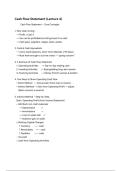
Cash Flow Statement – Core Concepts
1. Why Cash is King!
→ Profit ≠ Cash !!
→ You can be profitable but still go bust if no cash
→ Cash pays: suppliers, wages, loans, assets
2. Cash & Cash Equivalents
→ Coins, bank balances, short-term deposits (<90 days)
→ Must have enough to survive crises → “going concern”
3. 3 Sections of Cash Flow Statement
1. Operating Activities → Day-to-day trading cash
2. Investing Activities → Buying/selling long-term assets
3. Financing Activities → Money from/to owners & lenders
4. Two Ways to Show Operating Cash Flow
• Direct Method → Actual cash in/out (rare in exams)
• Indirect Method → Start from Operating Profit → adjust
(Most common in exams!)
5. Indirect Method – Step-by-Step
Start: Operating Profit (from Income Statement)
+ Add back non-cash expenses
→ Depreciation ✓
→ Amortisation ✓
→ Loss on asset sale ✓
→ (subtract gain on sale)
± Working Capital Changes
↑ Inventory → – cash
↑ Receivables → – cash
↑ Payables → + cash
– Tax paid
= Cash from Operating Activities