Philosophy and Ethics: Chapter 1.6: Exam question plan
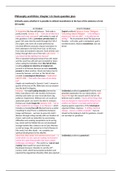
Critically assess whether it is possible to defend monotheism in the face of the existence of evil.
(30 marks)
IS POSSIBLE IS NOT POSSIBLE
St Augustine/the free will defence - God made a {logical problem} Epicurus. Hume ‘Dialogues
perfect world, Genesis 1:31 – “God saw all that he’d Concerning Natural Religion’ – “is he willing to
made and it was very good” and variety is a part of prevent evil, but not able?... is he able but not
this goodness. Evil is a privation (privatio boni) of willing?” The inconsistent triad/The Epicurean
good. Evil came into the world through the Fall of Paradox – evil exists, god is omnipotent, god is
the angels, who were all created perfectly but omnibenevolent. Rejects monotheism, but not
received different amounts of grace (assistance in deism.
their attempts to be holy) from God, so fell away
from God and wanted to become ‘lords of their own
being’ through their use of free-will. Luke 10:18 – “I
saw Satan fall like lighting from heaven”
This is repeated: God gave humans free-will, Adam
and Eve used free-will and were tempted by Satan
when eating the forbidden fruit (the Fall of Man),
creating original sin (doctrine of original sin),
present in all humans because we were seminally
present in Adam and Eve. Moral and natural evil is
caused by humans, not God, as The Fall of Man
created a cosmological disturbance. ‘Confessions’
(AD397-400) – “free-will is the cause of our doing
evil”.
Angels not mentioned in Genesis 2 and 3, except as
guards of the tree of life. Bible does not say serpent
was the devil in disguise.
Irenaeus – the soul-making theodicy (termed by {evidential problem/a posteriori} Find the most
Hick), God allows evil in the world to let humans plausible explanation for our observations. John
develop and make our own moral decisions (eg, Stuart Mill says the natural world is full of evil,
patience, forgiveness). Without evil, we could not believes God is sadistic “nearly all the things that
appreciate good, we need to be able to compare. men are hanged or imprisoned for doing to one
Humans are made imago dei, Genesis 1:26 – “Let us another are Nature’s everyday performances”.
make mankind in our image, in our likeness”, which Arguing against supporters of the teleological
includes us having free-will (likened God as a potter argument (Paley, Aquinas). “A trifling chemical
moulding his clay) There’s a distinction between change… starves a million of people”. Says we
image and likeness – we have to grow into God’s should not be looking to God for guidance, should
likeness through acting morally with our freedom of not worship his ‘goodness’
choice, and reach our potential, by overcoming
difficulties and resisting temptations to do wrong.
(eg, Jonah and the Whale) We are not developed
enough initially (like a baby) to be in God’s likeness
as well as image. We cannot be in God’s likeness in
this world, but after death – we complete our
spiritual development in the afterlife.
John Hick (1922-2012) ‘Evil and the God of Love’ - ‘a {evidential problem/a posteriori}
world which is to be a person-making environment
cannot be a pain-free paradise but must contain
challenges and dangers’. The world is a ‘vale of soul-
making’ (borrowed from poet John Keats.
Developed Irenaeus’ theodicy to suit the 20th-
century mind, which had accepted evolution and
rejected the Augustinian theodicy (Hick also rejected
Critically assess whether it is possible to defend monotheism in the face of the existence of evil.
(30 marks)
IS POSSIBLE IS NOT POSSIBLE
St Augustine/the free will defence - God made a {logical problem} Epicurus. Hume ‘Dialogues
perfect world, Genesis 1:31 – “God saw all that he’d Concerning Natural Religion’ – “is he willing to
made and it was very good” and variety is a part of prevent evil, but not able?... is he able but not
this goodness. Evil is a privation (privatio boni) of willing?” The inconsistent triad/The Epicurean
good. Evil came into the world through the Fall of Paradox – evil exists, god is omnipotent, god is
the angels, who were all created perfectly but omnibenevolent. Rejects monotheism, but not
received different amounts of grace (assistance in deism.
their attempts to be holy) from God, so fell away
from God and wanted to become ‘lords of their own
being’ through their use of free-will. Luke 10:18 – “I
saw Satan fall like lighting from heaven”
This is repeated: God gave humans free-will, Adam
and Eve used free-will and were tempted by Satan
when eating the forbidden fruit (the Fall of Man),
creating original sin (doctrine of original sin),
present in all humans because we were seminally
present in Adam and Eve. Moral and natural evil is
caused by humans, not God, as The Fall of Man
created a cosmological disturbance. ‘Confessions’
(AD397-400) – “free-will is the cause of our doing
evil”.
Angels not mentioned in Genesis 2 and 3, except as
guards of the tree of life. Bible does not say serpent
was the devil in disguise.
Irenaeus – the soul-making theodicy (termed by {evidential problem/a posteriori} Find the most
Hick), God allows evil in the world to let humans plausible explanation for our observations. John
develop and make our own moral decisions (eg, Stuart Mill says the natural world is full of evil,
patience, forgiveness). Without evil, we could not believes God is sadistic “nearly all the things that
appreciate good, we need to be able to compare. men are hanged or imprisoned for doing to one
Humans are made imago dei, Genesis 1:26 – “Let us another are Nature’s everyday performances”.
make mankind in our image, in our likeness”, which Arguing against supporters of the teleological
includes us having free-will (likened God as a potter argument (Paley, Aquinas). “A trifling chemical
moulding his clay) There’s a distinction between change… starves a million of people”. Says we
image and likeness – we have to grow into God’s should not be looking to God for guidance, should
likeness through acting morally with our freedom of not worship his ‘goodness’
choice, and reach our potential, by overcoming
difficulties and resisting temptations to do wrong.
(eg, Jonah and the Whale) We are not developed
enough initially (like a baby) to be in God’s likeness
as well as image. We cannot be in God’s likeness in
this world, but after death – we complete our
spiritual development in the afterlife.
John Hick (1922-2012) ‘Evil and the God of Love’ - ‘a {evidential problem/a posteriori}
world which is to be a person-making environment
cannot be a pain-free paradise but must contain
challenges and dangers’. The world is a ‘vale of soul-
making’ (borrowed from poet John Keats.
Developed Irenaeus’ theodicy to suit the 20th-
century mind, which had accepted evolution and
rejected the Augustinian theodicy (Hick also rejected