

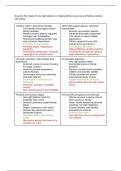
Examine the impact of new right policies in shaping family structures and family practices
(30 marks)
Taxation reform- promoting marriage 1993 child support agency- enforcing
- Tax benefits encouraged nuclear responsibility
family formation - Ensured non-resident parents
- Married coupled alliance regarded remained financially responsible
marriage over cohabitation - CSA aimed to reduce welfare
- Reinforced traditional gender roles dependency
and economic dependence - Fathers required to pay child
- Promoted nuclear stability maintenance post-divorce
- Feminists argue it reproduces - Encouraged self-relience
patriarchy - Often ineffective, burdens mothers
- Personal life perspective- overlooks - Personal life perspective- ignores
meaningful non-nuclear bonds wider definitions of parenthood
Housing restrictions- discouraging lone Functionalist alignment
parenthood - New right policies reflect
- Reduced access to council housing functionalist views on family
for single mothers functions
- Aimed to prevent dependency - Parsons- nuclear family socialises
culture (Murray) children and provides stability
- Discouraged early lone parenting - Policies promote two-parent
and state reliance heterosexual family models
- Encouraged + reinforced self - Supports order and consensus
sufficiency - Ignores family diversity and modern
- Feminists- punishes vulnerable values
women
- May increase poverty and instability
Feminist and marxist critique Personal life perspective and diversity
- New right policies reinforce - Policies assume a narrow view of
inequality and control what counts as “family”
- Benston- promotes unpaid female - Smart- family defined by personal
labour meaning, not solid categories
- Delphy- patriarchy in the family - Chosen families, step families,
- Women stay dependent due to extended kin networks
tax/benefit cultures - Reflects lived reality
- Highlights hidden gender/class - New right sees this as social decline,
power not evolution
- May ignore passive outcomes of a
structure for some
(30 marks)
Taxation reform- promoting marriage 1993 child support agency- enforcing
- Tax benefits encouraged nuclear responsibility
family formation - Ensured non-resident parents
- Married coupled alliance regarded remained financially responsible
marriage over cohabitation - CSA aimed to reduce welfare
- Reinforced traditional gender roles dependency
and economic dependence - Fathers required to pay child
- Promoted nuclear stability maintenance post-divorce
- Feminists argue it reproduces - Encouraged self-relience
patriarchy - Often ineffective, burdens mothers
- Personal life perspective- overlooks - Personal life perspective- ignores
meaningful non-nuclear bonds wider definitions of parenthood
Housing restrictions- discouraging lone Functionalist alignment
parenthood - New right policies reflect
- Reduced access to council housing functionalist views on family
for single mothers functions
- Aimed to prevent dependency - Parsons- nuclear family socialises
culture (Murray) children and provides stability
- Discouraged early lone parenting - Policies promote two-parent
and state reliance heterosexual family models
- Encouraged + reinforced self - Supports order and consensus
sufficiency - Ignores family diversity and modern
- Feminists- punishes vulnerable values
women
- May increase poverty and instability
Feminist and marxist critique Personal life perspective and diversity
- New right policies reinforce - Policies assume a narrow view of
inequality and control what counts as “family”
- Benston- promotes unpaid female - Smart- family defined by personal
labour meaning, not solid categories
- Delphy- patriarchy in the family - Chosen families, step families,
- Women stay dependent due to extended kin networks
tax/benefit cultures - Reflects lived reality
- Highlights hidden gender/class - New right sees this as social decline,
power not evolution
- May ignore passive outcomes of a
structure for some


